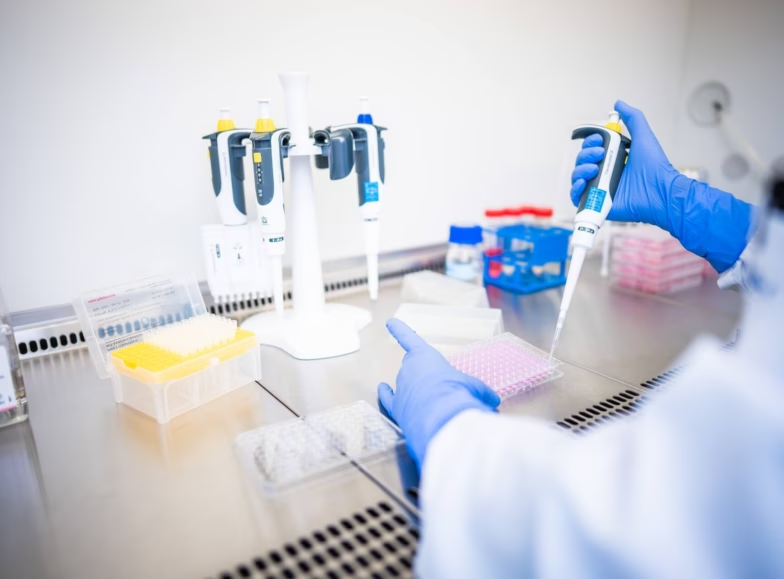


Biocompatibility as the foundation of patient safety
Biocompatibility refers to the ability of a material to perform safely in or on the human body without causing harmful biological reactions. For medical devices and implants that come into prolonged contact with patients, biocompatibility is a fundamental aspect of product safety.
Manufacturers must demonstrate that their materials do not pose an unacceptable biological risk. This is essential not only for protecting patients but also for complying with applicable regulations.
Ensuring the safety of medical devices
To assess the safety of medical devices, materials are tested for potential biological hazards. This includes evaluating whether they release substances that could have harmful effects on cells or human tissue.
Normec supports manufacturers with biocompatibility testing and helps generate the data required for technical documentation and conformity assessments.

Demonstrate compliance with MDR and ISO standards
Under the Medical Device Regulation (MDR), medical devices must not pose an unacceptable biological risk to patients. In addition, DIN EN ISO 17664 requires that the prescribed reprocessing procedure does not adversely affect the biocompatibility of a medical device.
An important first step in assessing biocompatibility is the in vitro cytotoxicity test in accordance with DIN EN ISO 10993-5. This test determines whether materials or medical devices release substances that may be harmful to living cells.
With our support, you can:
- Demonstrate that materials are safe for their intended use
- Comply with relevant MDR and ISO requirements
- Reduce risks for patients and end users
- Receive reliable test results from an accredited laboratory
- Strengthen the evidence supporting your technical documentation
Expertise in biocompatibility testing
Normec operates an accredited laboratory for biocompatibility testing. Our specialists combine extensive regulatory knowledge with practical experience in the medical device industry.
By identifying potential biological risks at an early stage, we help you address issues proactively and demonstrate that your product can be used safely.
Preparing for future regulatory requirements
Patient safety and biological risk assessment continue to receive increasing attention from regulators and the medical device industry. A thorough biocompatibility assessment not only helps you comply with current legislation but also prepares you for future requirements from regulatory authorities, notified bodies and the market.
Would you like to know more about biocompatibility testing?
You might also be interested in these services


Frequently Asked Questions about biocompatibility of medical devices
-
Biocompatibility describes the ability of a material to be used safely in or on the human body without causing harmful biological reactions.
-
Medical devices must not present an unacceptable risk to patients. Biocompatibility testing helps demonstrate that a device is safe for its intended use.
-
The Medical Device Regulation (MDR) requires manufacturers to demonstrate that medical devices do not pose an unacceptable biological risk to patients during their intended use.
-
An in vitro cytotoxicity test evaluates whether materials or medical devices release substances that may be harmful to living cells.
-
Cytotoxicity testing is performed in accordance with DIN EN ISO 10993-5, an internationally recognised standard for biological evaluation of medical devices.
-
Yes. According to DIN EN ISO 17664, the validated cleaning, disinfection and sterilisation process must not adversely affect the biocompatibility of a medical device.
-
Yes. We support manufacturers with biocompatibility testing, reporting and the evidence required for technical documentation and conformity assessments.