A safe and controlled environment
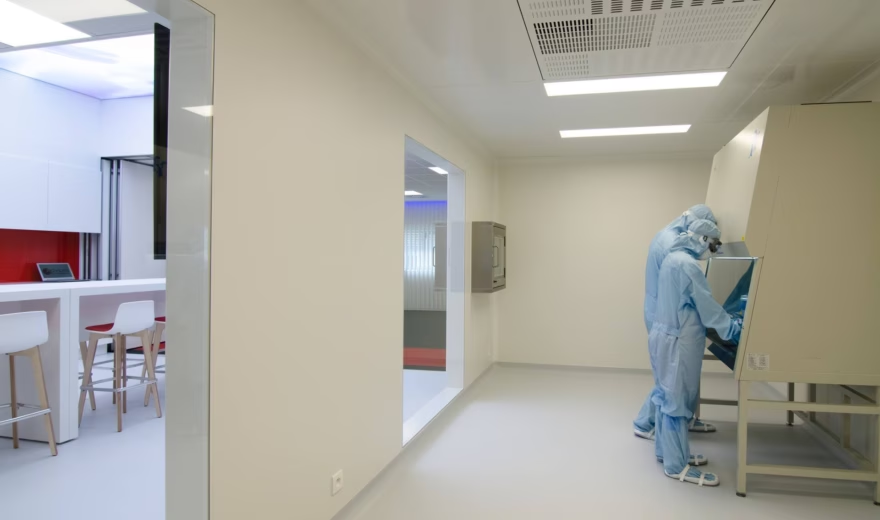
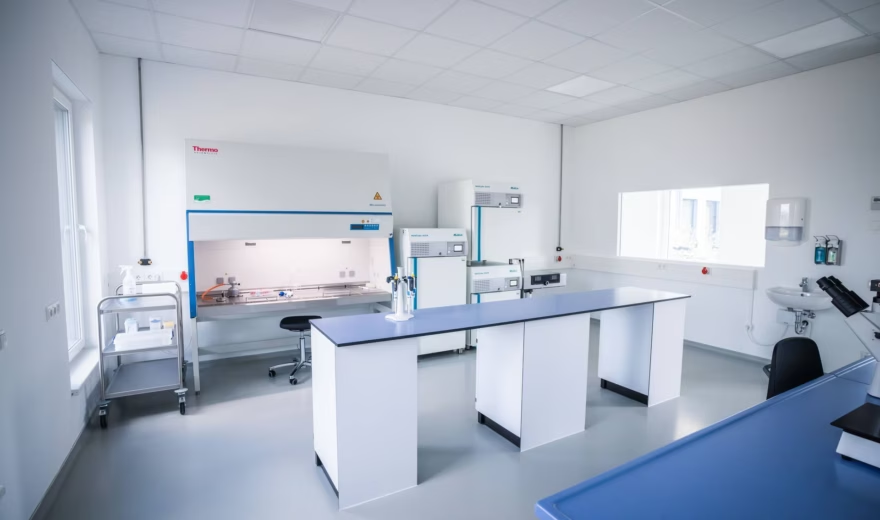
Cleanrooms are essential in the life sciences sector. They provide the foundation for a safe and controlled production environment in which pharmaceuticals, medical devices and other critical products are developed and manufactured.
Depending on the application, a cleanroom must comply with specific cleanliness classifications and regulatory requirements. That is why it is essential to periodically test and validate its performance in accordance with the applicable standards.
Cleanroom validation according to GMP and ISO 14644-1
A cleanroom is classified based on the number of airborne particles present. The key standards for this are ISO 14644-1 and the GMP grades defined in EudraLex Volume 4 Annex 1.
During validation, we determine whether the cleanroom meets the requirements for its intended activities. This provides assurance that processes are carried out under the correct conditions while minimising the risk of contamination.
Testing all critical cleanroom parameters
In addition to particle counting, several other parameters play an important role in maintaining a controlled production environment.
Normec can assess, among others:
- Microbial contamination
- Temperature
- Relative humidity
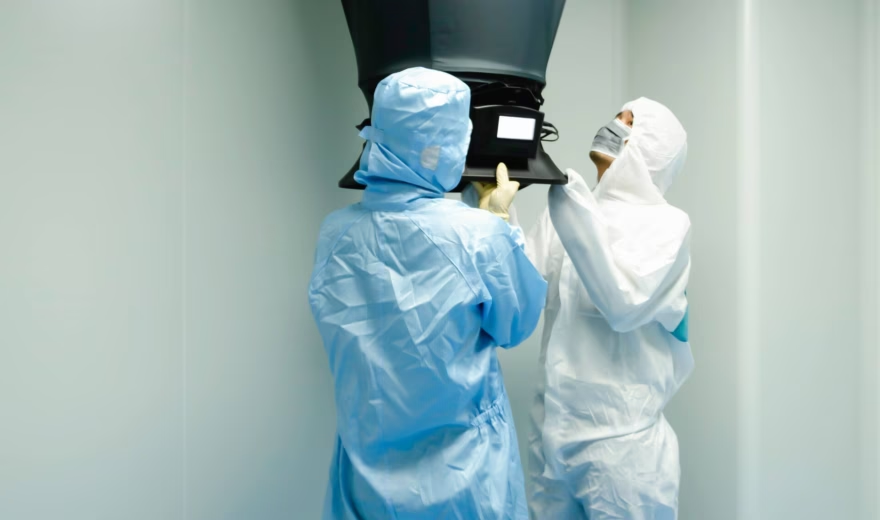
- Airflow rates
- Differential pressure
- Light intensity
This means you can:
- Demonstrate compliance with GMP and ISO requirements
- Gain insight into the performance of your cleanroom
- Reduce the risk of contamination and product deviations
- Receive reliable test results and comprehensive reports
- Maintain a safe and controlled production environment
Validation testing for cleanrooms and laminar flow cabinets
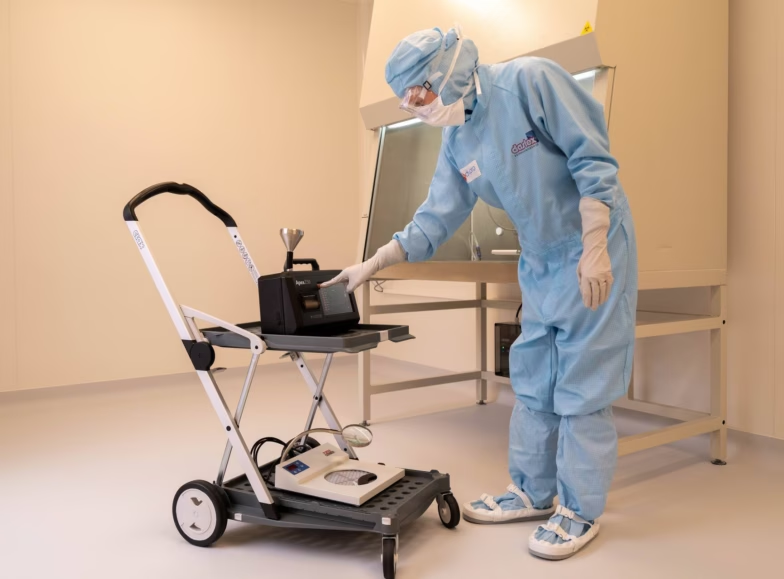
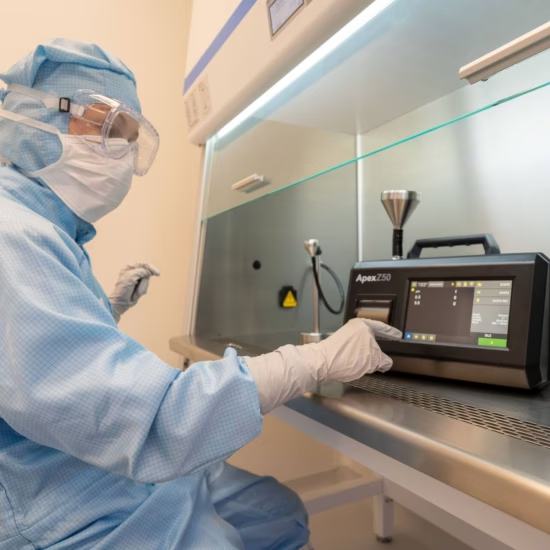
Using calibrated equipment operated by our Mobile Validation Experts (MoVE), Normec performs a wide range of validation tests for cleanrooms and controlled environments.
Environmental monitoring
- Microbiological sampling
- Particle counting
- Temperature measurements
- Humidity measurements
- Pressure measurements
- Light intensity measurements
- Filter integrity testing
- Recovery time testing
- Air change rate determination
Laminar flow cabinets and controlled workstations
- Laminar airflow (LAF) cabinets
- Biological safety cabinets Class I, II and III
- Isolators
- Powder extraction cabinets
- Fume cupboards
Expertise for the cleanrooms of tomorrow
New technologies, stricter regulations and increasing quality requirements demand specialist expertise. For many hospitals, laboratories, pharmaceutical companies and start-ups, designing, building and validating a cleanroom is a complex process.
Normec supports organisations throughout the entire project lifecycle. Drawing on extensive experience with a wide range of cleanroom projects, we help minimise risks and safeguard both cleanroom performance and process quality.
This expertise also formed the basis of our Cleanroom Implementation Blueprint (CLIMB®), which guides organisations from design and risk assessment through validation, monitoring and operational support.
This ensures that your cleanroom is not only compliant with today's requirements but also prepared for future developments within the life sciences sector.
Would you like to learn more about cleanroom validation?
Project references
You might also be interested in these services


Frequently Asked Questions about cleanroom validation
-
Cleanroom validation demonstrates that a cleanroom meets predefined requirements for air quality, cleanliness and operational performance.
-
Cleanrooms are generally validated in accordance with ISO 14644-1 and the GMP requirements set out in EudraLex Volume 4 Annex 1.
-
Depending on the application, parameters such as particle counts, microbial contamination, temperature, humidity, differential pressure and airflow rates are evaluated.
-
Environmental monitoring involves monitoring microbial contamination and airborne particles to verify cleanroom performance.
-
Yes. We validate LAF cabinets, biological safety cabinets, isolators, powder extraction cabinets and fume cupboards.
-
A filter integrity test verifies that HEPA filters are functioning correctly and are free from leaks.
-
Yes. Using our CLIMB® methodology, we support organisations from design through validation, monitoring and operational support.