
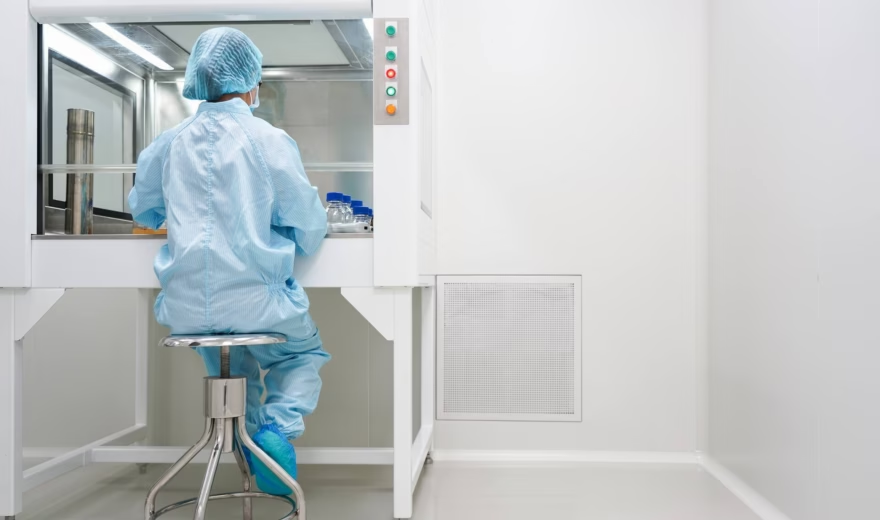
For pharmaceutical products and medical devices
From sterility testing to endotoxin testing and bioburden analysis, reliable microbiological data form the foundation for safe manufacturing processes and product release.
Normec supports organisations with microbiological testing services from a cGMP-certified laboratory. We perform analyses in accordance with international guidelines, including USP, EP, ISO and JP, for pharmaceutical products, raw materials, medical devices, packaging and cosmetics.
Sterility testing and method suitability
Sterility testing is performed to demonstrate that products are free from viable microorganisms. We support organisations with sterility testing for a wide range of products and complex applications.
Our services include:
- Method suitability testing for bacteriostasis and fungistasis (B/F)
- Neutralisation of antimicrobial activity to minimise inhibitory effects
- Sterility testing for large or complex products, including products larger than 20 litres per sample
- Testing in accordance with international pharmacopoeial guidelines
Sterility testing is performed for:
- Pharmaceutical products
- Pharmaceutical raw materials, including active pharmaceutical ingredients (APIs) and excipients
- Medical devices with a sterility claim
- Packaging for the food, medical and pharmaceutical industries
LAL endotoxin testing in accordance with USP and EP
The Bacterial Endotoxins Test (BET), also known as the LAL test, is used to detect and quantify bacterial endotoxins from Gram-negative bacteria. This test is essential for products that come into direct or indirect contact with body fluids.
Our endotoxin testing services include:
- Kinetic Turbidimetric Method
- Gel Clot Method
- Chromogenic Kinetic Method using Recombinant Cascade Reagents (rCR)
The sustainable rCR method eliminates the need for Limulus Amebocyte Lysate (LAL), meaning horseshoe crabs are no longer used to produce test reagents.
All endotoxin testing is performed in accordance with:
- USP <85> and USP <161>
- EP 2.6.14
- JP 4.01
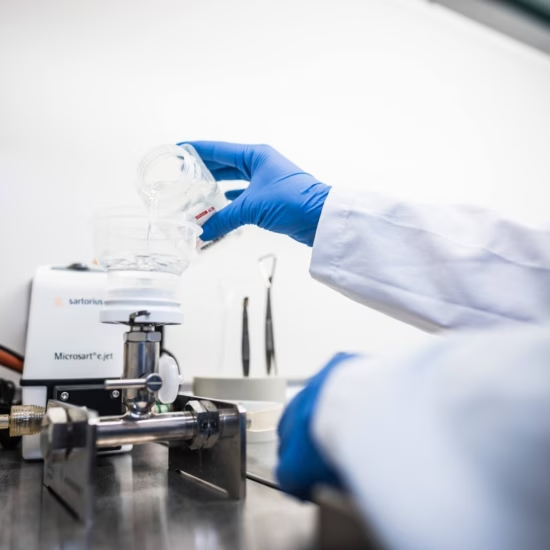
Microbiological potency testing for antibiotics
For antibiotics listed in the European and United States Pharmacopoeias, microbiological potency testing is required to demonstrate biological activity. While chemical analyses measure concentration, microbiological assays determine the actual effect on living microorganisms.
We perform microbiological potency testing using the diffusion or cylinder plate method, measuring the inhibition of growth of susceptible microorganisms at different antibiotic concentrations.
Benefits of microbiological potency testing include:
- Direct measurement of biological activity
- Reliable comparison with reference standards
- A realistic assessment of antibiotic effectiveness
Antimicrobial effectiveness testing
Products with antimicrobial claims, such as preservatives in pharmaceutical formulations, often require antimicrobial effectiveness testing.
During this test, the product is deliberately inoculated with specified microorganisms. Over a period of 28 days, the preservative system is evaluated to determine its ability to reduce microbial growth.
Our testing is performed in accordance with USP <51> and supports organisations with:
- Validation of preservative systems
- Substantiation of antimicrobial claims
- Demonstration of product safety and shelf life
Bioburden testing for microbiological quality control
Bioburden testing, also known as total viable count testing, measures the microbial load of products, raw materials and manufacturing environments. These analyses help organisations control microbiological risks and validate sterilisation processes.
Bioburden test results can be used for:
- Testing raw materials and finished products in accordance with USP <61>
- Detection of specified and objectionable microorganisms in accordance with USP <62> and USP <60>
- Monitoring and trend analysis of manufacturing processes in accordance with ISO 11737
- Determination of the appropriate irradiation dose for terminal sterilisation in accordance with ISO 11137
- Investigation of contamination incidents and establishment of alert and action limits
Normec provides:
- Product-specific and validated bioburden methods
- Controlled test documentation for consistent analyses
- Customised methods, including identification of detected microorganisms
- Integration of alert and action limits within test methods
Bioburden testing is performed for:
- Pharmaceutical products
- Raw materials
- Medical devices
- Packaging
- Cosmetics

Reliable microbiological analysis
Normec combines specialist microbiological expertise with extensive knowledge of international regulations and quality standards. Thanks to our cGMP certification and ISO/IEC 17025 accreditation, we support organisations with reliable microbiological quality control and safe product release.
Together, we deliver microbiological analyses that meet the highest quality and compliance standards.
Would you like to know more about our microbiological testing services?
You might also be interested in these services






Frequently Asked Questions about microbiological Testing Services
-
A sterility test demonstrates that a product is free from viable microorganisms.
-
An LAL test detects bacterial endotoxins from Gram-negative bacteria in pharmaceutical products and medical devices.
-
Bioburden is the level of microbial contamination present on or within a product or raw material.
-
We work in accordance with international standards, including USP, EP, ISO and JP.
-
This test determines how effectively a preservative system reduces microorganisms over a specified period.
-
We support pharmaceutical products, medical devices, raw materials, packaging and cosmetics.
-
These tests directly measure the effect of an antibiotic on living microorganisms, providing a more realistic assessment of its biological activity.