
What performance and safety tests are available?
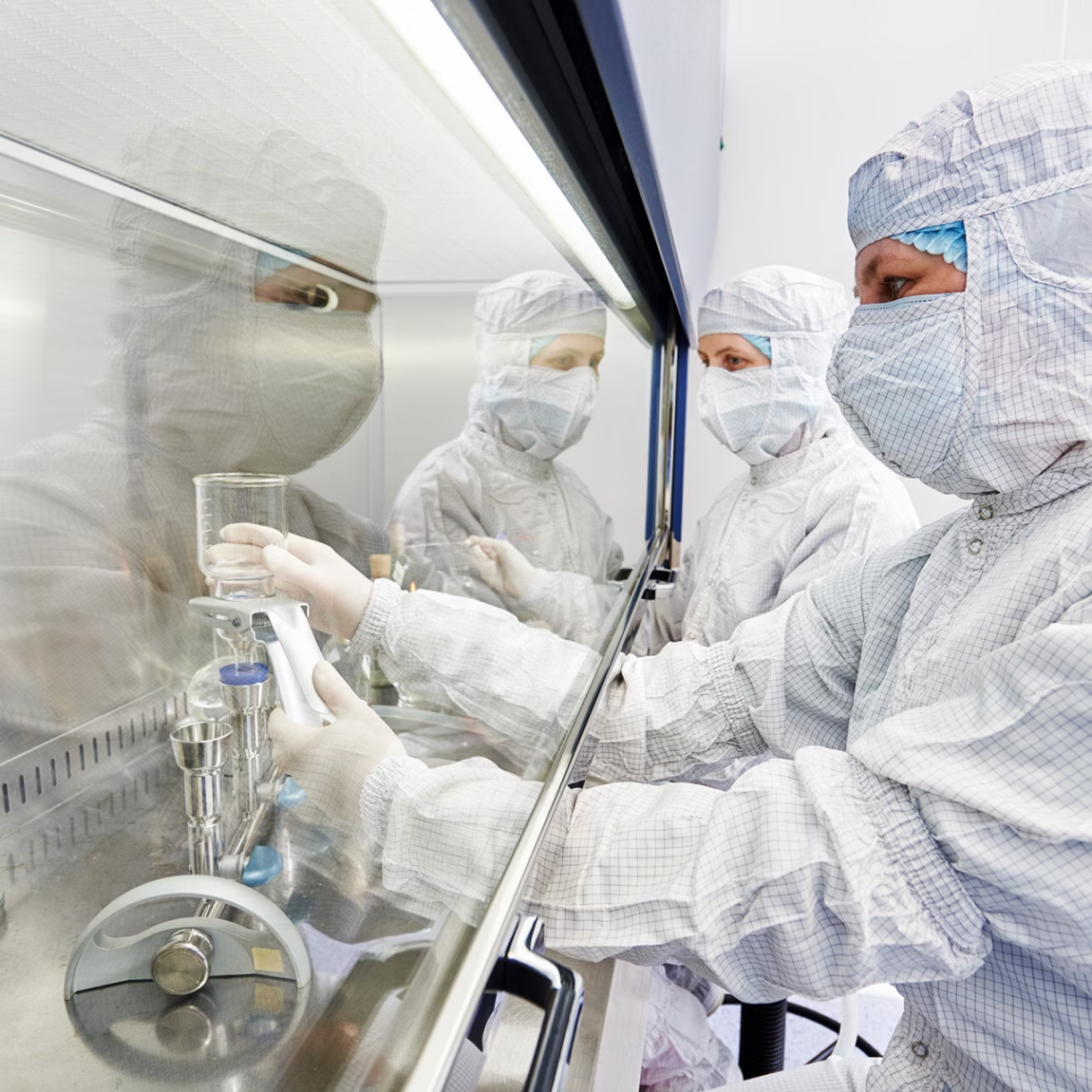
There are a number of different performance and safety tests that can be carried out to ensure that your microbiological safety cabinet is in good working order. These include everything from operational checks to make sure that all parts of your cabinet are working correctly to an in situ HEPA filter leak integrity test. Other tests include airborne particle counting, airflow velocity checks, and light and noise level checks.
How often does my safety cabinet need to be tested?
It is advised that Class I, II, and III safety cabinets are tested annually to ensure that they’re in good working order. You may also need a test if a filter is being replaced. If your laboratory is containment level 3 or 4 and you’re working with HG3 and HG4 agents, your safety cabinet should be tested every six months.
What happens if something needs replacing?
When you choose Crowthorne Group to test your safety cabinets, you can be confident that we’ll be able to source any replacement parts that your cabinet needs. This means that we can have your cabinet working as its meant to as soon as possible, limiting the length of time that it’s out of use.
If you need to get your safety cabinet tested, contact us today to book the type of tests you require. You can also read more on our website about our services for Lab Equipment Testing here.
Your partner in quality, safety, and compliance
The life sciences sector requires specialized knowledge and reliable guidance. Thanks to our extensive expertise, we help organizations comply with laws and regulations, ensure quality, and continue to innovate with confidence.
Related services
Related Articles
17 Mar 2023
Biosafe: The Only CL3/HL3 Emergency Recovery Plan You Need
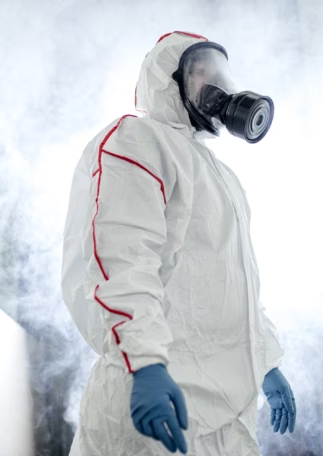
When it comes to decontamination and fumigation plans for your lab, the one name you need to know is Biosafe. Biosafe from Normec Crowthorne Group is an Emergency Recovery scheme for customers with a containment level 3/Hazard Group 3 facility, offering a range of servicing and decontamination response solutions designed for CL3/HG3 laboratories.


09 Mar 2022
What is a KI test?
If you have a microbiological safety cabinet, you may have heard of a KI test. Having your safety cabinet tested when necessary is integral in ensuring that its in good working order and safe to use, but is a KI test what you need? Here, we look at what a KI test is and how it can determine if your safety cabinet is functioning correctly.


23 Sep 2022
Positioning microbiological safety cabinets for best performance
Microbiological Safety Cabinets (MSCs) form part of many labs, often with multiple cabinets running different tests and/or experiments. With floorspace being at a premium in all labs, it is crucial that MSCs are positioned correctly to ensure optimum performance and safety. The design of the lab space should avoid overcrowding and minimise footfall around MSCs. Also critical to consider, are the position of doors, columns and any windows. The layout of furniture and free-standing equipment can result in a lab that is uncluttered and easy to clean with cabinets operating at their optimised levels.
14 Jan 2022
Reducing surgical site infections through regular inspections
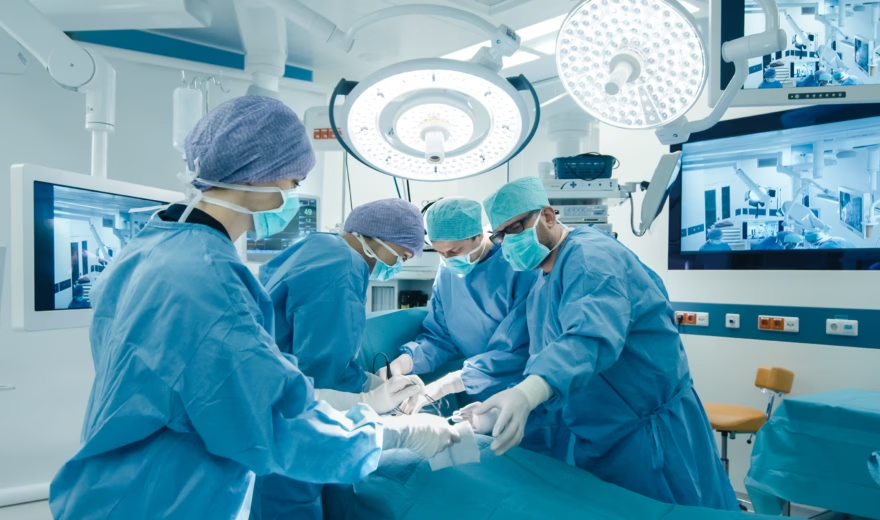
Research has indicated that the level of post-operative infection and the rate of surgical wound infections is strongly influenced by operating theatre suitability and quality, thus, the level of airborne bacteria within an Operating Theatre is directly proportional to infection rates. A safe and stable operating theatre is an environment in which all sources of pollution and any micro-environmental contaminates are kept under strict control. This can be achieved only through careful planning, on-going maintenance and periodic checks as well as proper training for staff.