

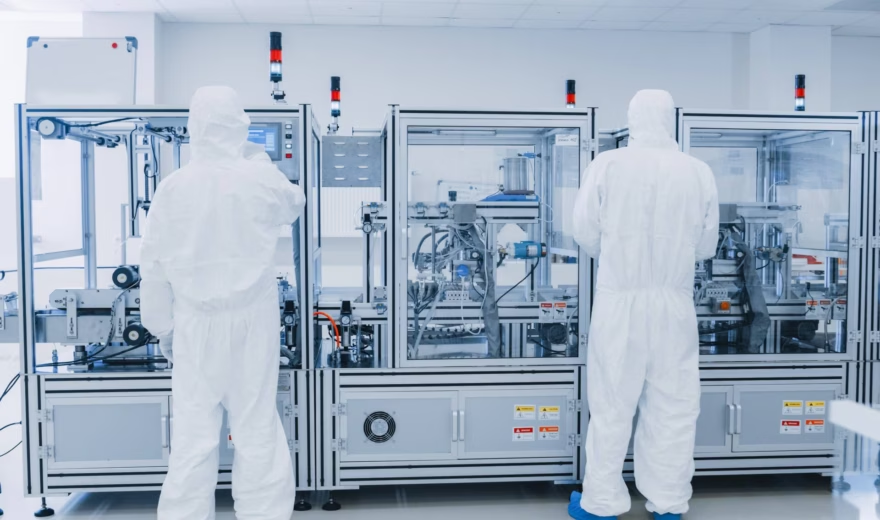
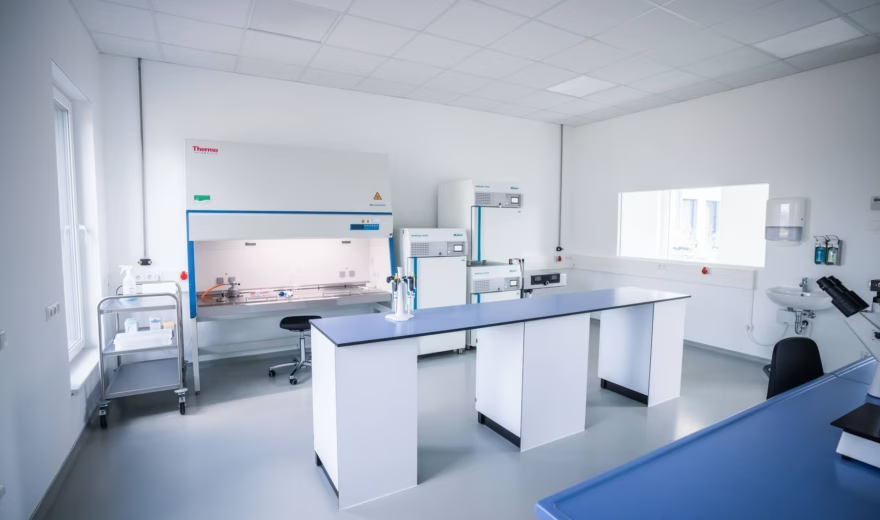
In addition to equipment performance, it is essential to consider that personnel are provided with ample space to perform lab work safely and that safety cabinets need adequate space around them to allow for correct airflow. There are some simple guidelines to follow for layout design and positioning safety cabinets which we will look at here:
1: Maintain an undisturbed space of 1000mm around the cabinet. This has two benefits i.e., firstly, the worker has ample room to perform tasks safely, and secondly, this room provides sufficient undisturbed air for the cabinet to work properly.
2: Allow a minimum distance of 300mm from the cabinet to adjacent walls. While it would be tempting to place the cabinet against the wall to leave floorspace free, this will inhibit and compromise the airflow to the cabinet.
3: Place your cabinets at least 2000mm from opposing walls, Again, this is a situation where allowing free space has the dual benefits of ample room to work and clear, uncompromised airflow for the cabinet.
4: Place safety cabinets at least 1500mm away from opposing bench tops or areas with occasional traffic. Placement of benches in relation to cabinets needs to be carefully considered; the amount of traffic to the bench area could impact the airflow to the cabinet.
5: Maintain a distance of at least 1000mm between a cabinet and bench top along perpendicular wall.
6: A distance of 300mm from columns will avoid disturbance to cabinet airflow, columns can also aid in defining traffic routes.
7: Where you have cabinets opposite each other, keep at least a 3000mm distance between them. Cabinets are rarely deployed in isolation, so consideration of how they interact is critical for efficient performance.
8: The same consideration is true when they are positioned side by side, where a distance of 1000mm between cabinets along same wall should be maintained.
9: More problematic is where two cabinets are placed in the corner of a workspace. Here, a distance of 1200mm between cabinets should be maintained as shown in the diagram.
The guidance outlined by British Standards Institution and National Institutes of Health, also advises on placements that should be avoided, such as:
- Where there would be an entryway adjacent to or behind the cabinet
- Positioning bench tops alongside the cabinet without a gap
- Overcrowding the work area so that there is too much traffic moving around the cabinets which will negatively impact the airflow to a cabinet.
Keeping lab staff and product samples safe is always the number one priority in any laboratory environment. Proper lab design and positioning of equipment is critical to delivering on this but if you follow the guidelines above for safety cabinet placement, it will minimize the risk of accidents, support productivity and maintain the highest levels of performance for both staff and equipment.
If you would like to discover whether your safety cabinets sited effectively and working efficiently, contact our clean air environment specialists to arrange a site survey, equipment inspection, servicing or maintenance.
Your partner in quality, safety, and compliance
The life sciences sector requires specialized knowledge and reliable guidance. Thanks to our extensive expertise, we help organizations comply with laws and regulations, ensure quality, and continue to innovate with confidence.
Related services

Related Articles
17 Mar 2023
Biosafe: The Only CL3/HL3 Emergency Recovery Plan You Need
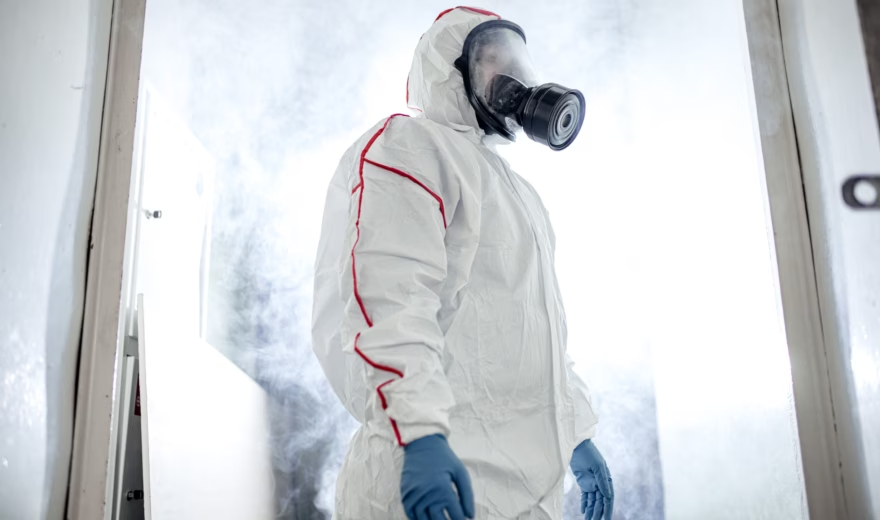
When it comes to decontamination and fumigation plans for your lab, the one name you need to know is Biosafe. Biosafe from Normec Crowthorne Group is an Emergency Recovery scheme for customers with a containment level 3/Hazard Group 3 facility, offering a range of servicing and decontamination response solutions designed for CL3/HG3 laboratories.


09 Mar 2022
What is a KI test?
If you have a microbiological safety cabinet, you may have heard of a KI test. Having your safety cabinet tested when necessary is integral in ensuring that its in good working order and safe to use, but is a KI test what you need? Here, we look at what a KI test is and how it can determine if your safety cabinet is functioning correctly.

03 Feb 2022
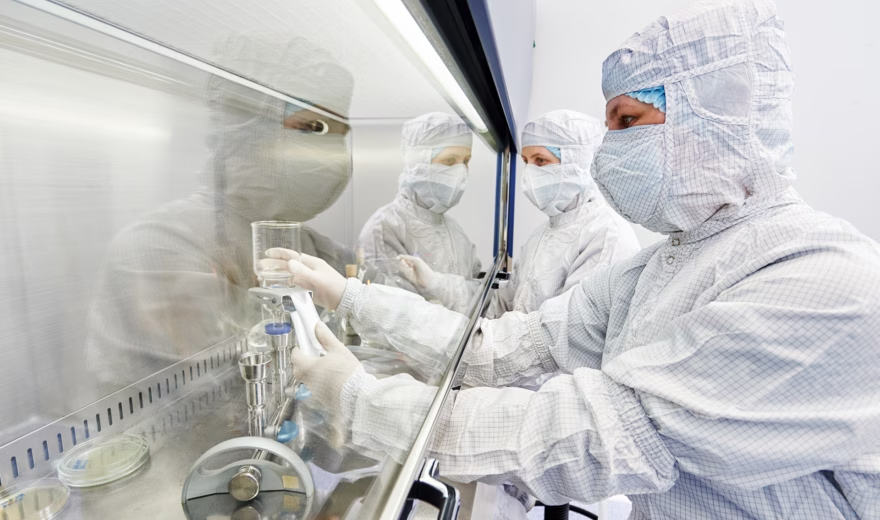
How often should your safety cabinet be tested?
If you have a microbiological safety cabinet, you may have heard of a KI test. Having your safety cabinet tested when necessary is integral in ensuring that its in good working order and safe to use, but is a KI test what you need? Here, we look at what a KI test is and how it can determine if your safety cabinet is functioning correctly.
14 Jan 2022
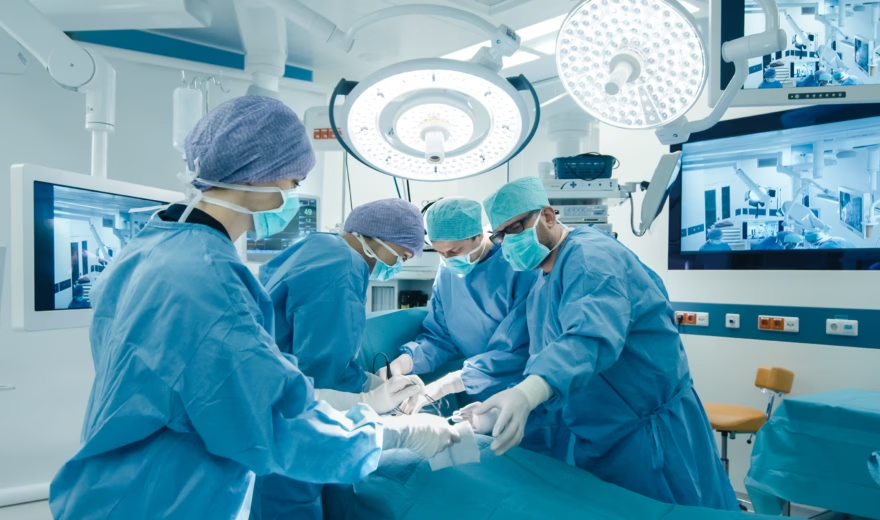
Reducing surgical site infections through regular inspections
Research has indicated that the level of post-operative infection and the rate of surgical wound infections is strongly influenced by operating theatre suitability and quality, thus, the level of airborne bacteria within an Operating Theatre is directly proportional to infection rates. A safe and stable operating theatre is an environment in which all sources of pollution and any micro-environmental contaminates are kept under strict control. This can be achieved only through careful planning, on-going maintenance and periodic checks as well as proper training for staff.