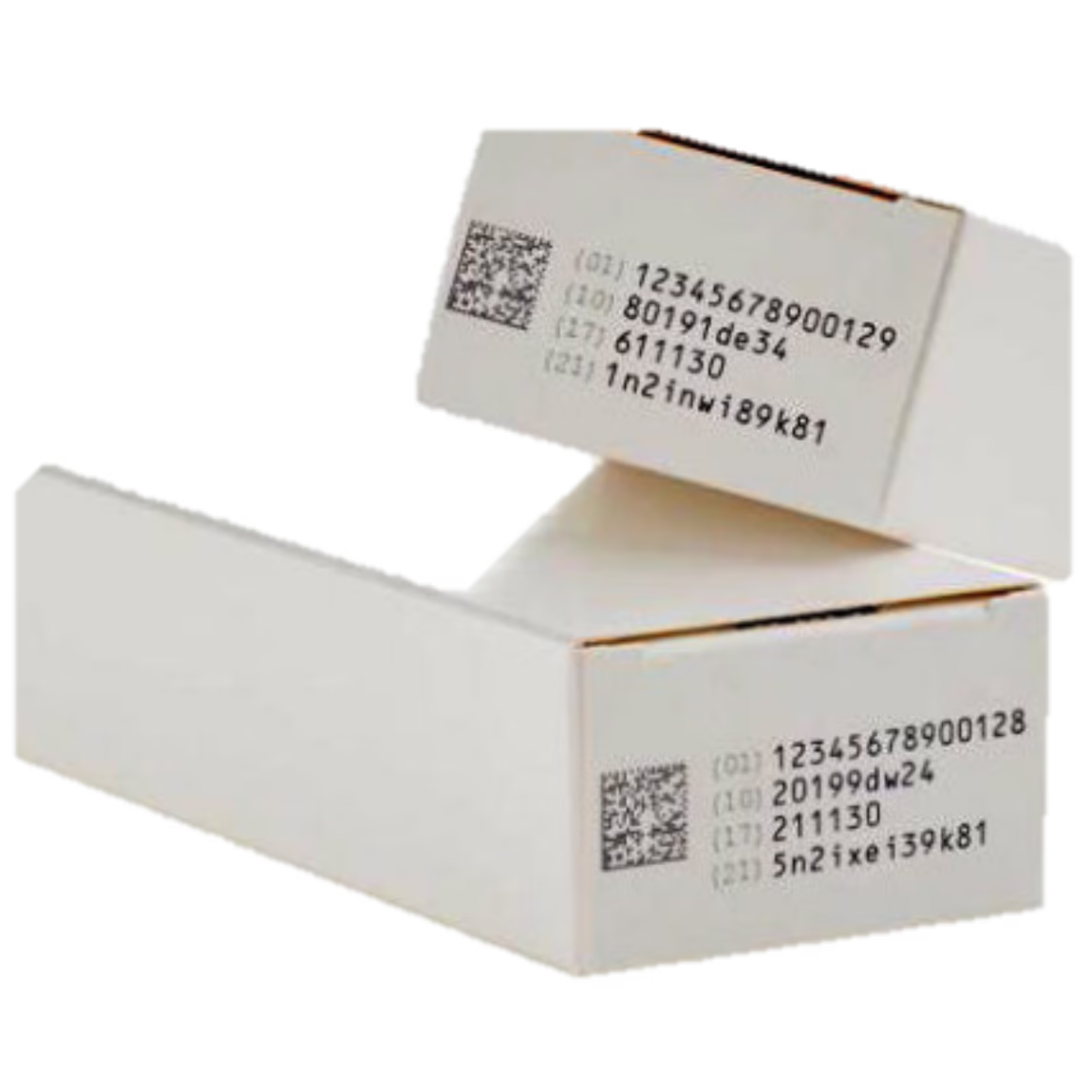



Very recently, counterfeit products were detected in a warehouse in the United Kingdom that could be traced back to a pseudo-pharmaceutical company in Turkey. The counterfeiting was detected because all the boxes had the same serial number. The packaging looked very similar, and the other lot-specific details, such as the lot number and expiration date, were also correct. There are many important points to note here, such as the importance of good distribution practices and conducting supplier qualification, but today we’re focusing on the concept of “serialization.”
Serialization: What Is It?
Since February 9, 2019, it has been mandatory in the EU to provide most prescription drugs and some OTC products (usually reimbursable) must be provided with a unique 2D barcode and a physical barrier to the medication by sealing the box with adhesive or a tamper-evident seal.
Simply put, serialization involves assigning a unique number to each individual medication package. This number is printed alongside the product code, batch number, and expiration date, and is also encoded in a data matrix code. At the end of the supply chain, this code is then scanned at the pharmacy to verify its authenticity.
Of course, every individual package with its unique number travels quite a distance before it can be scanned and purchased at the pharmacy. First, all these numbers—linked to a specific product (which in turn has a unique product code)—must be retrieved by software. This software is directly or indirectly linked to the devices that ultimately print all the lot-specific data onto the cardboard boxes.
In principle, a surplus of numbers will always be provided because there are inevitably losses (such as rejects due to illegibility, legally required samples, and damage). That is why “reconciliation” is such an important term here. After all, you want the number of “active” serial numbers at the end of the process to match the number of finished boxes ready on the pallet to be shipped for commercial sale. If this is not the case, there is a risk that medications will end up in pharmacies that are marked as “inactive” status and therefore should not—or cannot—be sold, or that “active” packages end up in the company’s trash, where they could be misused—for example, by reselling them through illegal channels.
How does serialization prevent potential disasters?
Once the reconciliation of a specific batch has been successfully completed, the order is closed in the software, and the used serial numbers are sent to a central collection point, after which they are transmitted to a cloud-based system where both wholesalers and pharmacists can verify that the product is indeed an authentic medication with a known origin. When sold at the pharmacy, the serial number printed on the box is marked as “used” to prevent it from being sold a second time under the same number.
Serialization has been a major undertaking for most pharmaceutical companies, requiring, among other things, the purchase of new software and equipment, as well as the development, training, and implementation of new procedures.
However, given recent reports such as this one regarding Ozempic®, it should be clear that this effort was not in vain and that the additional measures against drug counterfeiting are effective in detecting fraudulent practices at an early stage.
Your partner in quality, safety, and compliance
The life sciences sector requires specialized knowledge and reliable guidance. Thanks to our extensive expertise, we help organizations comply with laws and regulations, ensure quality, and continue to innovate with confidence.
Related Services


Related Articles


10 Jul 2026
Project Management
In the complex and highly regulated world of the pharmaceutical industry, project management plays a pivotal role to bring life-saving medications and treatments to the market. From drug discovery to clinical trials and regulatory approval, effective project management is essential for managing timelines, resources, and compliance. Let’s dive in some practical tips and tricks specifically for navigating the complexities of project management in the pharmaceutical sector.

10 Jul 2026
Potential Pitfalls in an MES Project
Just as every project has its pitfalls, the same is true for a Manufacturing Execution System (MES) implementation project. Implementing electronic batch records is no easy task. That’s why, in the blog below, we’ll share a few pitfalls so you can prepare for a successful implementation within your company.
10 Jul 2026
Streamlining Post-Marketing Surveillance with IMDRF Coding
Since the implementation of the Medical Device Regulation (MDR) in Europe, companies have had to maintain and execute a post-marketing surveillance (PMS) procedure. This systematic process involves collecting and analysing data on the performance and safety of medical devices after they have been released to the market. The primary goal is to help manufacturers identify and address potential issues that may arise during actual use, monitor the market for known risks, and identify new risks.
10 Jul 2026
ISO 9001:2015 in Life Sciences Industry
In the life sciences industry, maintaining high quality standards is critical not only to the success and sustainability of organizations but also to patient safety and compliance. ISO 9001:2015, part of the ISO 9000 family, provides a robust framework for quality management systems (QMS) that can be used in organizations in the life sciences, including pharmaceutical, natural technology, including medical devices. This article examines the key features of ISO 9001:2015, its benefits, implementation methods, potential pitfalls, and impact in the life sciences.
10 Jul 2026
The Role of a CQV Expert in the Cold Chain Division of a Pharmaceutical Company
In the pharmaceutical industry, product quality is of vital importance. This is particularly true for medicinal products that are sensitive to temperature fluctuations, such as vaccines, biologics, and certain medications that must be stored and transported in a controlled environment. Within this process, the CQV (Commissioning, Qualification, and Validation) expert plays a crucial role, especially within the cold chain division, which is responsible for monitoring product quality during the transport and storage of these temperature-sensitive products. This blog outlines the various aspects a CQV expert must consider in this context.
10 Jul 2026
Radiopharmaceutical & Selective Internal Radiation Treatments: Overcoming Challenges and Embracing Future Opportunities
Radiopharmaceutical and selective internal radiation treatments have emerged as a transformative force in the pharmaceutical industry, offering precision, personalized therapies for patients with conditions such as cancer and other serious diseases.
10 Jul 2026
Implementation of the European Clinical Trial Regulation (EU-CTR)
By the end of this month (31st of January 2025), the final deadline is reached in the transition period for the implementation of the European Clinical Trial Regulation (EU-CTR). What is it and what is the difference with the previous European Clinical Trial Directive (EU-CTD)?