

THE LEGAL DEFINITION OF “ASSEMBLY”
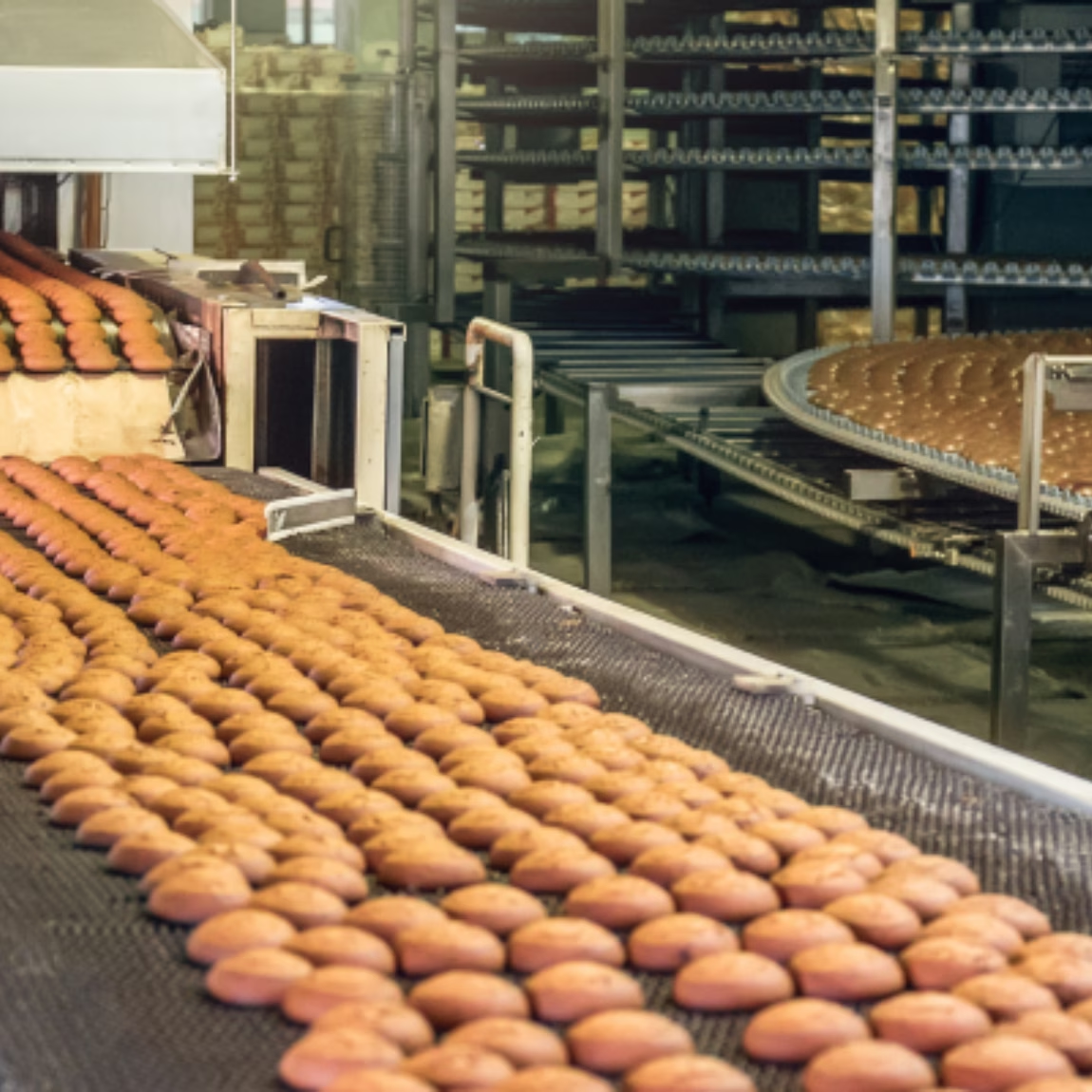
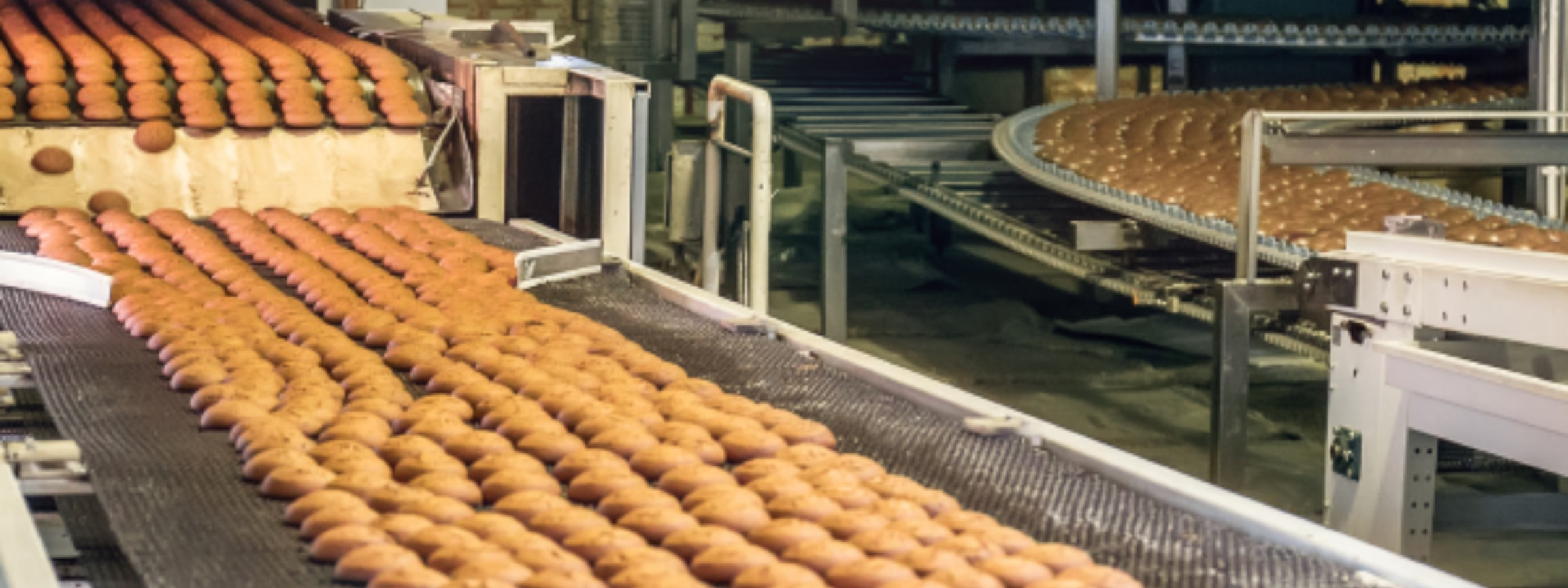
For a production line to be considered an ‘assembly,’ three elements must coexist: a production connection, operational linking, and a common control system (e.g., a coordinating PLC). When these conditions are met, the entire line is treated as a single machine—whether for existing lines or those being made available to workers. Individual certificates for component units are no longer sufficient; an integrated overview is required, which only an expert can guarantee.
INTERFACE RISK ANALYSIS
The critical juncture lies at the interfaces. An in-depth analysis must evaluate what occurs at the connection points: does an emergency stop on Machine A also bring Machine B to a safe state? The certification of the assembly serves to neutralize risks arising from the integration, verifying the compatibility of control systems and the coordinated management of safety functions.
RESPONSABILITIES AND DUTIES OF THE MANUFACTURER
Anyone who assembles the line legally assumes the role of Manufacturer of the Assembly. This entails the obligation to compile a new Technical File, issue a comprehensive EU Declaration of Conformity, and affix a new CE plate to the entire plant.
In order to draw up the Declaration of Conformity, it is necessary to comply with the requirements set out in Annex II of the Machinery Directive (2006/42/EC).
In particular, the document must include:
- The Manufacturer;
- The person authorised to compile the technical file within the EU;
- The signatory of the Declaration of Conformity.
The signatory of the Declaration of Conformity assumes the burden and responsibility of ensuring the machine’s compliance with safety requirements for as long as the machinery remains on the EU market.
THE STRATEGIC SUPPORT OF ECM
It is therefore essential to rely on a Notified Body such as ECM, which guides the company through the bureaucratic process by drafting rigorous reports. This ensures that the person signing the Declaration of Conformity can do so with the full support of a team of subject-matter experts.
Your Partner in Quality, Safety, and Compliance
The life sciences sector requires specialized knowledge and reliable support. With our broad expertise, we help organizations comply with laws and regulations, ensure quality, and continue to innovate with confidence.
Related services
Related Articles


12 Jun 2026
Legacy Medical Devices and Regulation 2023/607: Managing Compliance Risk
The current European regulatory landscape is undergoing a delicate transition. The introduction of Regulation (EU) 2023/607, which amended the deadlines of the MDR (Medical Device Regulation), has given manufacturers more time to comply with the new rules. However, the practical application of these extensions is highlighting several shortcomings. Many manufacturers of so-called Legacy devices (devices placed on the market under MDD certificates that are still valid or have expired under specific conditions) do not fully meet the requirements necessary to benefit from the transitional regime.
11 Jun 2026
ECM in Palermo for the 61st CNB-MA Meeting: towards an increasingly harmonized European regulatory framework
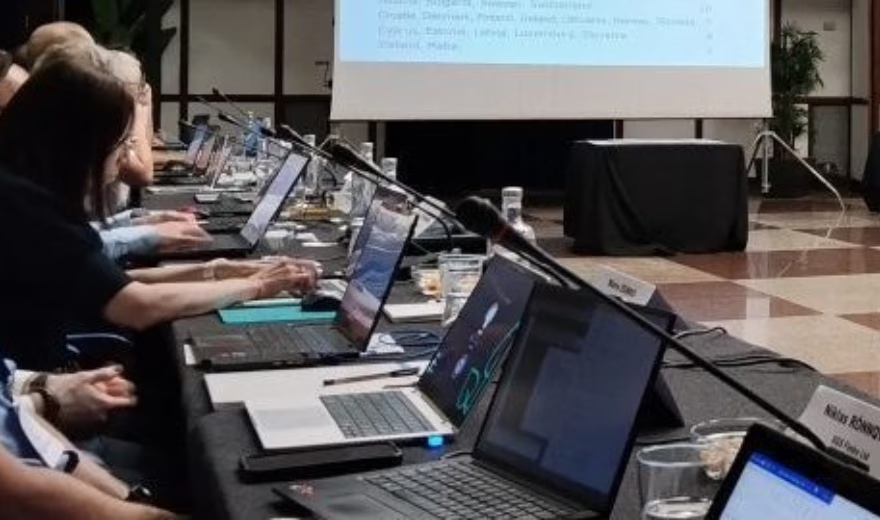
ECM confirms its institutional commitment within the European technical committees of Notified Bodies, contributing to the evolution of the regulatory framework for machinery. An important European institutional appointment has concluded, which ECM took part in, confirming its commitment to active participation in the coordination committees among Notified Bodies. Our Press Office & Social Media Manager Luca Serra represented ECM in Palermo on the occasion of the 61st CNB-MA HC Meeting (June 9-10, 2026) dedicated to the Machinery Regulation 2023/1230.

08 Jun 2026
From strategic realization to the factory of the future: the interview with Luca Bedonni, CEO of ECM, for FineEngineering Magazine
We are proud to announce that FineEngineering Magazine, a leading publication for the industrial and technological sector, has dedicated extensive coverage to Ente Certificazione Macchine (ECM), interviewing our CEO, Luca Bedonni.


05 Jun 2026
ECM joins the Barcelona Health Hub: a new era for digital health startups
ECM takes a decisive step toward the future of digital medicine by announcing its official entry into the prestigious Barcelona Health Hub (BHH) network. This strategic partnership combines ECM’s consolidated experience in medical device certification, testing, and compliance with one of the most dynamic global ecosystems dedicated to health innovation.
04 Jun 2026
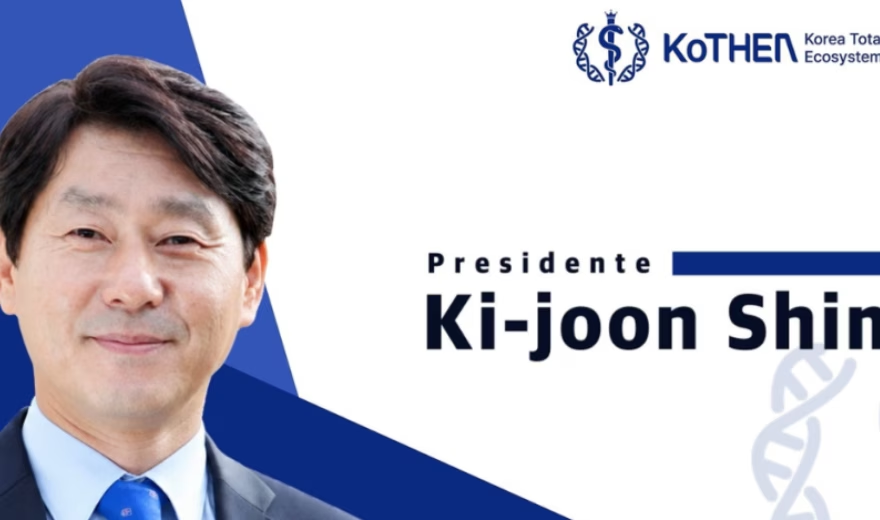
The voices of the Memorandum of Understanding (MoU) with the Korea Total Healthcare Ecosystem Association (KoTHEA): Ki-joon Shim – President of KoTHEA
A new era of international cooperation in the digital health sector begins. During the official ceremony held at our HQ in Valsamoggia, the Korea Interministerial Healthcare Association (KOTHEA) and the European Notified Body ECM signed a crucial Memorandum of Understanding (MoU). The agreement aims to facilitate the access of Korean medical technologies into the European market.
04 Jun 2026
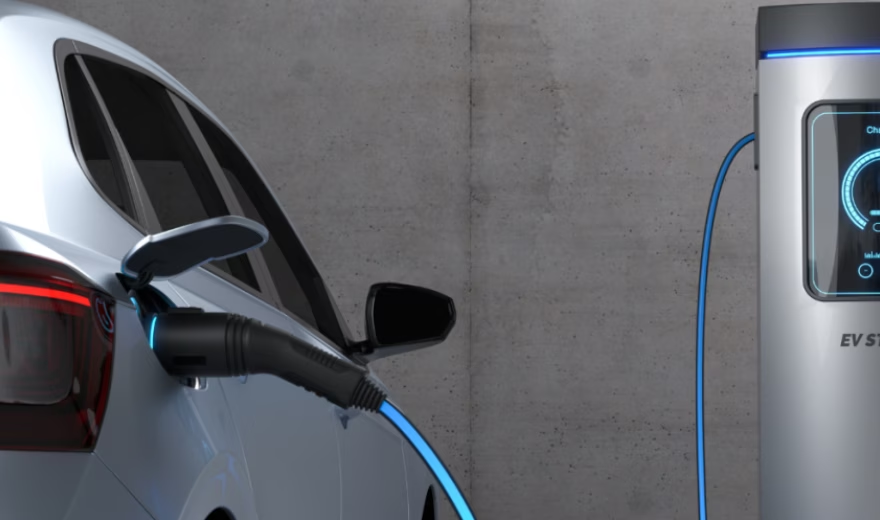
Battery Passport: Transparency and Sustainable Future
The transition toward electric mobility and renewable energy storage requires increasingly stringent sustainability standards. In this context, the Battery Passport was born: a digital registry that will become mandatory in the European Union starting in February 2027 for electric vehicle (EV) batteries, light means of transport (LMT) batteries, and industrial batteries with a capacity over 2 kWh.


03 Jun 2026
Towards the new Machinery Regulation: ECM participates in the European meeting of Notified Bodies
ECM’s commitment to actively contributing to the regulatory dialogue on machinery continues through its participation in the European coordination meeting of Notified Bodies. In June, Ente Certificazione Macchine will take part in a major European institutional meeting organized at an international level dedicated to the machinery sector, which will bring together Notified Bodies for a direct dialogue with the institutions.