

THE CHALLANGE OF TECHNICAL SAFETY
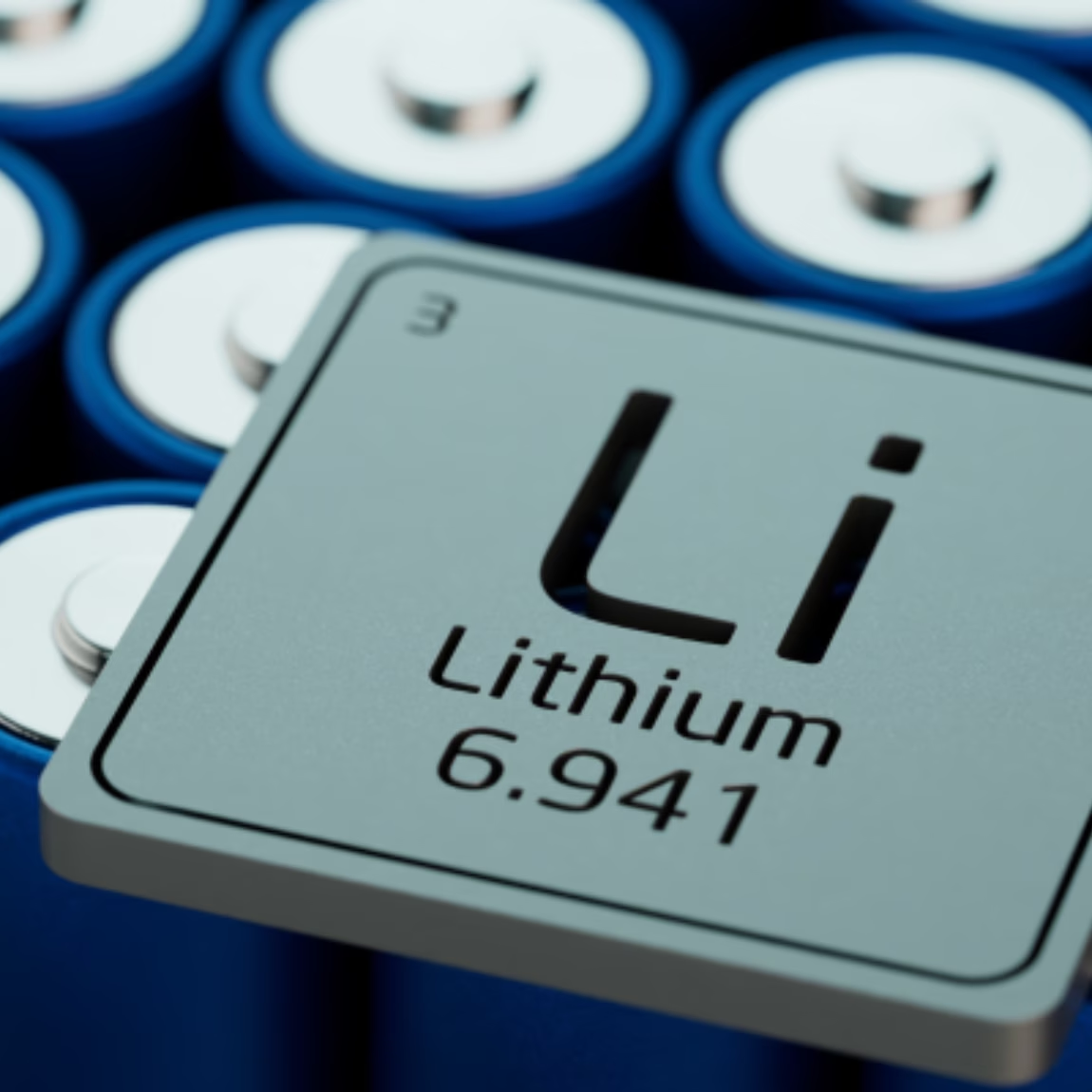
Due to their chemical nature, lithium batteries must operate within well-defined parameters. A manufacturing defect, physical damage, or improper handling (such as overcharging or overheating) can trigger a chain reaction leading to an uncontrolled release of energy, smoke, and fire. To mitigate these risks, safety is not an option but a fundamental design requirement, involving sophisticated Battery Management Systems (BMS), flame-retardant materials, and robust designs that isolate individual cells.
SCIENCE AND FUNCTIONALLY: UNDERSTANDING THE REAL RISKS
The core of a lithium battery consists of electrochemical cells where the cathode, anode, and electrolyte interact to store energy. High energy density, while being the greatest strength of this technology, also represents its primary risk factor: the higher the stored energy, the greater the potential danger in the event of defective or non-certified components.
SAFETY BEGINS WITH COMPLIANCE
True safety stems from product certification. It is not a goal that can be improvised, but rather the result of a rigorous verification process.
At ECM, we support companies by performing laboratory testing, technical assessments, and compliance verifications according to the most stringent European standards. Our goal is to ensure that every lithium-powered device placed on the market meets the highest levels of protection for the end user.
Your Partner in Quality, Safety, and Compliance
The life sciences sector requires specialized knowledge and reliable support. With our broad expertise, we help organizations comply with laws and regulations, ensure quality, and continue to innovate with confidence.
Related services

Related Articles
30 Jun 2026
UPDATED THE LIST OF FAKE/FORGED DOCUMENTS
ECM – Ente Certificazione Macchine is informed of the existence of fakes/counterfeit certificates/laboratory test reports/other ECM documents relating to certain European Directives or International Standards. No one has permission to issue certificates or other documents in our name and on our behalf, so ECM will take action against any companies that issue certificates/documents without authorization.
25 Jun 2026
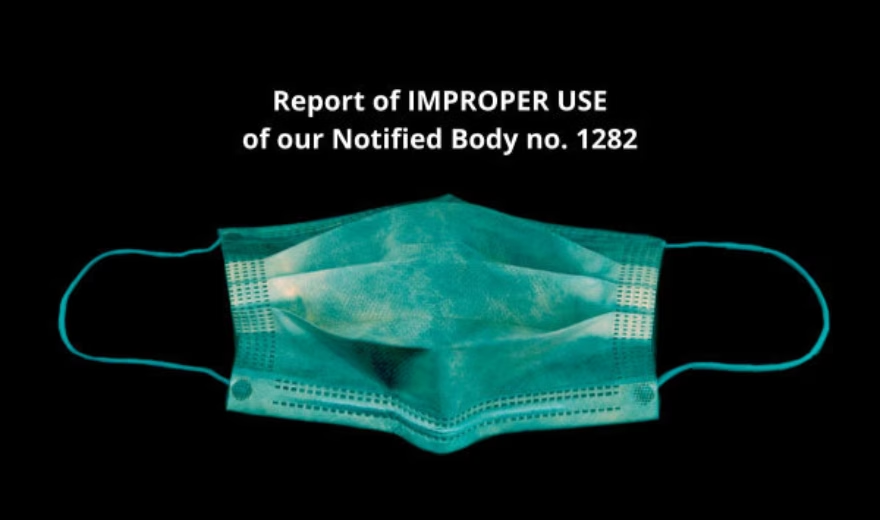
UPDATED LIST OF IMPROPER USES OF THE NAME ENTE CERTIFICAZIONE MACCHINE SRL AND/OR THE ECM NUMBER OF NOTIFIED BODY 1282
To consult the updated list of reports of misuse of the name Ente Certificazione Macchine srl and/or the notified body number 1282, click here.
22 Jun 2026
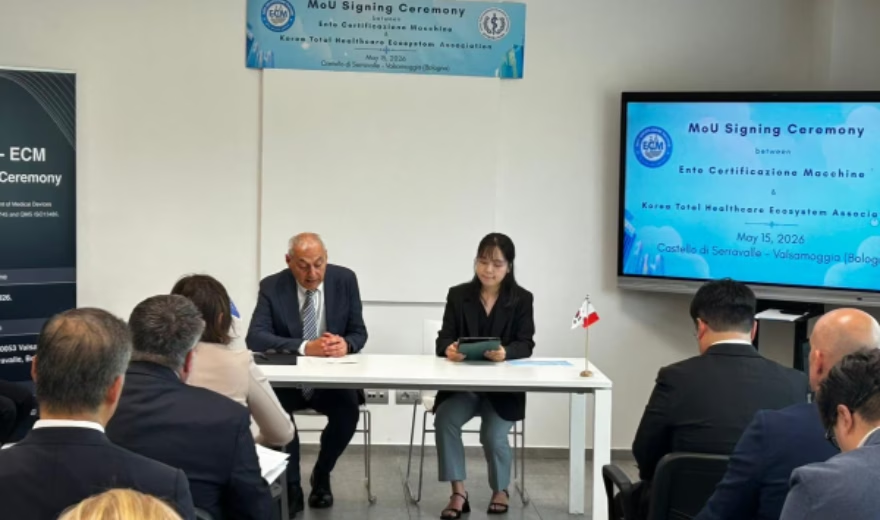
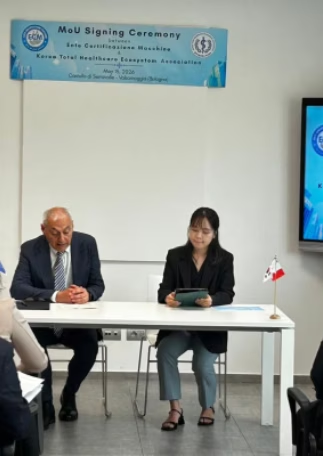
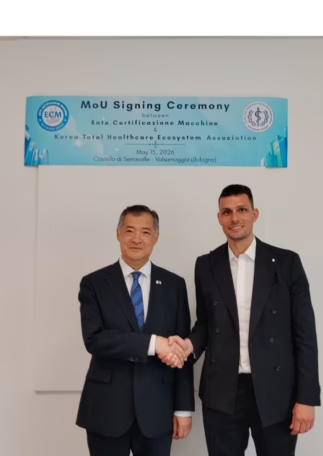
The voices of the Memorandum of Understanding (MoU) with the Korea Total Healthcare Ecosystem Association (KoTHEA): Gianluca Baldoni – Internationalization of the regional production system (Emilia-Romagna Region)
As part of the signing of the Memorandum of Understanding (MoU) on May 15, 2026, between ECM – Ente Certificazione Macchine and KoTHEA (Korea Total Healthcare Ecosystem Association), we continue to gather testimonials from the institutions and key partners supporting this important strategic bridge between Italy and South Korea. Today we feature the contribution of Dr. Gianluca Baldoni (Internationalization of the Regional Production System – Attractiveness, Internationalization, and Research Sector; Export and Trade Fair System Area of the Emilia-Romagna Region), who participated in the institutional event held in the presence of local authorities and the Consul General of the Republic of Korea in Milan.


19 Jun 2026
EUDAMED: The Regulatory Turning Point for Medical Devices
May 28, 2026, marked a watershed moment for medical devices in Europe. As of this date, full EUDAMED registration became mandatory for all devices undergoing certification under the MDR and IVDR regulations. The database becomes the operational hub of the single market. This is not a bureaucratic formality, but a binding requirement to maintain market access.
19 Jun 2026
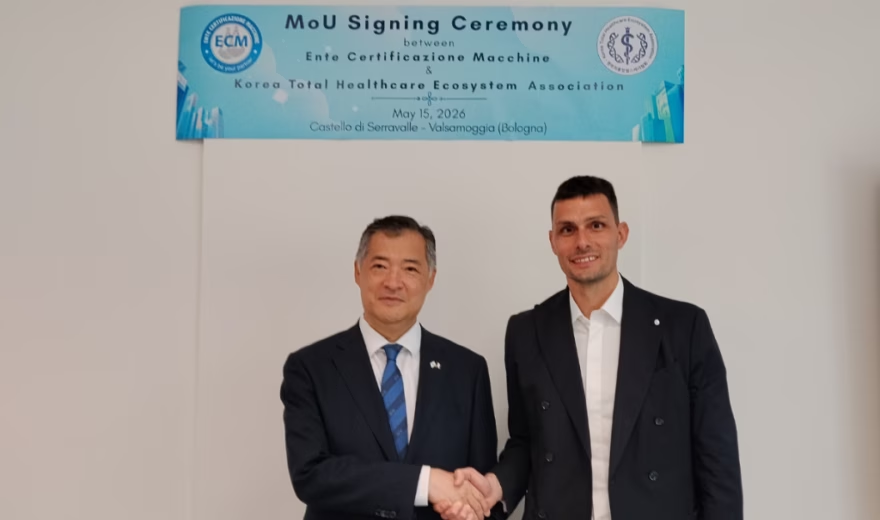
The voices of the Memorandum of Understanding (MoU) with the Korea Total Healthcare Ecosystem Association (KoTHEA): Choi Taeho – Consul General of the Republic of Korea
International ties and strategic development prospects are strengthening around the crucial Memorandum of Understanding (MoU) signed at the Valsamoggia headquarters between the Korea Total Healthcare Ecosystem Association (KoTHEA) and the European notified body Ente Certificazione Macchine (ECM). The official ceremony was graced by the prestigious participation and institutional support of Choi Taeho, Consul General of the Republic of Korea, who emphasized the high political and economic value of this agreement. The agreement represents not only a technical milestone but also a genuine turning point in industrial and regulatory relations along the Seoul-Rome axis, fitting into a rapidly evolving global macroeconomic framework.
18 Jun 2026
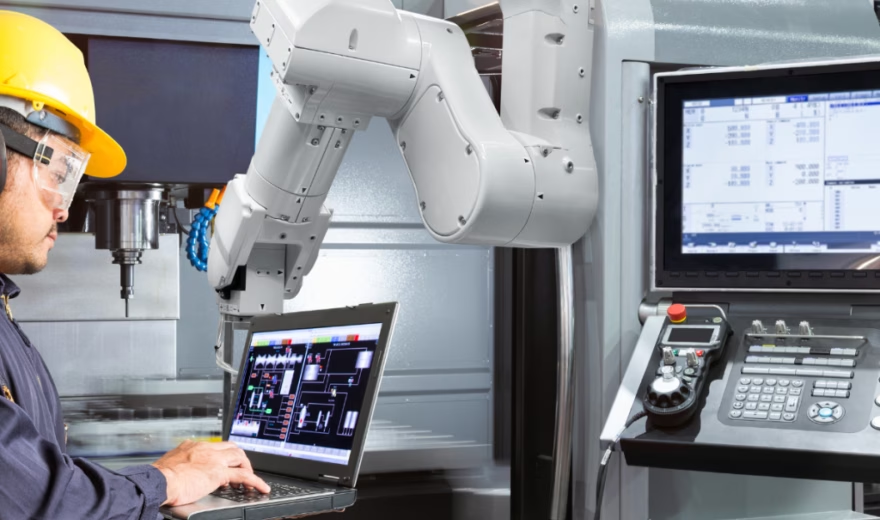
New Machinery Regulation, the entry into force approaches: what’s new for Manufacturers
The European regulatory landscape is undergoing a crucial transformation with the introduction of Regulation (EU) 2023/1230, which will permanently phase out the historic Machinery Directive 2006/42/EC. One of the most impactful changes concerns the obligation to integrate cybersecurity as an essential element of product safety.
18 Jun 2026
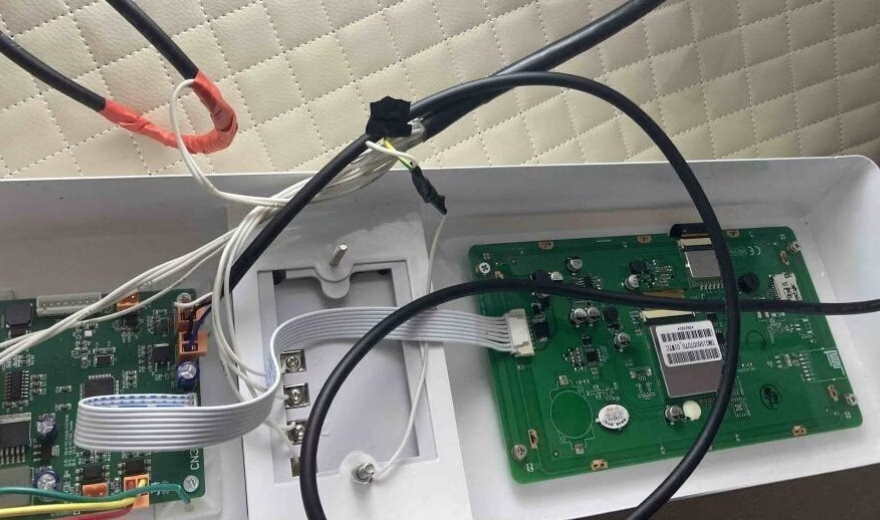
IMPORTANT NOTICE: Immediate suspension of the use of the product “Hyperbaric chamber”
We would like to inform all our valued customers and business partners of an urgent measure that requires the utmost attention and timely cooperation from all users.