

COMPLIANCE MANAGEMENT AND CUSTOMS VIGILANCE: REGULATORY AND OPERATIONAL FRAMEWORK
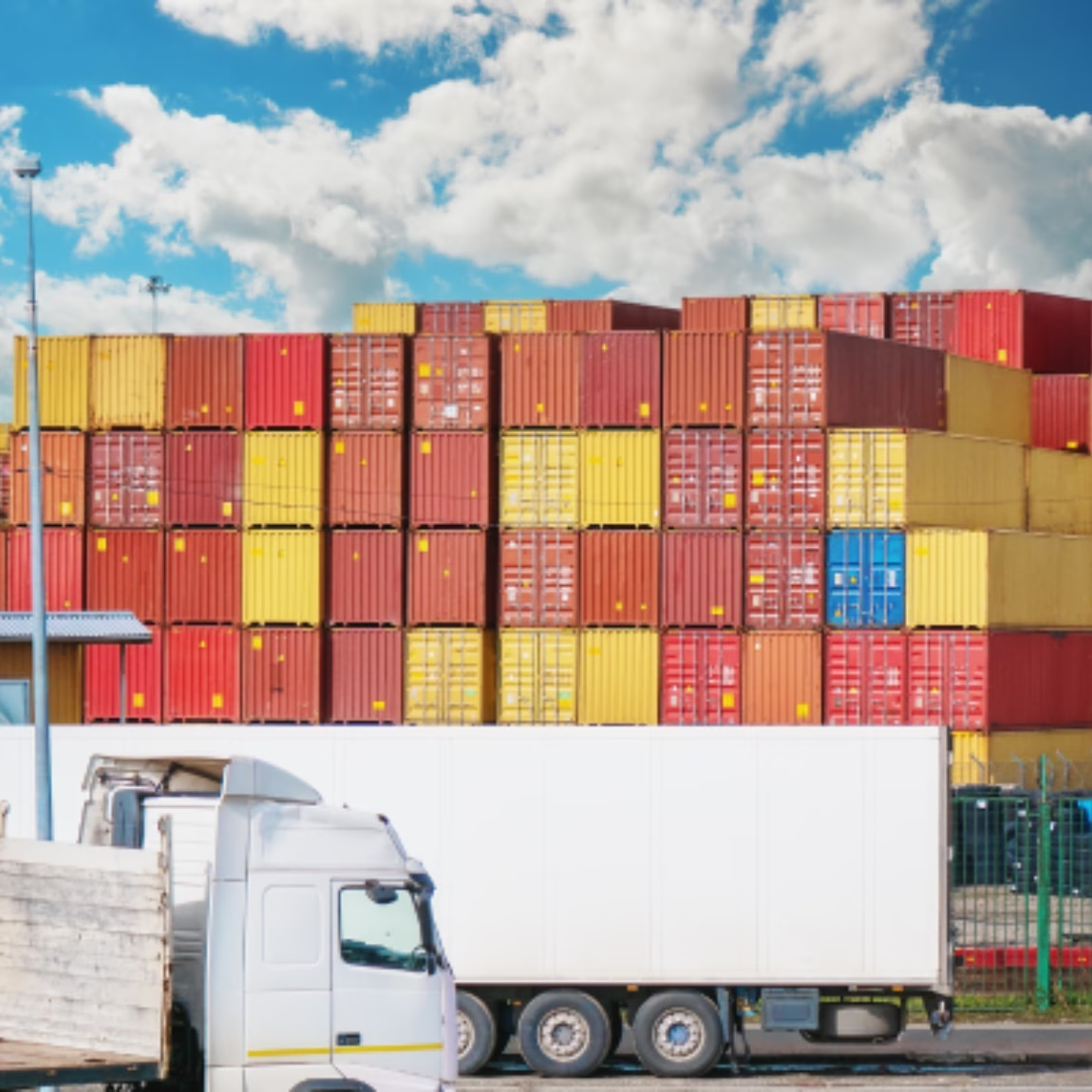
The landscape of EU imports is currently governed by Regulation (EU) 2019/1020, which has intensified customs controls to ensure that only safe and compliant products circulate within the internal market. Through a risk-based approach, surveillance authorities monitor economic operators (manufacturers, importers, distributors, and users), who are required to ensure goods are compliant, including through the availability of technical documentation and an EU Declaration of Conformity that strictly adhere to European regulations.
In the event of documentary irregularities or risks to user health, authorities must suspend the release of goods for free circulation. To facilitate these processes, the Customs Single Window (SUDOCO) has been implemented, aimed at streamlining customs clearance and improving coordination between administrations. In critical situations, solutions such as ECM’s ‘Safe Import Check’ service offer pre-shipment inspections and support to resolve customs hold-ups through third-party verification.
FOCUS ON PENALTIES AND THE CONSEQUENCES OF CUSTOMS HOLD-UPS
The tightening of controls and any potential findings of non-compliance lead to severe repercussions for economic operators, both from a financial and an operational perspective.
- Direct Economic Burdens. Administrative Penalties: These are imposed for product non-compliance with the essential health and safety requirements set out in EU directives. Storage Costs: Prolonged holding of goods at customs warehouses generates significant storage fees that increase proportionally with the duration of the detention.
- Legal Liability: Should the requirements for compliance not be met, the importer, manufacturer, authorized representative, or distributor shall assume full legal and financial responsibility for placing the product on the market, being held directly accountable for any violations of European regulations.
- Post-Detention Procedures: Once Customs issues a non-compliance report (also notifying the Ministry of Enterprises and Made in Italy – MIMIT), the company is faced with only three mandatory options:
- Compliance Remediation: Technical intervention (where feasible) to bring the goods or equipment into regulatory compliance;
- Return to Sender: Shipping the goods back outside EU borders at the importer’s expense;
- Destruction of Goods: Permanent disposal of the non-compliant product.
- Strategic Impact: Beyond penalties, customs hold-ups cause delays in the distribution chain, damaging corporate reputation and commercial relationships.
THE CRITICAL ROLE OF CUSTOMS IN THE SAFETY CHAIN
Control activities at entry points are not merely a bureaucratic act, but the first and most critical filter for ensuring the safety of those who use these products.
CRITICAL PARAMETERS FOR THE CUSTOMS VERIFICATION OF GOODS
According to the findings of the experts at Ente Certificazione Macchine (ECM), there are two pillars upon which the inspector’s attention must be focused:
- The Authenticity of the Technical File: goods must be accompanied, among other things, by the declaration of conformity, which must be drawn up exclusively by the manufacturer. Often, the presence of the CE logo or a certification issued by third parties does not guarantee the compliance of the documentation or the product itself.
- Manufacturer and Importer Identity: The regulation is clear: anyone placing a product on the EU market assumes the same legal responsibilities as the manufacturer. It is essential to verify that the authorized representative or the importer is clearly identified and traceable.
COLLABORATION BETWEEN CUSTOMS AND VARIOUS ORGANIZATIONS
In the event that Customs identifies anomalies in either the documentation or the product itself, they are required to report the matter to the competent authorities. Should doubts arise regarding compliance—pertaining to both the documentation and the product within European territory—there are Organizations, including Certification Bodies, which, by virtue of their independence, impartiality, and expertise, can provide an authoritative opinion.
Ente Certificazione Macchine (ECM) is able to support all the various parties involved to ensure that the import process guarantees that products made available to the European market fully comply with the current regulations, protecting end-users.
Your Partner in Quality, Safety, and Compliance
The life sciences sector requires specialized knowledge and reliable support. With our broad expertise, we help organizations comply with laws and regulations, ensure quality, and continue to innovate with confidence.
Related services


Related Articles
30 Jun 2026
UPDATED THE LIST OF FAKE/FORGED DOCUMENTS
ECM – Ente Certificazione Macchine is informed of the existence of fakes/counterfeit certificates/laboratory test reports/other ECM documents relating to certain European Directives or International Standards. No one has permission to issue certificates or other documents in our name and on our behalf, so ECM will take action against any companies that issue certificates/documents without authorization.
25 Jun 2026
UPDATED LIST OF IMPROPER USES OF THE NAME ENTE CERTIFICAZIONE MACCHINE SRL AND/OR THE ECM NUMBER OF NOTIFIED BODY 1282
To consult the updated list of reports of misuse of the name Ente Certificazione Macchine srl and/or the notified body number 1282, click here.
22 Jun 2026
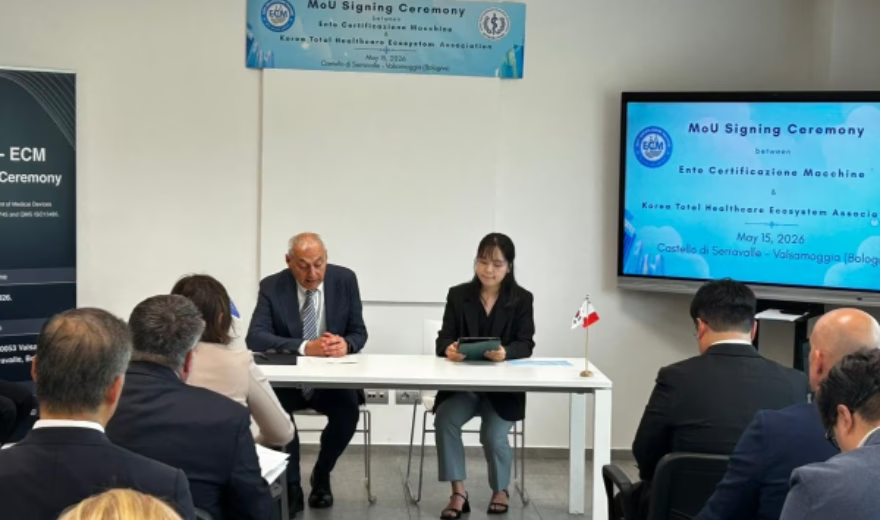
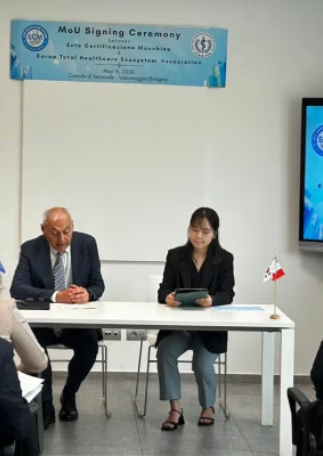
The voices of the Memorandum of Understanding (MoU) with the Korea Total Healthcare Ecosystem Association (KoTHEA): Gianluca Baldoni – Internationalization of the regional production system (Emilia-Romagna Region)
As part of the signing of the Memorandum of Understanding (MoU) on May 15, 2026, between ECM – Ente Certificazione Macchine and KoTHEA (Korea Total Healthcare Ecosystem Association), we continue to gather testimonials from the institutions and key partners supporting this important strategic bridge between Italy and South Korea. Today we feature the contribution of Dr. Gianluca Baldoni (Internationalization of the Regional Production System – Attractiveness, Internationalization, and Research Sector; Export and Trade Fair System Area of the Emilia-Romagna Region), who participated in the institutional event held in the presence of local authorities and the Consul General of the Republic of Korea in Milan.


19 Jun 2026
EUDAMED: The Regulatory Turning Point for Medical Devices
May 28, 2026, marked a watershed moment for medical devices in Europe. As of this date, full EUDAMED registration became mandatory for all devices undergoing certification under the MDR and IVDR regulations. The database becomes the operational hub of the single market. This is not a bureaucratic formality, but a binding requirement to maintain market access.
19 Jun 2026
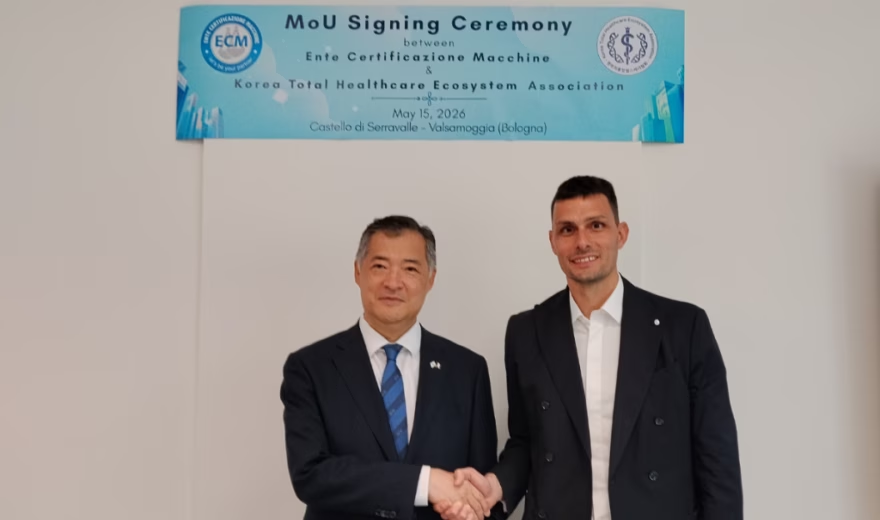
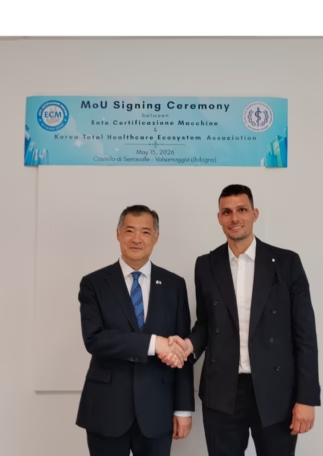
The voices of the Memorandum of Understanding (MoU) with the Korea Total Healthcare Ecosystem Association (KoTHEA): Choi Taeho – Consul General of the Republic of Korea
International ties and strategic development prospects are strengthening around the crucial Memorandum of Understanding (MoU) signed at the Valsamoggia headquarters between the Korea Total Healthcare Ecosystem Association (KoTHEA) and the European notified body Ente Certificazione Macchine (ECM). The official ceremony was graced by the prestigious participation and institutional support of Choi Taeho, Consul General of the Republic of Korea, who emphasized the high political and economic value of this agreement. The agreement represents not only a technical milestone but also a genuine turning point in industrial and regulatory relations along the Seoul-Rome axis, fitting into a rapidly evolving global macroeconomic framework.
18 Jun 2026
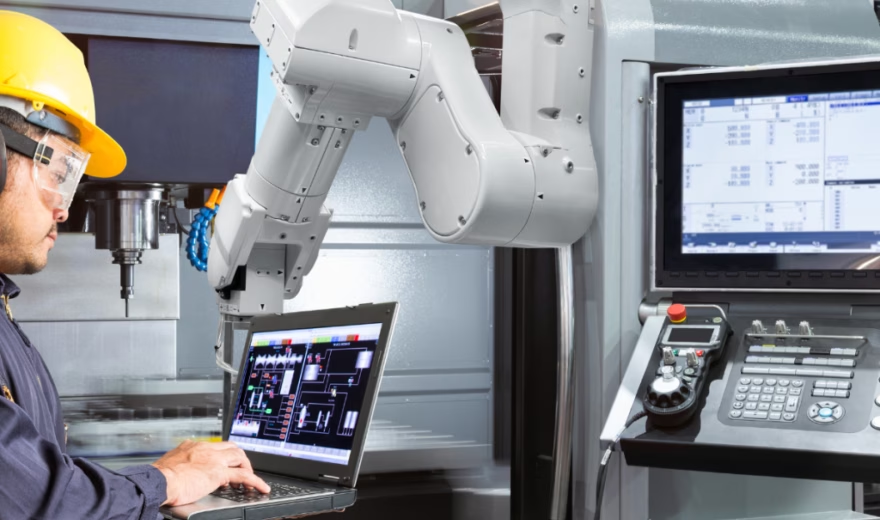
New Machinery Regulation, the entry into force approaches: what’s new for Manufacturers
The European regulatory landscape is undergoing a crucial transformation with the introduction of Regulation (EU) 2023/1230, which will permanently phase out the historic Machinery Directive 2006/42/EC. One of the most impactful changes concerns the obligation to integrate cybersecurity as an essential element of product safety.
18 Jun 2026
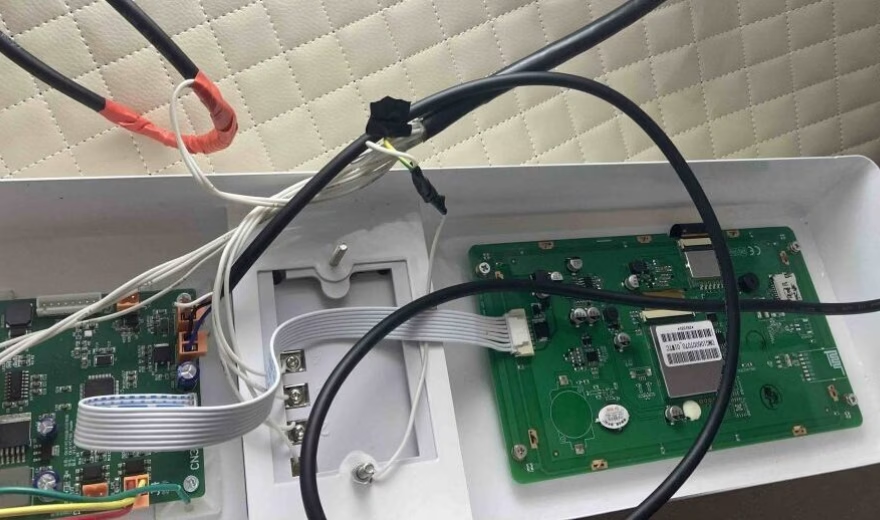
IMPORTANT NOTICE: Immediate suspension of the use of the product “Hyperbaric chamber”
We would like to inform all our valued customers and business partners of an urgent measure that requires the utmost attention and timely cooperation from all users.