
However, before we get too excited about the potential benefits of epigallocatechin gallate, we must face some challenges. First, we need to characterize better the bioavailability and metabolism of EGCG in humans, which means how much of it is absorbed, distributed, transformed, and eliminated by your body. Second, we must develop a reliable analytical assay for its determination in biological samples, such as blood, urine, or tissue. This is a challenging task, as EGCG is present in deficient concentrations and can be easily degraded or modified by various factors, such as pH, light, temperature, and oxygen.
Third, we need to find a way to stabilize EGCG in human serum, the liquid part of your blood, especially in the presence of an anticoagulant, such as VcEDTA, which can prevent blood clotting and protect EGCG from degradation. Therefore, we need a sensitive, selective, and reliable method to quantify epigallocatechin gallate in human serum. This can help us understand its pharmacokinetics and pharmacodynamics or how it behaves and acts in your body.
Solution
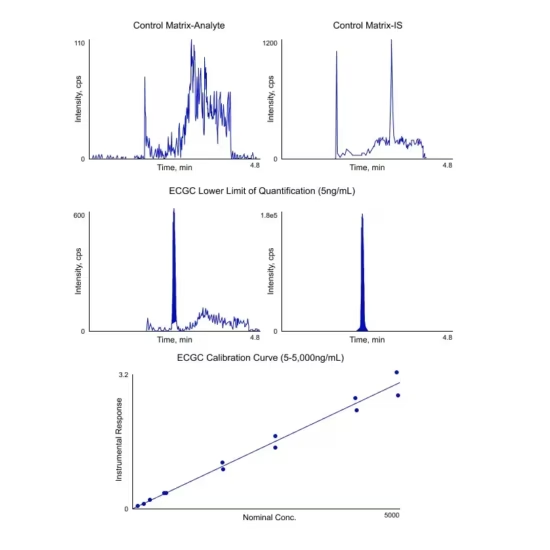
To overcome these challenges, we developed a cutting-edge liquid chromatography-tandem mass spectrometry (LC-MS/MS) method explicitly designed to measure epigallocatechin gallate(EGCG) in human serum enriched with VcEDTA. This groundbreaking technique involves a rapid protein precipitation extraction, which removes the proteins from the serum and isolates the EGCG and other small molecules. Then, the extracted sample is injected into a C18 column, which separates the EGCG from other compounds based on their polarity and affinity to the stationary phase. The eluted EGCG is then detected and identified by a high-resolution mass spectrometer, which operates in negative electrospray ionization mode, ionizing the EGCG molecules and preparing them for analysis.
The mass spectrometer also performs multiple reaction monitoring, which selects and fragments the EGCG ions and measures their mass-to-charge ratio, which is unique and specific for each compound. This way, we can accurately quantify the amount of EGCG in the serum sample. And the best part? Our method meets the stringent guidelines the US Food and Drug Administration set for bioanalytical methods, ticking off all the boxes for accuracy, precision, linearity, selectivity, recovery, matrix effect, and stability. Our method is valid, reproducible, and robust for analyzing epigallocatechin gallate in human serum.

Outcome
We reveal the secrets locked within serum samples from our enthusiastic volunteers. Armed with our method, we successfully detected and quantified epigallocatechin gallate (EGCG) at astonishingly low nanogram per milliliter levels. This is equivalent to finding a needle in a haystack! Finally, we could shed light on the intriguing pharmacokinetics and bioavailability of EGCG in humans. This can help us understand how EGCG is absorbed, distributed, metabolized, and excreted by your body and affects your health.
However, that is not all – our method showed that VcEDTA acts as a guardian, preserving the stability of EGCG in serum and protecting it from unwanted degradation. This is crucial for ensuring the quality and reliability of our results and avoiding false negatives or positives. The possibilities for clinical and pharmacological studies involving EGCG and green tea consumption are endless! We can use our method to investigate the effects of EGCG on various diseases, such as inflammation, oxidative stress, cancer, diabetes, obesity, cardiovascular disease, and neurodegenerative disease.
We can also use our method to evaluate the safety and efficacy of EGCG as a dietary supplement or a therapeutic agent. Our method can also be applied to other biological samples, such as urine, saliva, or tissue, to assess the exposure and risk of epigallocatechin gallate in human populations.
Registered And Inspected By Various Regulatory Agencies
Speak To Our Scientist About Your Epigallocatechin Gallate (EGCG) LC MS Analysis In VcEDTA Human Serum
Related articles
MSD Hybridization ELISA PK Immunoassay Development, GLP Validation, And Oligonucleotide Analysis

TaqMan Gene Expression Assay, Copy Number Variation Assay Development, nGLP Validation, And Sample Analysis

Genomic Variation Analysis – TaqMan Single Nucleotide Polymorphism (SNP) Analysis

LC MS Bioanalysis Of Antisense Oligonucleotide (ASO) Using Mass Spectrometry And Ion Pair Chromatography
LC MS Method For Proline Amino Acid, Hydroxyproline In Mouse Tissues
LC MS Method For DNA Adducts Analysis In Cell-Based In-Vitro Samples
LC MS Method for Everolimus Eluting Coronary Stent Drug Delivery Systems

Mass Spectrometry Amino Acids, Quantitative LC MS Amino Acid Analysis

LC MS Method Development And GLP Validation For Human Plasma PK Sample Analysis
Incurred Sample Reanalysis (ISR) Test, FDA Requirements, And Study Evaluation
Dried Blood Spot (DBS) Sampling, DBS Collection, And DBS Analysis
Your partner in quality, safety, and compliance
The life sciences sector requires specialized knowledge and reliable support. With our broad expertise, we help organizations comply with laws and regulations, ensure quality, and continue to innovate with confidence.