
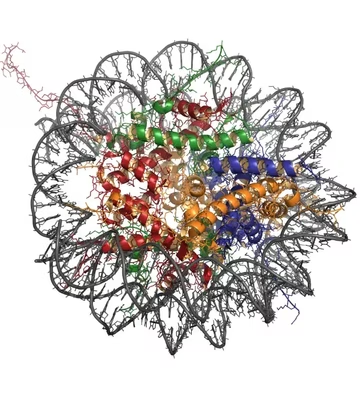
Chemopreventive agents aimed at mitigating the effects of genotoxic compounds are particularly interesting. When these compounds react with DNA, they form covalent modifications, known as DNA adducts, which can alter the structure and function of DNA. To know the role of DNA adducts in disease initiation and progression, it is important to measure them in biological samples, such as blood, urine, or tissue. This is the aim of DNA adductomics, a new research field that uses liquid chromatography-tandem mass spectrometry (LC-MS/MS) to screen for known and unknown DNA adducts comprehensively and unbiasedly.
However, DNA adductomics is challenging, especially when applied to cell-based in-vitro samples, which are often used to study the effects of genotoxic compounds on different cell types. Some challenges include the low amount and quality of DNA available from cultured cells, the interference of cell culture components, such as serum proteins and media additives, and the need for reference standards and spectral libraries for DNA adduct analysis.
Solution
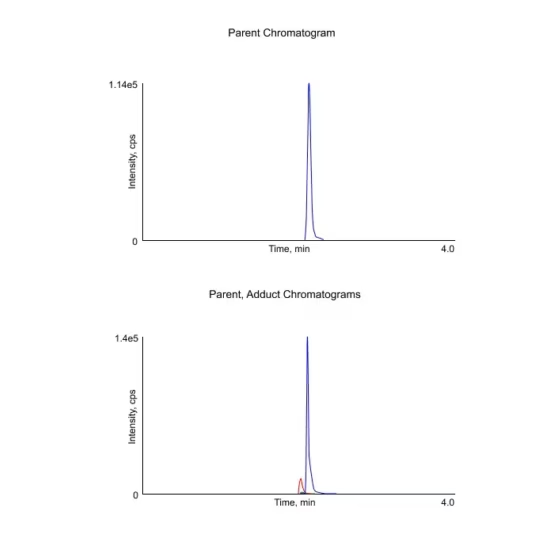
To overcome these challenges, we developed, qualified, and applied an LC–MS/MS method to analyze DNA adducts in cell-based in vitro samples. The method involved the following steps:
- Isolation of DNA from cultured cells using a commercial kit, which ensured high yield and purity of DNA
- Enzymatic hydrolysis of DNA to nucleosides, which reduced the complexity of the sample and increased the sensitivity of the analysis
- Online solid-phase extraction and separation of nucleosides by reversed-phase chromatography, which removed the interference of cell culture components and achieved good resolution of the analytes
- Detection and identification of DNA adducts by a high-resolution mass spectrometer, operated in positive electrospray ionization (ESI+) mode and data-independent acquisition (DIA) mode, enabling the simultaneous acquisition of precursor and fragment ion spectra for all analytes
The method was qualified according to the fit-for-purpose approach, which assessed the method's performance based on the intended use and predefined acceptance criteria. The method demonstrated acceptable performance for detecting and quantifying DNA adducts in cell-based in vitro samples in terms of accuracy, precision, linearity, selectivity, and stability.
The method was applied for DNA adduct analysis induced by different genotoxic compounds, including benzo[a]pyrene, aflatoxin B1, and acetaldehyde, in various cell lines such as HepG2, A549, and TK6, representing different organs and tissues.
Deze versie wijzigt alleen de opmaak van de opsomming; de formulering blijft vrijwel identiek aan je originele tekst.

Outcome
The method provided a sensitive and reliable tool for analyzing DNA adduct analysis in cell-based in-vitro samples and enabled the investigation of the repair of DNA adducts and the formation in different cell models. The method also contributed to advancing DNA adductomics by generating new data and knowledge on the occurrence and diversity of DNA adducts in biological systems.
The method could be useful for studying the mechanisms and consequences of DNA damage by genotoxic compounds and for evaluating the efficacy and safety of chemopreventive agents, such as antioxidants, polyphenols, and phytochemicals, which may modulate the formation and repair of DNA adducts. The method could also be applied to other biological samples, such as human tissues or fluids, to assess the exposure and risk of DNA damage in human populations. This comprehensive approach integrates the analysis of DNA adducts, the exploration of DNA adductomics, and the evaluation of chemopreventive agents, offering valuable insights into mechanisms underlying DNA damage and potential strategies for prevention and intervention.
Registered And Inspected By Various Regulatory Agencies
Speak To Our Scientist About Your LC MS Assays For DNA Adducts Analysis, Chemopreventive Agents
Related articles
MSD Hybridization ELISA PK Immunoassay Development, GLP Validation, And Oligonucleotide Analysis

TaqMan Gene Expression Assay, Copy Number Variation Assay Development, nGLP Validation, And Sample Analysis

Genomic Variation Analysis – TaqMan Single Nucleotide Polymorphism (SNP) Analysis

LC MS Bioanalysis Of Antisense Oligonucleotide (ASO) Using Mass Spectrometry And Ion Pair Chromatography

Epigallocatechin Gallate (EGCG) LC MS Method Development, GLP Validation, And Sample Analysis In VcEDTA Human Serum
LC MS Method For Proline Amino Acid, Hydroxyproline In Mouse Tissues
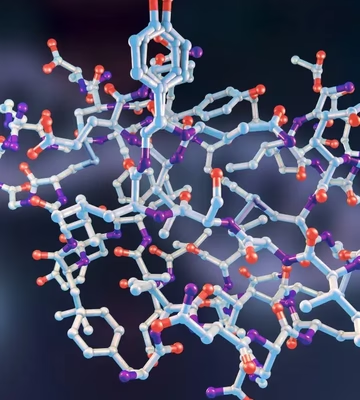
LC MS Method for Everolimus Eluting Coronary Stent Drug Delivery Systems

Mass Spectrometry Amino Acids, Quantitative LC MS Amino Acid Analysis

LC MS Method Development And GLP Validation For Human Plasma PK Sample Analysis

Incurred Sample Reanalysis (ISR) Test, FDA Requirements, And Study Evaluation
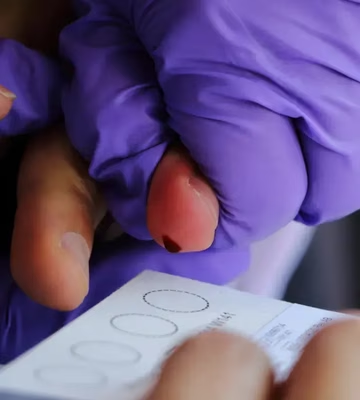
Dried Blood Spot (DBS) Sampling, DBS Collection, And DBS Analysis
Your partner in quality, safety, and compliance
The life sciences sector requires specialized knowledge and reliable support. With our broad expertise, we help organizations comply with laws and regulations, ensure quality, and continue to innovate with confidence.