

The method development process also involves a rigorous refinement to minimize non-specific binding, a common impediment to assay accuracy. By incorporating acidic modifiers like Hexafluoroisopropanol (HFIP) and implementing precise handling protocols during sample preparation, the integrity of the ASOs is preserved, and non-specific interactions are significantly reduced.
Furthermore, the solution includes a comprehensive development of the method, ensuring it adheres to the stringent criteria for specificity, linearity, accuracy, and precision.
This validation process is critical in establishing the method’s reliability for routine quantification of ASOs in biological samples.
Through these concerted efforts, the analytical method meets the current demands for ASO analysis and lays a robust foundation for future advancements in therapeutic applications. The approach ensures that the full therapeutic potential of ASOs can be harnessed, thereby contributing to the progress of precision medicine and the treatment of various diseases.
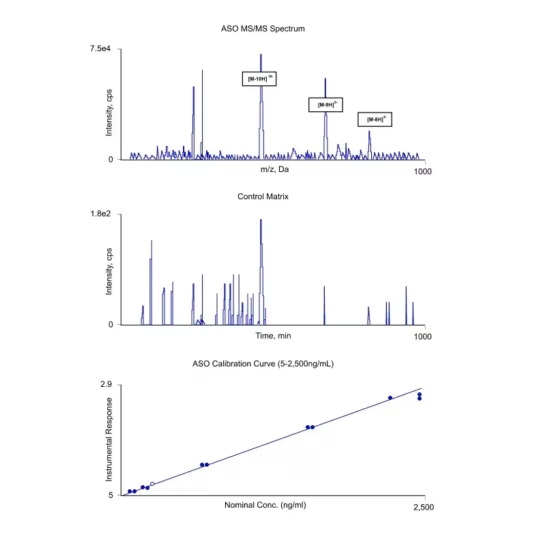
Solution
This systematic approach developed an analytical method demonstrating high specificity and sensitivity for each ASO and its impurities within the corresponding formulation matrix. The method was robust and reliable, making it suitable for stability studies of therapeutic agents in their formulation.
The method’s robustness was further confirmed under various experimental conditions, ensuring its suitability for quality control and regulatory purposes. Importantly, the developed method met the current analytical needs and showed potential for adaptation for future analyses of different types of ASOs. This adaptability underscores the versatility of our method and its potential for further research.

Outcome
This systematic approach developed an analytical method demonstrating high specificity and sensitivity for each ASO and its impurities within the corresponding formulation matrix. The method was robust and reliable, making it suitable for stability studies of therapeutic agents in their formulation.
The method’s robustness was further confirmed under various experimental conditions, ensuring its suitability for quality control and regulatory purposes. Importantly, the developed method met the current analytical needs and showed potential for adaptation for future analyses of different types of ASOs. This adaptability underscores the versatility of our method and its potential for further research.
This case study highlights the intricate process of developing an analytical method for ASOs. It emphasizes the importance of a systematic and comprehensive approach to method development, which is crucial for the progression of targeted genetic therapies. The successful development of this method represents a significant achievement in the analysis of ASOs, setting the stage for their use in clinical settings and ultimately contributing to improved patient outcomes. The case study serves as a testament to the meticulous work required to ensure that new therapeutic agents can be accurately and reliably measured, a cornerstone in the development of precision medicine.
Registered And Inspected By Various Regulatory Agencies
Speak To Our Scientist About Your Monoclonal Antibody Fragment PK ELISA Immunoassay Development, GLP Validation, and MAb Bioanalysis
Related articles
MSD Hybridization ELISA PK Immunoassay Development, GLP Validation, And Oligonucleotide Analysis

TaqMan Gene Expression Assay, Copy Number Variation Assay Development, nGLP Validation, And Sample Analysis

Genomic Variation Analysis – TaqMan Single Nucleotide Polymorphism (SNP) Analysis

LC MS Bioanalysis Of Antisense Oligonucleotide (ASO) Using Mass Spectrometry And Ion Pair Chromatography

Epigallocatechin Gallate (EGCG) LC MS Method Development, GLP Validation, And Sample Analysis In VcEDTA Human Serum

LC MS Method For Proline Amino Acid, Hydroxyproline In Mouse Tissues

LC MS Method For DNA Adducts Analysis In Cell-Based In-Vitro Samples

LC MS Method for Everolimus Eluting Coronary Stent Drug Delivery Systems

Mass Spectrometry Amino Acids, Quantitative LC MS Amino Acid Analysis

LC MS Method Development And GLP Validation For Human Plasma PK Sample Analysis

Incurred Sample Reanalysis (ISR) Test, FDA Requirements, And Study Evaluation
Dried Blood Spot (DBS) Sampling, DBS Collection, And DBS Analysis
Your partner in quality, safety, and compliance
The life sciences sector requires specialized knowledge and reliable support. With our broad expertise, we help organizations comply with laws and regulations, ensure quality, and continue to innovate with confidence.