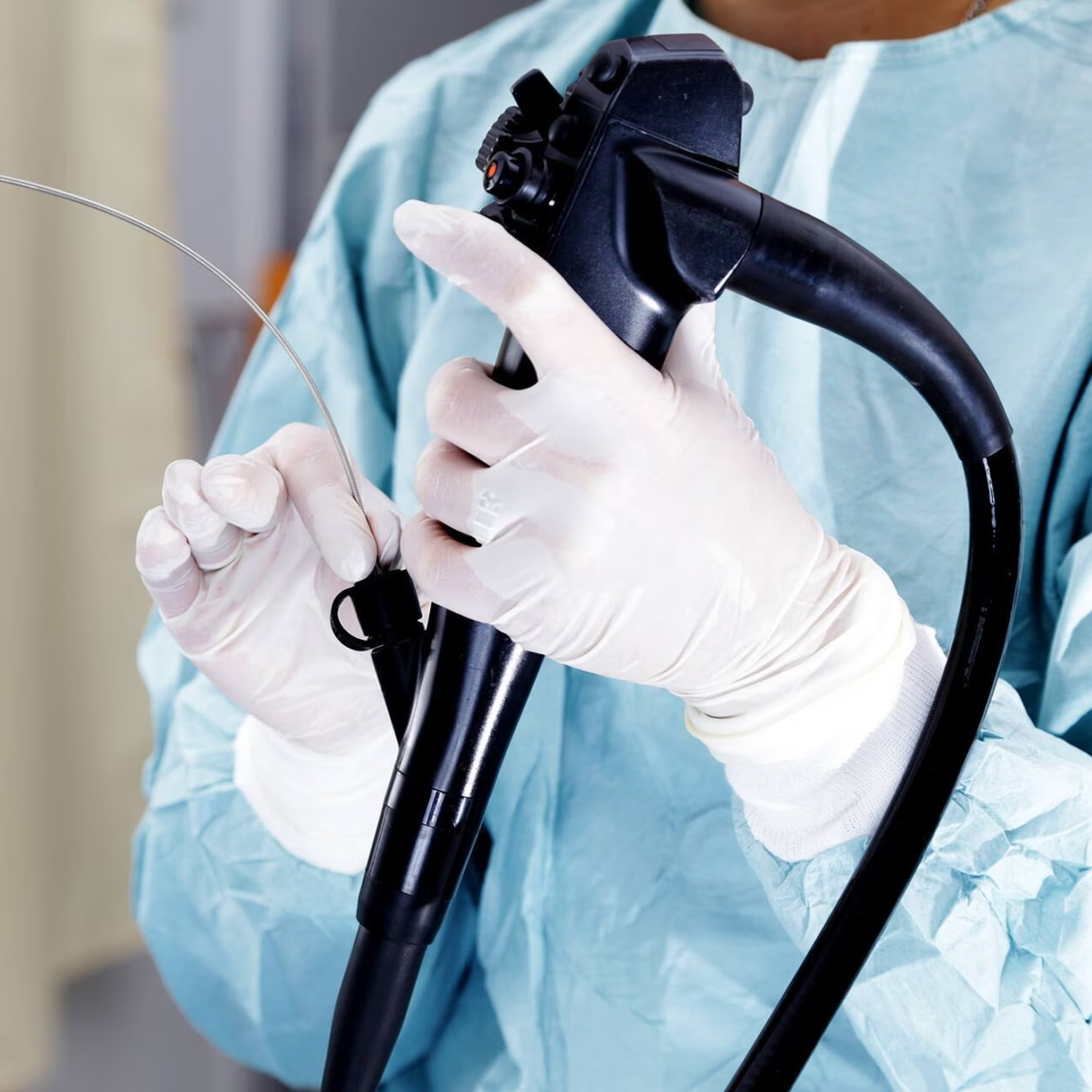
In October 2024, the revised Annex 8: “Hygiene Requirements for the Reprocessing of Thermolabile Endoscopes” was published, which corresponds to the relevant annex of the recommendation by the Commission for Hospital Hygiene and Infection Prevention (KRINKO) at the Robert Koch Institute (RKI) and the Federal Institute for Drugs and Medical Devices (BfArM) regarding “Hygiene Requirements for the Reprocessing of Medical Devices” from 2012.
A key change is the elution of microorganisms from all existing channels, including testing of the optical flush bottle. For sampling the endoscope channels, sensitive methods such as the so-called Flush-Brush-Flush (FBF) procedure are recommended. In this process, flushing alone is supplemented by mechanically assisted elution using brushes (Brush-Flush). This method is already used for sampling in other countries, and recent studies show a significantly increased microbial recovery rate.
To enhance patient safety, Normec Hybeta also recommends the use of FBF in all brush-accessible channels during sampling and offers corresponding testing services as part of its accreditation.
Based on our many years of expertise in this field and to provide you with technically meaningful results, Normec Hybeta has decided to continue analyzing the samples on a per-canal basis rather than, as described in the recommendation of the aforementioned new Annex 8 of the KRINKO, to combine all flushing samples. An information sheet with a detailed technical justification can be found on our website.
In light of the above-mentioned changes, we have expanded our testing services within the scope of our flexible accreditation and can now offer you the following services:
- Qualitative microbiological analysis of swab samples from all external endoscope surfaces identified as relevant for testing
Note: According to the new Annex 8, these include, for example, the distal end; the Albarran lever and recess, balloon fixation points, valve cylinders; control wheels and levers, if present) - Quantitative microbiological analysis of the flushing solution (F) for channels that cannot be brushed
- Quantitative microbiological analysis of the flushing solution (FBF), including the detached brush head
- Quantitative microbiological analysis of the rinse solution from the optical rinse bottle
- Quantitative microbiological analysis of unused reference brush(es)
Note: The user must use their own brushes for testing, as different endoscopes require different brushes, some of which are specified by the manufacturer. If the endoscope cleaning brush is neither a sterile, single-use product nor individually packaged, it is recommended to send a brand-new unit of the same type and from the same batch, or multi-pack for microbiological testing.
You can use our order form to select the desired testing services for each endoscope type based on your risk analyses.
On our website, you will also find corresponding testing instructions for the Flush and Flush-Brush elution methods:
Endoscope Testing
Endoscope Testing: Flush, Brush, Flush
If you have any questions, please feel free to contact us at any time at 0251 2851-119.
Your Partner for Quality, Safety, and Compliance
The life sciences sector requires specialized knowledge and reliable support. With our comprehensive expertise, we help companies comply with laws and regulations, ensure quality, and continue to innovate with confidence.
Related Services
Related Articles
18 Jun 2026
19%—a fee you’ll never have to pay again.
Normec Hybeta’s hygiene services are exempt from sales tax under the applicable legal requirements. Not a discount. Not a special offer. But a structural advantage that extends across your entire facility—from operating rooms to water and air hygiene to hospital hygiene.
13 May 2026
Which operating room belongs to which room class?
A structured decision-making framework for the standard-compliant classification of surgical procedures into room classes Ia, Ib, and II.
01 Apr 2026
Cleanrooms at Medical Device Manufacturers
Commissioning • Monitoring • Requalification
10 Mar 2026
Validation of New Reprocessing Devices – Your Operator Obligations Under the MPBetreibV.
New reprocessing devices (RDG, RDG-E, sterilizers) may only be put into routine operation once their processes have been validated in accordance with the law. The MPBetreibV defines clear requirements for this and specifies who is authorized to perform this validation. An independent, accredited testing laboratory lays the foundation for safe and legally compliant operation from the very first use.
10 Dec 2025
Your specialist for microbiological and technical hygiene in the healthcare sector
We are pleased to announce that the identification of microorganisms using the MALDI Biotyper® is now also available through us under an accredited framework (D-PL-17310-01-01) in accordance with DIN EN ISO/IEC 17025:2018!
10 Mar 2026
"A great way of interacting with each other—the friendliness and willingness to help one another"
Tatiana Pershukova (37) is a team assistant in the Technical Hygiene and Construction department. In this interview, she talks about her work experience at Normec Hybeta.

14 Mar 2024
February 29, 2024—a day to celebrate volunteerism!
Two weeks ago today was the day—this year, February gave us an extra day. To make good use of the extra time, we at Normec Hybeta decided to join “Social Day 2024.”