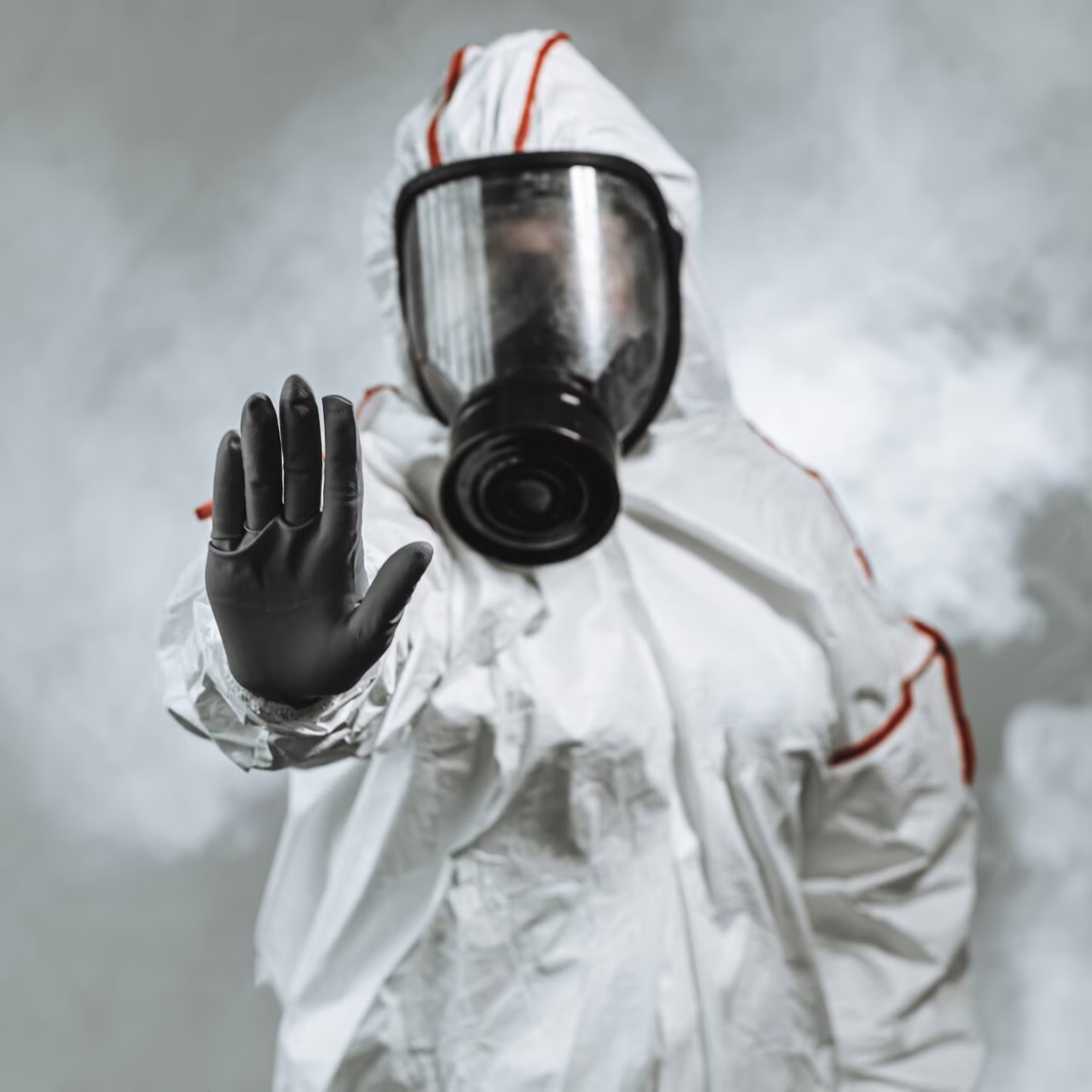



But what does ALARA really mean?
Often mentioned but sometimes misunderstood, this principle is based on a simple idea: reduce exposure as much as possible without compromising the objective of the activity. However, implementing it goes far beyond a simple intention. It requires rigorous organization, technical decisions, and a genuine culture of prevention.
The ALARA principle, which stands for “As Low As Reasonably Achievable, ” means “as low as reasonably possible.” It is a fundamental principle of radiation protection aimed at reducing exposure to ionizing radiation to the lowest possible level, taking into account technical, economic, and organizational constraints.
Contrary to popular belief, ALARA is not merely about complying with regulatory thresholds. It is part of a process of continuous optimization. In other words, even when exposure limits are met, it remains necessary to seek further reductions in radiation doses.
This principle is therefore based on a proactive approach: anticipating risky situations, adapting practices, and continuously improving operational conditions.
The term “reasonably” is essential. It implies that the measures implemented must be proportionate, effective, and realistic. The goal is not to completely eliminate exposure—which is often impossible—but to control it as effectively as possible.
This concept introduces a significant decision-making dimension: each situation must be analyzed to determine the best balance between safety and operational constraints.
What are the three ALARA rules?
The implementation of the ALARA principle relies on three operational levers, simple in their formulation but essential in their application.
The first lever involves reducing exposure time. The longer a person is exposed to a radiation source, the higher the dose received. Reducing the time spent in an exposed area therefore directly limits the impact.
The second measure is distance. Radiation intensity decreases rapidly as one moves away from the source. Increasing the distance is thus an effective and often simple way to reduce exposure.
The third strategy relies on the use of protective barriers, also known as shields. These can include absorptive materials such as lead or concrete, or personal protective equipment. These measures help reduce the amount of radiation reaching exposed individuals.
What are the basic principles of radiation protection?
The ALARA principle is part of a broader framework structured around three fundamental principles of radiation protection.
- The first is justification. Any exposure to ionizing radiation must be justified by a sufficient benefit, whether medical, industrial, or scientific.
- The second is optimization, embodied by the ALARA principle. This involves keeping exposures as low as reasonably achievable.
- The third is dose limitation. Regulatory limits are set to protect workers and the public from the effects of radiation.
Some approaches also incorporate an additional dimension related to safety culture, which aims to foster a sense of responsibility among all stakeholders in the management of radiological risk.
Real-World Examples
In medical imaging
During a CT scan, the technologist adjusts the machine’s parameters (voltage, intensity, exposure time) based on the patient and the medical objective.
The goal is not to obtain the “perfect” image, but rather an image that is sufficiently usable at the lowest possible dose.
In the operating room
During a procedure using fluoroscopy, the surgical team minimizes radiation exposure time by planning each step in advance.
The surgeon may request short, targeted exposures rather than continuous exposure.
At the same time, healthcare professionals wear lead-lined protective gear (apron, thyroid shield, goggles) and position themselves as far away from the radiation source as possible.
In industry
A technician working on a device containing a radioactive source begins by verifying that the source is in a safe position before handling it.
They limit the duration of the procedure, use appropriate tools to maintain a sufficient distance, and rely on protective shields if necessary.
These operational procedures directly reflect the application of the ALARA principle.
Your partner for quality, safety, and compliance
The life sciences sector requires specialized knowledge and reliable support. With our in-depth expertise, we help organizations comply with laws and regulations, ensure quality, and continue to innovate with confidence.
Related Services






Related Articles


15 Apr 2026
5 Key Factors for Success in Implementing Your CSR Initiative
In radiation protection, limiting exposure to ionizing radiation is a top priority. This is the context for the ALARA principle, a fundamental rule applied in the medical, industrial, and nuclear sectors


25 Mar 2026
What content should you include in your POPM?
The POPM is a key document for organizing medical physics within healthcare facilities that use ionizing radiation. But what elements should it include?


12 Mar 2026
Radiation Protection: What Is a Calculation Note?
In facilities that use ionizing radiation—whether for medical, industrial, or research purposes—the issue of radiation protection is of paramount importance.


09 Mar 2026
The BIG Regulatory FAQ: Why You Should Watch the Replay
Between upcoming changes regarding radiation protection experts, questions about radon, zoning, radioactive waste, and regulatory inspections, many professionals are facing the same challenge: understanding what’s actually changing and knowing what’s mandatory… and what isn’t.
11 Feb 2026
Understanding the Different Types of Ionizing Radiation
Although invisible to the naked eye, ionizing radiation is ubiquitous in many sectors: the medical field, the nuclear industry, scientific research, nondestructive testing, and industrial radiology.


13 Jun 2025
DUERP: How to Comply with Regulations While Saving Time?
My DU: A Simple and Powerful Tool Developed by the ASCND Innovation Center