

Winter is coming
Ensuring the quality and safety of critical products is essential year-round. Not only production, but also storage and distribution affect the safety of these end products. It is therefore important to be able to monitor certain factors throughout the process, such as stable temperature and humidity. One way to do this is by conducting annual winter mapping.
What is winter mapping?
Winter mapping is an essential component of compliance with GMP guidelines. Parameters such as temperature and relative humidity must be monitored and controlled during production, as well as during the storage and distribution of pharmaceutical and other temperature-sensitive products.
Winter mapping is a specific form of temperature mapping that addresses the challenges posed by the winter season. This primarily involves fluctuating temperature conditions during the storage and transport of products subject to GMP.
Winter mapping helps monitor temperature and relative humidity during more extreme weather conditions. Is quality still guaranteed when there is a large difference between indoor and outdoor temperatures? During this mapping, for example, the temperature in a warehouse is accurately mapped to verify compliance with the required conditions. Winter mapping also identifies potential risks, for which improvement proposals can be developed.
When is temperature mapping essential?
In what types of spaces is winter mapping necessary?
Winter mapping (as well as summer mapping) is necessary in spaces that are subject to temperature fluctuations from the outside. These are typically storage facilities that are adjacent to at least one exterior wall. This makes the spaces more susceptible to the risks posed by outdoor conditions. The types of spaces where winter mapping is essential vary widely, ranging from warehouses and cold storage rooms to distribution centers.
When is temperature mapping necessary in these spaces?
In spaces that border a single exterior wall, temperature mapping is essential, but when exactly does this apply?
When a new space that is subject to outdoor temperatures is put into use, mapping is an important part of the initial qualification of that space. Also, when such spaces are modified —for example, when a new production line is installed or certain partition walls are removed—it is best to perform temperature mapping again.
Why is winter mapping so important?
Winter mapping is a type of temperature mapping that is performed annually . This is because outdoor weather conditions differ in the winter, and this can affect conditions inside a space if it is adjacent to exterior walls.
As soon as outdoor temperatures drop, winter mapping is scheduled to ensure that outdoor temperatures do not cause temperature fluctuations in storage or distribution areas.
After all, the winter season presents various challenges for life sciences and high-tech companies. A key challenge is maintaining a stable temperature in controlled environments. Cold temperatures can also cause malfunctions in certain devices and machines, which affects the storage of temperature-sensitive products.
Another key factor monitored during winter mapping is humidity. Because outdoor air is often drier in winter, indoor humidity levels can be compromised, which in turn is detrimental to the quality of stored products.
Only by monitoring and controlling temperatures and humidity through a winter mapping can the quality of critical products in controlled environments be maintained. These environments must continuously meet the required storage conditions.
How does temperature mapping work?
To accurately map and monitor the temperature in a space, we follow several steps.
- Precise data loggers are installed to map the temperature in warehouses, cold storage rooms, distribution areas, etc.
- The collected data helps identify certain risks during the winter and ensures they can be avoided. This is a proactive approach.
- The mapping report demonstrates the suitability of the storage area throughout the year, under both normal and more extreme conditions. This is a required document for any audits.
Your partner in quality, safety, and compliance
The life sciences sector requires specialized knowledge and reliable guidance. Thanks to our extensive expertise, we help organizations comply with laws and regulations, ensure quality, and continue to innovate with confidence.
Related Services





Related Articles
28 Apr 2026
A Failed APS: Every Sterile Production Department’s Nightmare
A failed aseptic process simulation (APS) is every sterile production department’s nightmare. As soon as the culture medium becomes cloudy, alarm bells go off throughout the entire organization.


16 Mar 2026
What do you know about EudraLex Volume 4 Annex 11:2026? Are your computer systems inspection ready?
The current version of Eudralex Volume 4 Annex 11 dates back to 2011 and is no longer fully up to date. The technological world has changed significantly since then. Requirements for lifecycle management and data integrity have become much stricter, and the use of cloud solutions in the pharmaceutical industry is now standard. Regulatory bodies such as EMA and PIC/S have indicated plans to revise Annex 11 to provide more clarity on its interpretation, guidelines for new technologies, and clear requirements for data integrity.
16 Jun 2025
Summer Storage: Protect Your Temperature-Sensitive Products
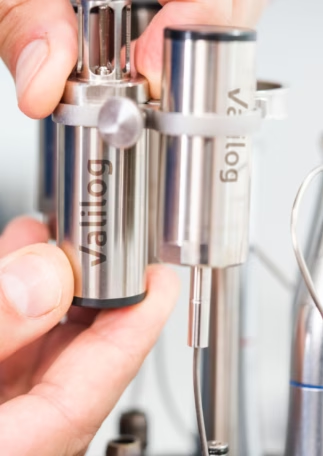
Discover how mapping works and why it’s essential for addressing the challenges posed by controlled environments. We’ll outline the best practices for effective summer mapping.
05 May 2025
Advipro Becomes Normec Advipro
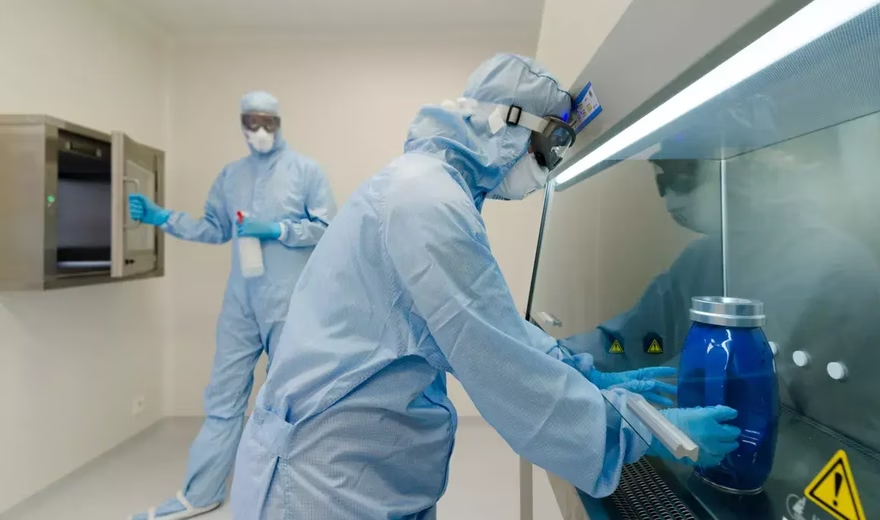
Lille, May 5, 2025 – Advipro, an expert in consulting and project support within the life sciences sector, is taking a new strategic step. Starting in May 2025, the company will operate under the name Normec Advipro.
31 Aug 2022
Where Can Normec Advipro Make a Difference? | PIC/S Standard
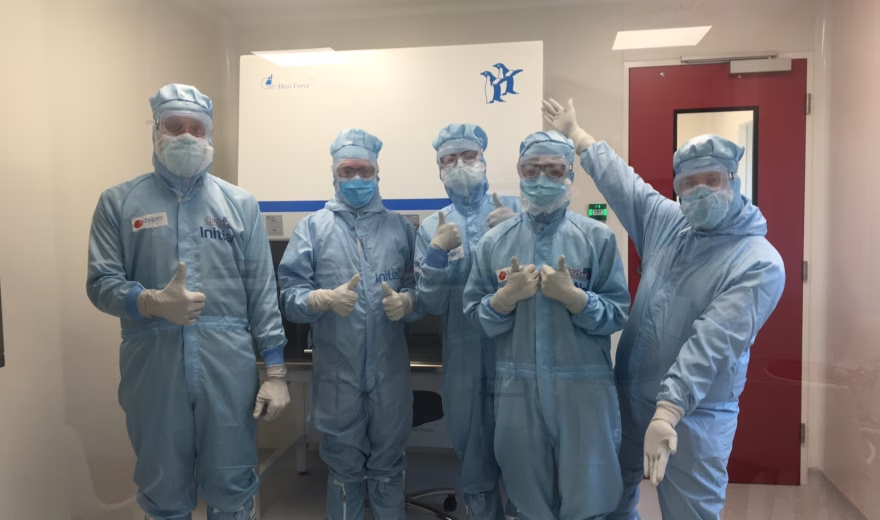
A new Royal Decree was recently published “concerning the preparation and dispensing of medicines and the use and distribution of medical devices within healthcare institutions.” You can read all about it in the blog “The New Regulations for Hospitals and Their Pharmacies.” Specifically, the regulations require work to be carried out in controlled environments (cleanrooms), where the handling of open containers must always take place in ventilated rooms with filtered air. For many hospitals, building and validating a cleanroom is a major undertaking, and they often lack the necessary in-house expertise. Collaborating with an expert like Normec Advipro offers enormous benefits. We work closely with the hospital and apply the “First Time Right” principle, which benefits the project’s quality, budget, and timeline. In the past, we’ve collaborated with various large and small hospitals, as well as university hospitals. Below, we outline a few project phases in which Normec Advipro provided real added value and share our three main lessons learned.


24 Feb 2022
5 Reasons to Choose a Career in Life Sciences
Choosing a career in pharma & life sciences is a forward-looking choice in a rapidly growing industry. But you must also make a conscious decision to enter this highly regulated and state-of-the-art sector.
24 Feb 2022
What is GxP?
Sooner or later, everyone comes into contact with medications, but we often don’t stop to think about everything that needs to be done to safely deliver a medication to the patient. When it comes to medications, patient safety is paramount. To ensure safety, various quality systems have been introduced in the pharmaceutical and food industries. These quality systems are divided into different categories. The general term for these quality systems is GxP. What does GxP mean, and why is it so important to implement quality systems in these industries?