

Check out our step-by-step guide to make this happen:
-
1.
Step 1: Define the backbone
Create a policy document that sets out the guidelines your startup follows.
Ensure audit trails, periodic password changes, and regular reviews to comply with these guidelines.
Develop procedures for periodic system reviews, deviations, Corrective and Preventive Actions (CAPA), and risk analyses.
-
2.
Step 2: Select the system
Identify your startup’s needs and requirements.
Compare available systems such as QMS, LIMS, and MES to choose the most suitable system.
-
3.
Step 3: Process Development
Analyze and discuss business processes with team members.
Define the desired outcomes and identify key steps and criteria.
Determine the expectations for the new system.
-
4.
Step 4: Write the User Requirement Specification (URS)
Document detailed system requirements and perform a risk analysis.
-
5.
Step 5: Documentation
Prepare documentation specific to the chosen system and business processes.
-
6.
Step 6: Configuration and Testing
Configure the system and test it continuously to verify that it is functioning correctly.
Identify any issues that arise during testing.
-
7.
Step 7: Developing Test Scripts and Acceptance Criteria
Create test scripts based on the URS and the acceptance criteria.
Ensure that the system meets the specified requirements.
-
8.
Step 8: Validation & Go Live!
Validate the system by following the test scripts and acceptance criteria, and document the findings.
Demonstrate that the system meets all requirements.
Deploy the system in the startup’s production environment.
By following these steps, you can set up a robust CSV system that ensures the reliability and compliance of your startup’s processes.
Want to get in touch with one of our experts right away, or do you have any questions? Fill out the contact form below, and we’ll get back to you as soon as possible!
Your partner in quality, safety, and compliance
The life sciences sector requires specialized knowledge and reliable guidance. Thanks to our extensive expertise, we help organizations comply with laws and regulations, ensure quality, and continue to innovate with confidence.
Related services















Related Articles


15 Jul 2026
How to Become Fully Inspection-Ready According to Annex 1
What happens when inspectors enter your production environment? Do you really have everything in order? Or is there a risk that your processes will fall short at first glance? And how do you make your company inspection-proof? It starts with documentation. Unfortunately, a few neatly filed SOPs aren’t enough. Inspectors want more and are looking for evidence that your processes are robust and continuously monitored.


15 Jul 2026
Innovative Approaches to Paperless Validation
Computerized System Validation (CSV) is the way to ensure the reliability, compliance, and data integrity of automated systems in regulated industries. With the shift toward digital transformation, paperless validation methods are gaining importance. This article explores innovative approaches and technologies that streamline the CSV process while maintaining compliance and data integrity.
15 Jul 2026
Does your organization have complete control over all its processes?
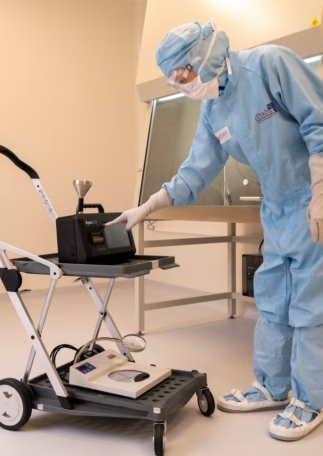
Modern processes are monitored using sensors. These sensors indicate, for example, whether the product is being manufactured under the correct conditions. But can we always blindly trust the results these sensors record?


15 Jul 2026
Gap Assessment Analysis
A gap analysis allows an organization to evaluate its current state of affairs in comparison to the desired situation or objectives. This method provides valuable insights for effectively achieving projects and business goals. During a gap analysis, for example, the maintenance process is critically examined. Essential questions are answered, such as: What are possible improvements to the process? How can we take asset maintenance to the next level? And how do we ensure safety in the maintenance process?


15 Jul 2026
What is the essence of an effective supply chain?
In the rapidly changing world of business operations, maintaining high-quality products during distribution is crucial. Our consultants have extensive knowledge of Good Distribution Practice (GDP) and its impact on efficient business operations. GDP goes beyond mere compliance with regulations. From temperature control to smart storage and seamless transportation, it is the essence of an effective supply chain.


15 Jul 2026
What is Annex 1?
Pharmaceutical companies within the EU must operate in accordance with European laws and regulations, as described in EudraLex, Vol. 4 – Good Manufacturing Practice (GMP) guidelines. Annex 1, titled “Manufacture of Sterile Medicinal Products,” provides general guidelines to be used in the design and control of facilities, equipment, systems, and procedures used for the manufacture of sterile products.

15 Jul 2026
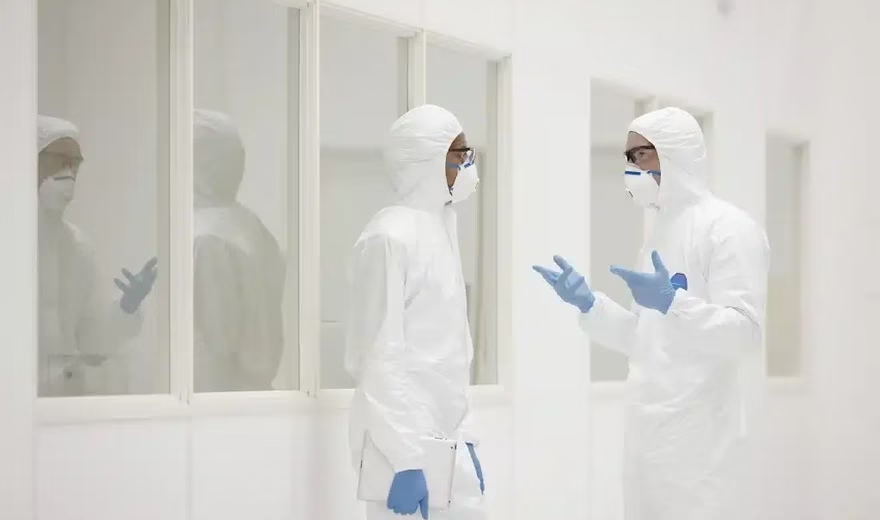
What if you took a completely different approach to Gowning?
When you think of gowning, you probably think of putting on protective clothing. The way employees dress in cleanrooms is key to preventing product contamination and ensures compliance with even the strictest standards related to Annex 1. A single small particle in the wrong place can make the difference between a perfect product and a lost batch.