



According to the revised Annex 1, published in 2022 and mandatory as of August 25, 2023, companies must adopt a risk-based approach to prevent all forms of contamination in the final product. To demonstrate that companies have control over their production facilities and processes to prevent contamination, Annex 1 now requires that a Contamination Control Strategy be in place.
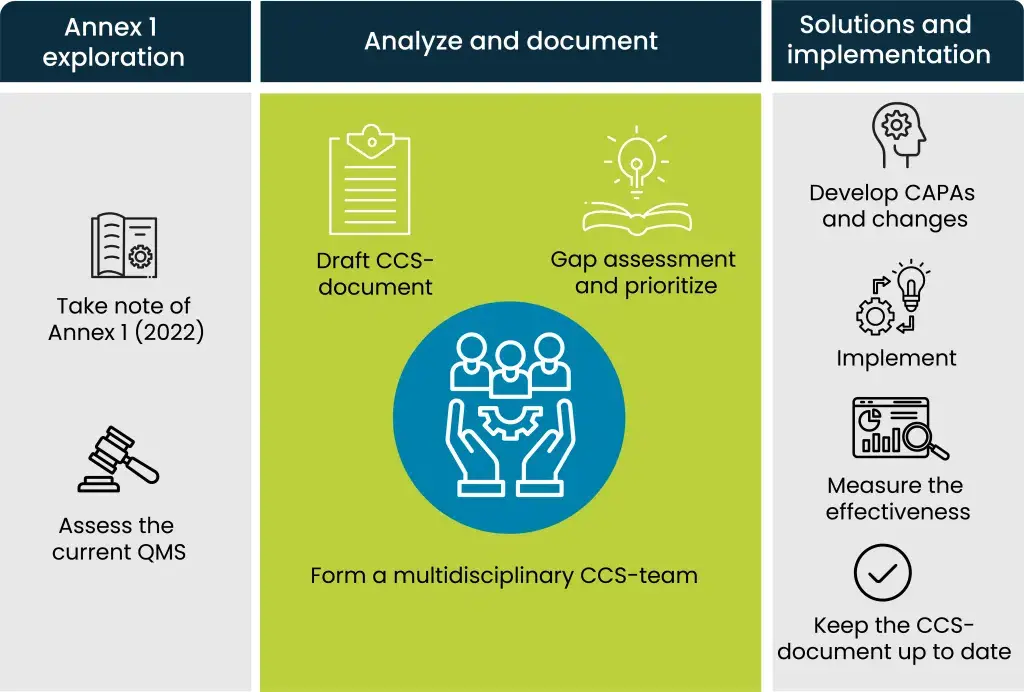
What is a Contamination Control Strategy?
A Contamination Control Strategy (CCS) is a compilation of all existing controls designed to prevent contamination in facilities, processes, and finished products. In other words, a CCS is an umbrella document summarizing all activities aimed at preventing all forms of contamination. It must be clear at a glance that all critical process parameters have been defined, and where necessary, risk assessments and scientific evidence must be used to demonstrate that the risk of contamination is low.
Creating a CCS requires not only process knowledge but also technical expertise. That is why it is important to work with a multidisciplinary team.
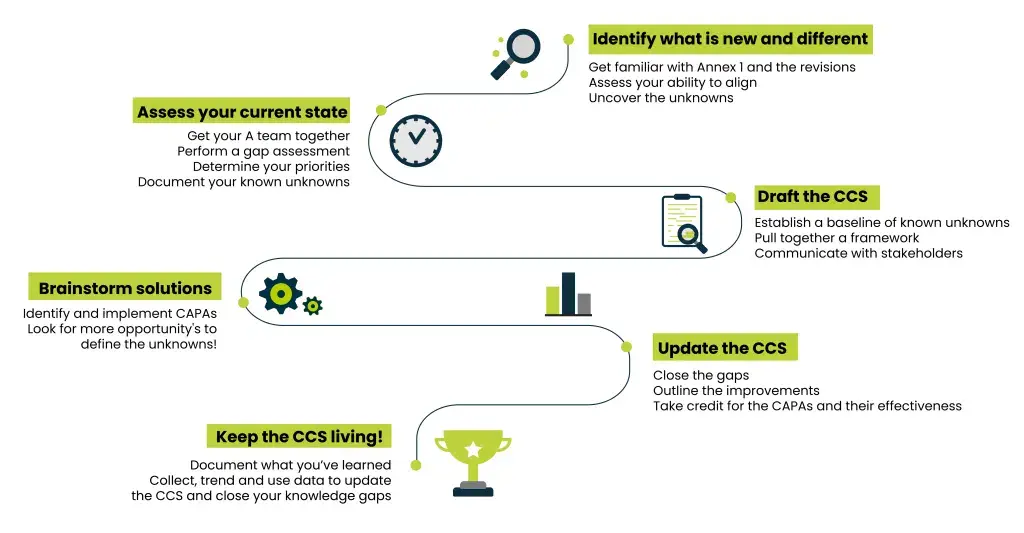
How to Implement
To begin with, it is important that everyone on the team is aware of the Annex 1 changes and what they mean for the various departments. Conduct a gap analysis to assess the current status and identify priorities.
Brainstorm solutions together and start building your CCS.
“Keep the CCS alive!”—so review and update your CCS regularly. Demonstrate that there is a culture of continuous improvement within the company.
Your partner in quality, safety, and compliance
The life sciences sector requires specialized knowledge and reliable guidance. Thanks to our extensive expertise, we help organizations comply with laws and regulations, ensure quality, and continue to innovate with confidence.
Related services


















Related Articles


15 Jul 2026
How to Become Fully Inspection-Ready According to Annex 1
What happens when inspectors enter your production environment? Do you really have everything in order? Or is there a risk that your processes will fall short at first glance? And how do you make your company inspection-proof? It starts with documentation. Unfortunately, a few neatly filed SOPs aren’t enough. Inspectors want more and are looking for evidence that your processes are robust and continuously monitored.


15 Jul 2026
Innovative Approaches to Paperless Validation
Computerized System Validation (CSV) is the way to ensure the reliability, compliance, and data integrity of automated systems in regulated industries. With the shift toward digital transformation, paperless validation methods are gaining importance. This article explores innovative approaches and technologies that streamline the CSV process while maintaining compliance and data integrity.
15 Jul 2026
Does your organization have complete control over all its processes?
Modern processes are monitored using sensors. These sensors indicate, for example, whether the product is being manufactured under the correct conditions. But can we always blindly trust the results these sensors record?


15 Jul 2026
What is risk assessment?
Risk management—that is, risk analysis and risk control—is important for every company. By conducting a risk analysis, you determine what the risks are, particularly those that threaten your business objectives. These include risks related to product quality and safety (such as (cross)contamination and mix-ups) and employee health and safety, as well as regulatory compliance. Corrective and/or preventive actions can then help reduce these risks and make them manageable. Discover the basic principles of risk management and learn how to identify, analyze, and mitigate potential risks.


15 Jul 2026
Gap Assessment Analysis
A gap analysis allows an organization to evaluate its current state of affairs in comparison to the desired situation or objectives. This method provides valuable insights for effectively achieving projects and business goals. During a gap analysis, for example, the maintenance process is critically examined. Essential questions are answered, such as: What are possible improvements to the process? How can we take asset maintenance to the next level? And how do we ensure safety in the maintenance process?


15 Jul 2026
What is the essence of an effective supply chain?
In the rapidly changing world of business operations, maintaining high-quality products during distribution is crucial. Our consultants have extensive knowledge of Good Distribution Practice (GDP) and its impact on efficient business operations. GDP goes beyond mere compliance with regulations. From temperature control to smart storage and seamless transportation, it is the essence of an effective supply chain.


15 Jul 2026
What if you took a completely different approach to Gowning?
When you think of gowning, you probably think of putting on protective clothing. The way employees dress in cleanrooms is key to preventing product contamination and ensures compliance with even the strictest standards related to Annex 1. A single small particle in the wrong place can make the difference between a perfect product and a lost batch.