

The DMAIC Approach
In the “assessment” phase of a gap analysis, the DMAIC approach can serve as a powerful method. DMAIC stands for Define, Measure, Analyze, Improve, and Control, and it provides a structured framework for thorough analysis of a process, based on factual data and figures. The primary goal of DMAIC is to facilitate evaluation, analysis, and improvement.
This data-driven improvement cycle comprises five essential steps, as illustrated in the diagram below.
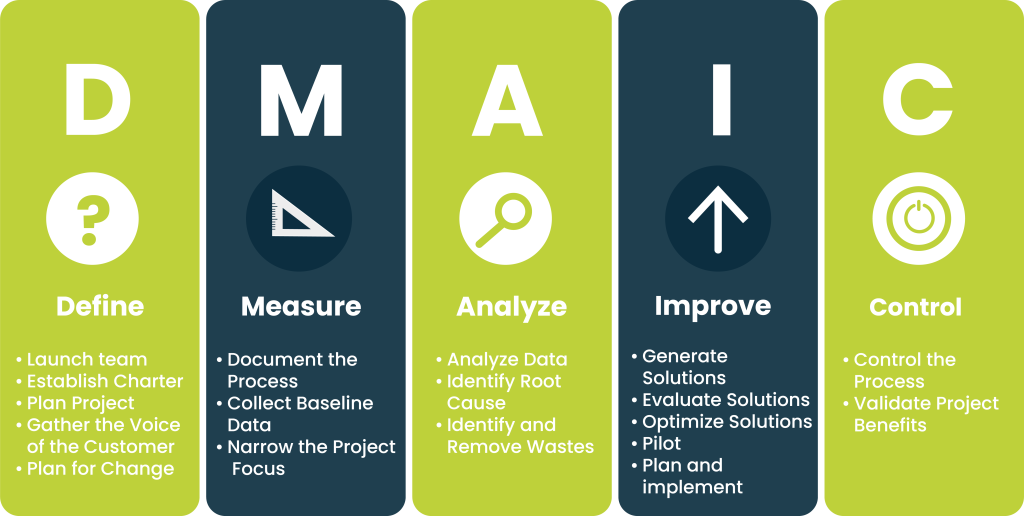
Each step involves crucial activities, tools, and templates that are applied to set up and execute problem-solving initiatives. This framework consists of distinct pillars and originated from the Six Sigma initiative.
These five steps can be further elaborated and documented in project charts. At an early stage of the assessment project, the client’s stakeholders can be granted access for reviews and feedback.
The Total Productive Maintenance Approach
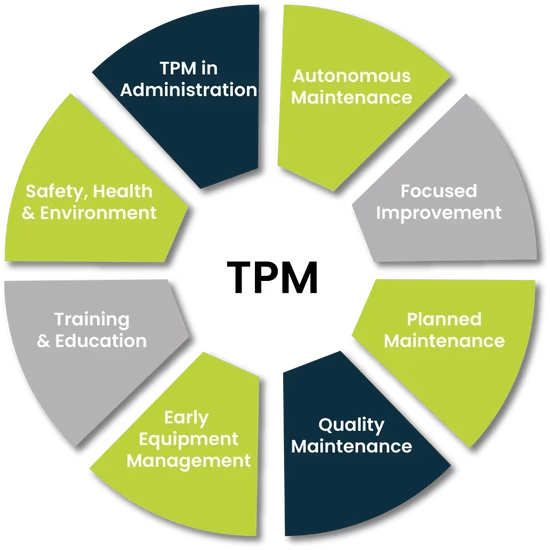
TPM, or Total Productive Maintenance, commonly known as the Toyota Production System (TPS), represents a comprehensive approach to equipment maintenance. The goal of this method is to achieve “perfect production” by promoting greater reliability:
- No accidents or hazards, by creating a safe work environment;
- No quality defects;
- No downtime or slow runs;
- No breakdowns.
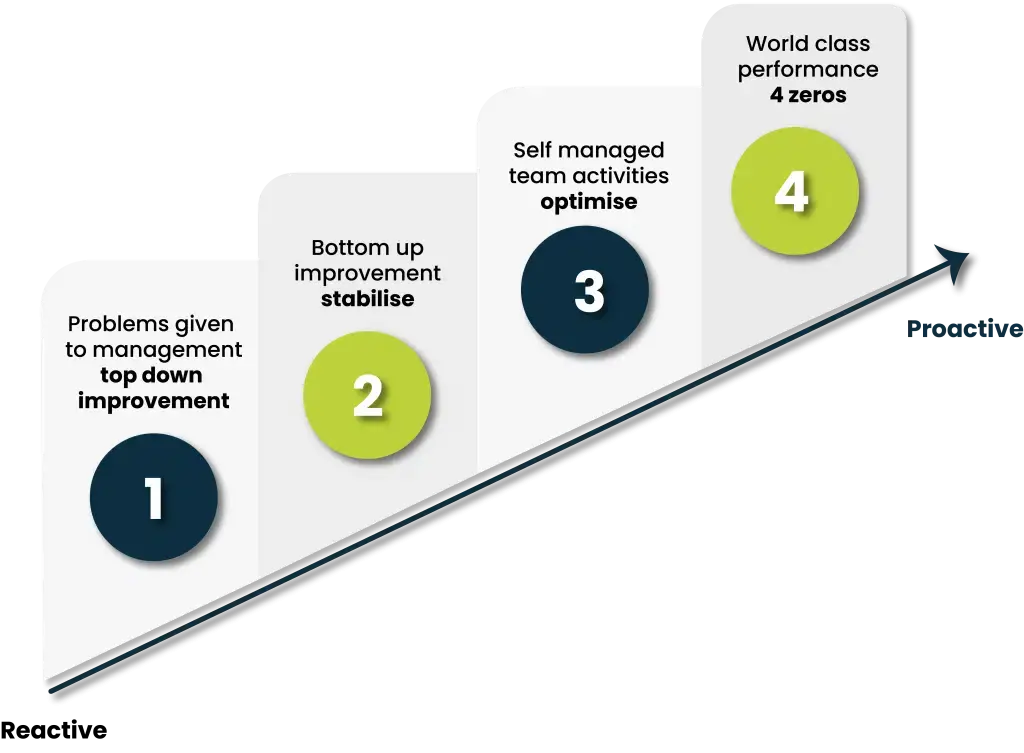
In the “solution deployment” phase, the intended goal is to increase uptime, shorten cycle times, and eliminate defects. Implementing a TPM program fosters shared responsibility for equipment, which in turn encourages greater engagement among employees on the factory floor.
By integrating the TPM approach alongside other reliability tools, existing gaps are addressed, resulting in growth and profitability. TPM is a proactive approach that emphasizes preventive maintenance, with the goal of maximizing the operational efficiency of equipment. The method aims to blur the lines between production and maintenance, with a focus on empowering operators to contribute to the maintenance of their equipment.
Reducing Waste
Based on best practices at various pharmaceutical companies and our own successful experiences with improvement initiatives, Yxion endorses the TPM method.
This approach has proven effective, with a positive impact on downtime, especially when production and maintenance work closely together. TPM helps increase knowledge on the front lines, where operators are actively involved, which ultimately results in reducing waste. Technicians can be called upon to optimize and build upon solutions, allowing for more efficient work rather than starting from scratch.
Your partner in quality, safety, and compliance
The life sciences sector requires specialized knowledge and reliable guidance. Thanks to our extensive expertise, we help organizations comply with laws and regulations, ensure quality, and continue to innovate with confidence.
Related services













Related Articles


15 Jul 2026
How to Become Fully Inspection-Ready According to Annex 1
What happens when inspectors enter your production environment? Do you really have everything in order? Or is there a risk that your processes will fall short at first glance? And how do you make your company inspection-proof? It starts with documentation. Unfortunately, a few neatly filed SOPs aren’t enough. Inspectors want more and are looking for evidence that your processes are robust and continuously monitored.


15 Jul 2026
Innovative Approaches to Paperless Validation
Computerized System Validation (CSV) is the way to ensure the reliability, compliance, and data integrity of automated systems in regulated industries. With the shift toward digital transformation, paperless validation methods are gaining importance. This article explores innovative approaches and technologies that streamline the CSV process while maintaining compliance and data integrity.
15 Jul 2026
Does your organization have complete control over all its processes?
Modern processes are monitored using sensors. These sensors indicate, for example, whether the product is being manufactured under the correct conditions. But can we always blindly trust the results these sensors record?


15 Jul 2026
What is risk assessment?
Risk management—that is, risk analysis and risk control—is important for every company. By conducting a risk analysis, you determine what the risks are, particularly those that threaten your business objectives. These include risks related to product quality and safety (such as (cross)contamination and mix-ups) and employee health and safety, as well as regulatory compliance. Corrective and/or preventive actions can then help reduce these risks and make them manageable. Discover the basic principles of risk management and learn how to identify, analyze, and mitigate potential risks.


15 Jul 2026
What is the essence of an effective supply chain?
In the rapidly changing world of business operations, maintaining high-quality products during distribution is crucial. Our consultants have extensive knowledge of Good Distribution Practice (GDP) and its impact on efficient business operations. GDP goes beyond mere compliance with regulations. From temperature control to smart storage and seamless transportation, it is the essence of an effective supply chain.


15 Jul 2026
What is Annex 1?
Pharmaceutical companies within the EU must operate in accordance with European laws and regulations, as described in EudraLex, Vol. 4 – Good Manufacturing Practice (GMP) guidelines. Annex 1, titled “Manufacture of Sterile Medicinal Products,” provides general guidelines to be used in the design and control of facilities, equipment, systems, and procedures used for the manufacture of sterile products.
15 Jul 2026
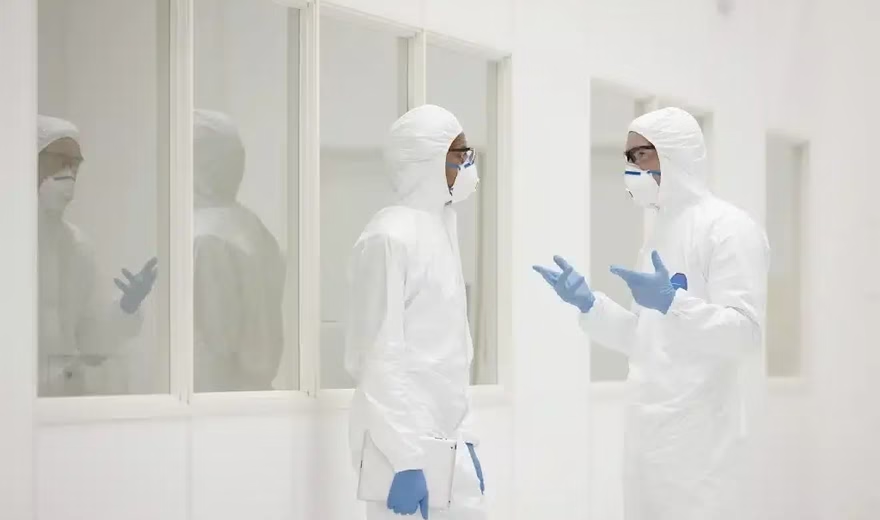
What if you took a completely different approach to Gowning?
When you think of gowning, you probably think of putting on protective clothing. The way employees dress in cleanrooms is key to preventing product contamination and ensures compliance with even the strictest standards related to Annex 1. A single small particle in the wrong place can make the difference between a perfect product and a lost batch.