What Do the New Gowning Regulations Say?
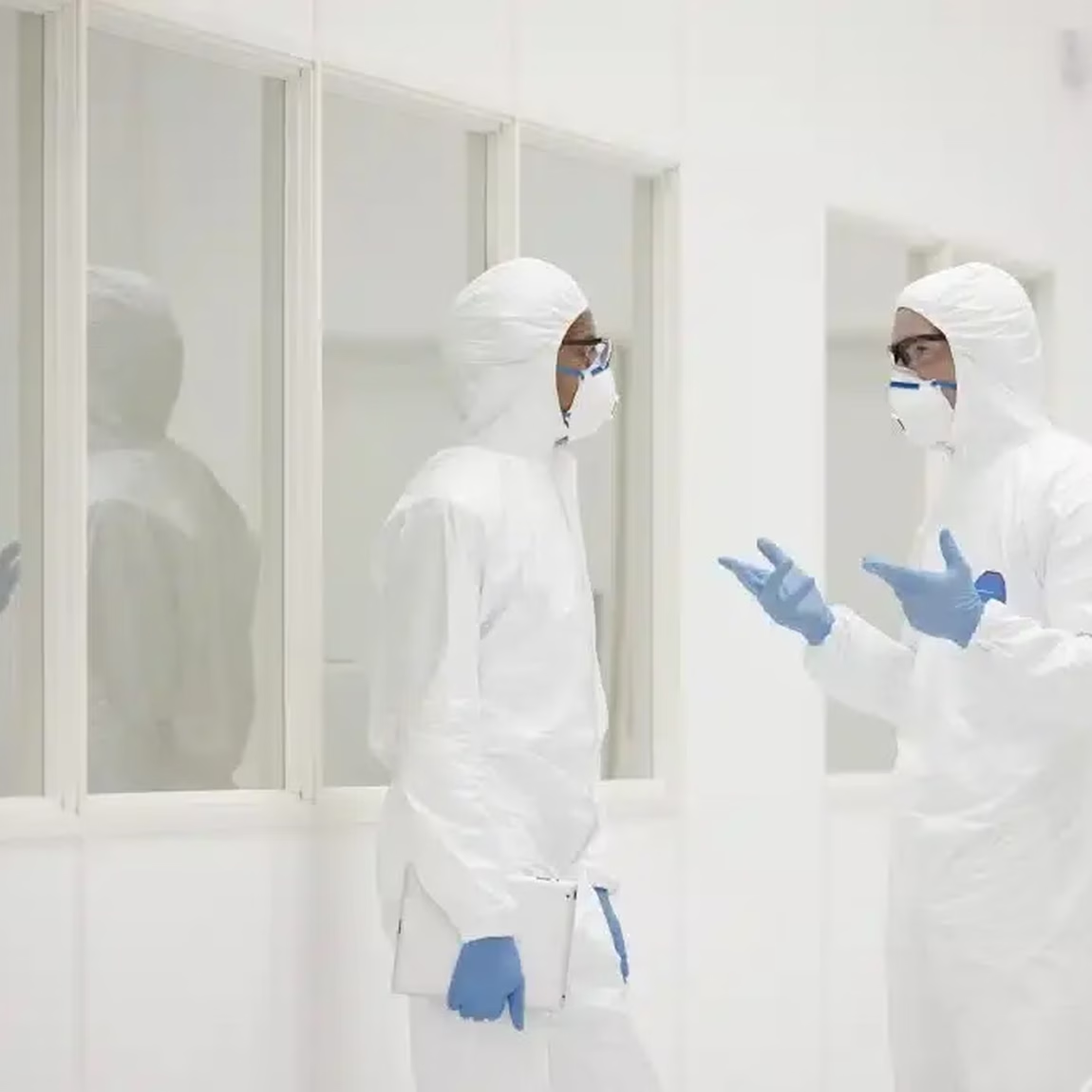
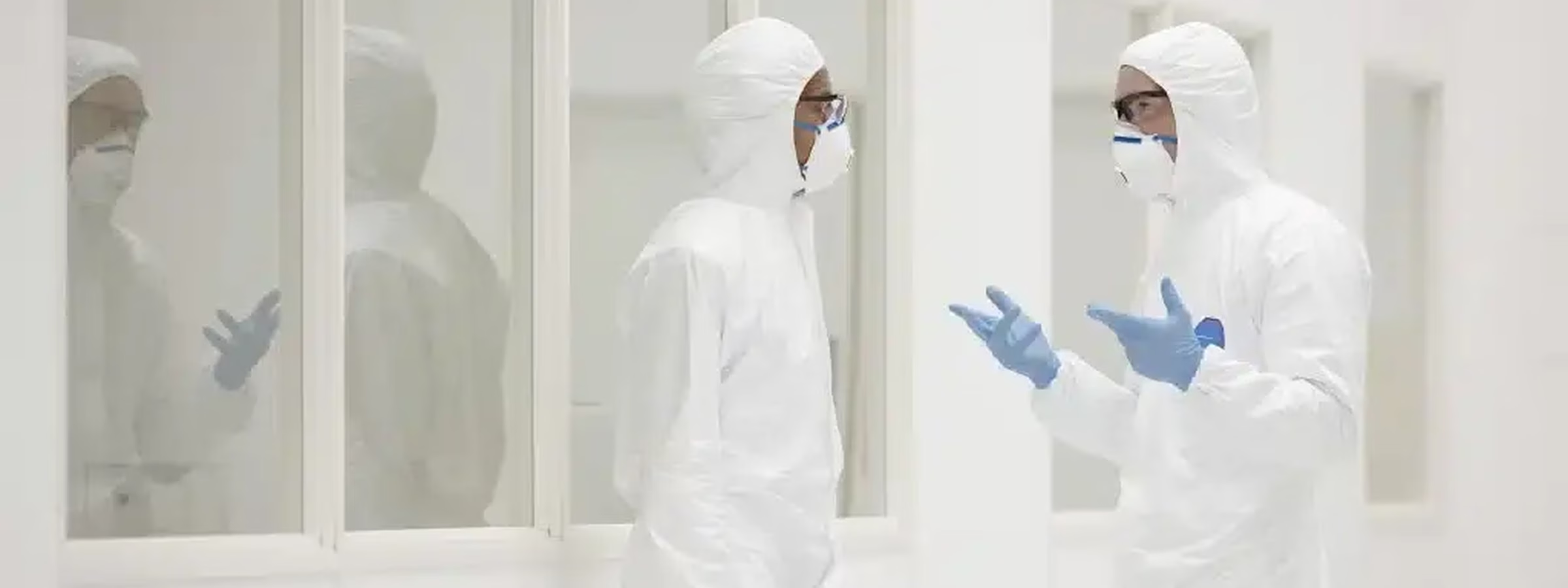
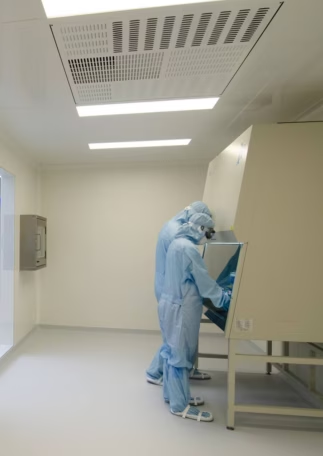
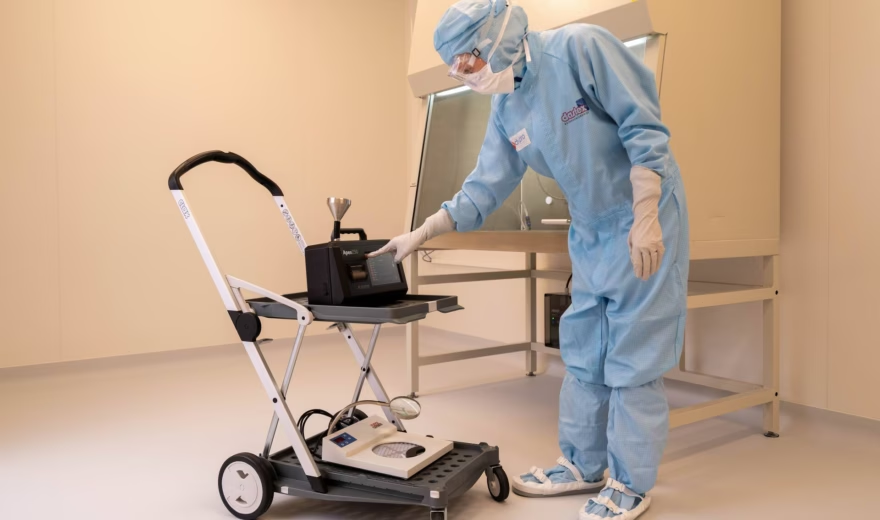
Proper gowning is more than just putting on a suit. It’s a critical measure in controlling contamination—the barrier between both the person and the sterile environment. A barrier that, if not adequately maintained, can completely undermine a product’s safety.
And what about the new requirements? This goes beyond just a protective suit.
- Facility socks are required for access to Grade C areas or higher.
- Sterile goggles in Grade B environments.
What Goes Wrong with Gowning
This sounds simple, but the reality is often quite different. Do you think gowning is just a routine? Chances are you’re missing certain essential steps in the process.
The order of steps is important
Hand washing is a crucial step that must be performed at the right time to prevent contamination of clothing and other items. Is this step carried out at the right time in your process?
Consistency in execution
In a hectic production environment, steps are sometimes skipped. How often has your team carried out the gowning procedure without errors?
Comfort versus safety
Knowing that gowning can sometimes be uncomfortable, how often do employees make “adjustments” that reduce the effectiveness of their protection?
Lack of training
Without rigorous training, errors can occur. Additionally, annual retraining is essential. What happens if the proper gowning technique is forgotten?
What You Can Do to Prevent This
It starts with understanding your processes. The most important thing is to prevent contamination of your product.
- During unsupervisedroutine checks, even the smallest mistakes can have major consequences. Do you have a visual protocol to quickly identify these errors? And do employees feel comfortable calling each other out on mistakes?
- Environmental Monitoring provides insight into how your procedures are working. Do you use trends to check gowning in the changing room?
- Strict hygiene policies —such as wearing the proper clothing—as well as personal hygiene play a role in minimizing contamination. Is your team 100% aware of the impact of personal hygiene?
- Regularly evaluate materials and procedures—don’t be afraid of innovation. New materials can reduce the number of contaminations while also providing comfort.
Are you running into any issues related to Annex 1? Would you like to speak with a specialist? Call us directly at +31(0)2075120 12. Or fill out the form below.
Your partner in quality, safety, and compliance
The life sciences sector requires specialized knowledge and reliable guidance. Thanks to our extensive expertise, we help organizations comply with laws and regulations, ensure quality, and continue to innovate with confidence.
Related services















Related Articles


15 Jul 2026
How to Become Fully Inspection-Ready According to Annex 1
What happens when inspectors enter your production environment? Do you really have everything in order? Or is there a risk that your processes will fall short at first glance? And how do you make your company inspection-proof? It starts with documentation. Unfortunately, a few neatly filed SOPs aren’t enough. Inspectors want more and are looking for evidence that your processes are robust and continuously monitored.


15 Jul 2026
Innovative Approaches to Paperless Validation
Computerized System Validation (CSV) is the way to ensure the reliability, compliance, and data integrity of automated systems in regulated industries. With the shift toward digital transformation, paperless validation methods are gaining importance. This article explores innovative approaches and technologies that streamline the CSV process while maintaining compliance and data integrity.
15 Jul 2026
Does your organization have complete control over all its processes?
Modern processes are monitored using sensors. These sensors indicate, for example, whether the product is being manufactured under the correct conditions. But can we always blindly trust the results these sensors record?


15 Jul 2026
What is risk assessment?
Risk management—that is, risk analysis and risk control—is important for every company. By conducting a risk analysis, you determine what the risks are, particularly those that threaten your business objectives. These include risks related to product quality and safety (such as (cross)contamination and mix-ups) and employee health and safety, as well as regulatory compliance. Corrective and/or preventive actions can then help reduce these risks and make them manageable. Discover the basic principles of risk management and learn how to identify, analyze, and mitigate potential risks.


15 Jul 2026
Gap Assessment Analysis
A gap analysis allows an organization to evaluate its current state of affairs in comparison to the desired situation or objectives. This method provides valuable insights for effectively achieving projects and business goals. During a gap analysis, for example, the maintenance process is critically examined. Essential questions are answered, such as: What are possible improvements to the process? How can we take asset maintenance to the next level? And how do we ensure safety in the maintenance process?


15 Jul 2026
What is the essence of an effective supply chain?
In the rapidly changing world of business operations, maintaining high-quality products during distribution is crucial. Our consultants have extensive knowledge of Good Distribution Practice (GDP) and its impact on efficient business operations. GDP goes beyond mere compliance with regulations. From temperature control to smart storage and seamless transportation, it is the essence of an effective supply chain.


15 Jul 2026
What is Annex 1?
Pharmaceutical companies within the EU must operate in accordance with European laws and regulations, as described in EudraLex, Vol. 4 – Good Manufacturing Practice (GMP) guidelines. Annex 1, titled “Manufacture of Sterile Medicinal Products,” provides general guidelines to be used in the design and control of facilities, equipment, systems, and procedures used for the manufacture of sterile products.