Environmental monitoring does not prove sterility and should not be treated as a standalone batch-release test. Its role is to provide evidence that the state of control established during qualification is being maintained. It also helps assess the ongoing effectiveness of cleaning and disinfection, air handling, housekeeping and gowning procedures.
The regulatory foundation: EU GMP Annex 1 and ISO 14644
A robust monitoring programme starts with recognised regulatory and technical frameworks. EU GMP Annex 1 sets expectations for sterile medicinal product manufacture in Europe and requires an integrated Contamination Control Strategy (CCS). Environmental monitoring is one element of that strategy, alongside facility design, air quality, material and personnel flows, cleaning and disinfection, and operator practices.
The monitoring programme should be based on a documented risk assessment. Sampling locations, frequencies, methods and incubation conditions need to be defined and justified. The programme should also include trend analysis, alert and action limits, and appropriate real-time monitoring, particularly in Grade A areas.
ISO 14644 provides the technical basis for cleanroom design, classification and periodic requalification. Additional references, including ISO 14698, USP <1116> and PDA Technical Report No. 13, can support the design and interpretation of microbiological monitoring programmes.
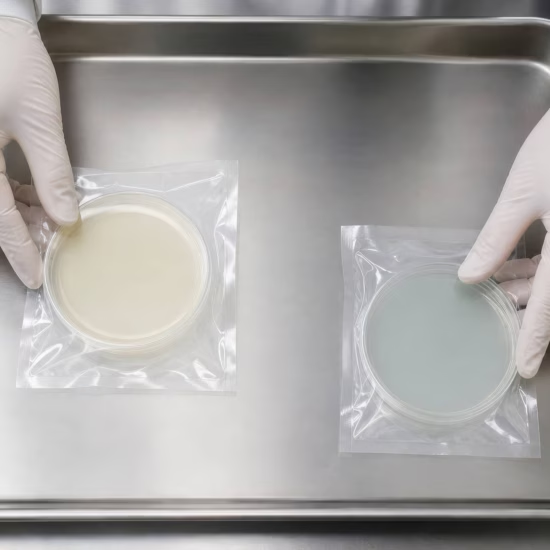
What should a cleanroom monitoring programme cover?
The programme should address contamination sources that may affect product quality. In practice, this means monitoring air, surfaces, personnel and relevant utilities.
Air: viable and non-viable contamination
Air monitoring combines particle measurement with microbiological sampling:
- Non-viable particles, such as dust and fibres, are measured with particle counters. Unexpected increases can indicate changes in activity, airflow or equipment performance.
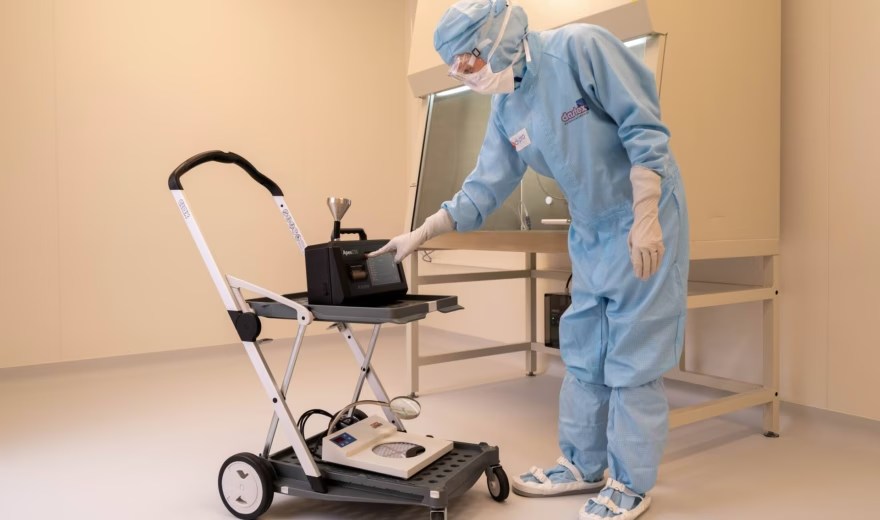
- Viable particles are detected through active or passive air sampling. In Grade A, viable monitoring should cover the full duration of critical processing, including equipment set-up.
Sampling points and tubing arrangements should also be qualified. Long tubing runs can cause particle losses and compromise the representativeness of results.
Surfaces and equipment
Floors, walls, workbenches, filling lines and other surfaces can harbour micro-organisms. Contact plates and swabs help verify whether routine cleaning and disinfection remain effective. Recovered organisms also contribute to the environmental isolate library used to support disinfectant efficacy studies. In Grade A and B areas, identification to species level helps reveal changes in flora and supports an up-to-date efficacy panel.
Personnel
Operators remain a major potential source of contamination, even when cleanroom garments and training controls are in place. Personnel monitoring may include gloves, sleeves and the chest area of cleanroom garments. Monitoring after critical interventions and when leaving Grade A/B areas provides insight into behaviour, training effectiveness and compliance with hygiene procedures.
Utilities
Utilities used in production also require appropriate monitoring. Purified Water is assessed for microbiological and physicochemical quality. Water for Injection is additionally controlled for bacterial endotoxins. Compressed air, nitrogen and clean steam should be tested against defined purity and quality requirements relevant to their use.
How to respond to alert and action limit excursions
A monitoring programme must define alert and action limits and explain how excursions will be investigated. When a deviation occurs, the first step is a timely risk assessment to establish the potential impact on product quality and patient safety. The investigation should then bring together relevant environmental, process, personnel and equipment data.
The outcome should be a supported root cause analysis, followed by corrective and preventive actions where required. The effectiveness of those actions should be checked and documented in the quality management system. Good documentation makes the control of quality processes visible and defensible during inspection.
Environmental monitoring is a shared responsibility
Quality teams may design and manage the programme, but environmental control depends on everyone working in or around the cleanroom. Opening doors, moving materials, performing interventions and using protective equipment can all affect the controlled environment.
Training should therefore connect procedures with their practical purpose. When employees understand how their actions influence monitoring results and contamination risk, environmental monitoring becomes part of daily operations rather than an isolated quality-control activity.
Common environmental monitoring pitfalls
-
1.
Sampling plans that are not justified by a risk assessment.
-
2.
Programmes that are not updated after changes to processes, equipment, layouts or personnel.
-
3.
Alert limit excursions that are repeatedly closed without meaningful investigation.
-
4.
Superficial root cause analyses that do not support effective corrective action.
-
5.
Failure to analyse trends because individual results remain within limits.
-
6.
Insufficient organism identification, making changes in cleanroom flora harder to detect.
-
7.
Sampling at convenient times instead of during representative or worst-case activities.
-
8.
Treating environmental monitoring as the responsibility of the quality department alone.
Build a programme that remains effective over time
An effective environmental monitoring programme is risk-based, representative and responsive. It links routine results to the Contamination Control Strategy, uses trends to detect change early and converts deviations into documented learning and improvement. Most importantly, it combines technical controls with consistent behaviour on the cleanroom floor.
Need support reviewing your environmental monitoring programme, sampling plan or contamination control strategy?
FAQ
-
Environmental monitoring is the routine collection and interpretation of data on viable and non-viable contamination. It helps demonstrate that the cleanroom remains in a controlled state during operations.
-
No. Environmental monitoring does not prove sterility and is not, by itself, a batch-release test. It provides evidence about the ongoing state of control.
-
A risk-based programme commonly covers airborne particles and micro-organisms, surfaces, personnel and relevant production utilities.
-
Excursions should trigger a timely risk assessment and a documented investigation. Where necessary, the outcome should lead to root cause analysis, corrective and preventive actions, and effectiveness checks.
-
The programme should be reassessed when processes, equipment, layouts, personnel or contamination risks change, and when trend data indicate that existing controls may no longer be adequate.
About Normec Advipro
Normec Advipro ensures that your organization in life science operations complies with regulations while also maintaining sustainable compliance. With our expertise in GMP, ISO standards, the FDA, the EMA, and other regulatory bodies, we implement smart solutions that ensure regulatory compliance and improve operational efficiency. From project initiation to periodic requalification: we support you at every stage to ensure optimal performance and risk management.
About Farma Consulting
Farma Consulting & Partners aims to be the reference for QA, QP, qualification and validation activities within the life sciences sector. We build sustainable, long-term relationships with our clients, with one goal: bringing your products to market safely, and implementing, optimising and validating your quality system efficiently. We continuously challenge the status quo. In a strictly regulated pharmaceutical sector, processes and systems are often approached conservatively — with our expertise in the applicable regulations, we are committed to helping our clients operate in the most efficient way possible.
Related Services
Related Articles
07 Sep 2026
Three Years Into Annex 1: What Inspectors Are Actually Asking For
In the pharmaceutical industry, contamination control is not just about meeting regulatory requirements. It determines whether product quality and patient safety can be demonstrated – and, in practice, whether a batch can be released and a facility can keep running.


14 Aug 2026
What do you know about EudraLex Volume 4 Annex 11:2026? Are your computer systems inspection ready?
The current version of Eudralex Volume 4 Annex 11 dates back to 2011 and is no longer fully up to date. The technological world has changed significantly since then. Requirements for lifecycle management and data integrity have become much stricter, and the use of cloud solutions in the pharmaceutical industry is now standard. Regulatory bodies such as EMA and PIC/S have indicated plans to revise Annex 11 to provide more clarity on its interpretation, guidelines for new technologies, and clear requirements for data integrity.
28 Apr 2026
A Failed APS: Every Sterile Production Department’s Nightmare
A failed aseptic process simulation (APS) is every sterile production department’s nightmare. As soon as the culture medium becomes cloudy, alarm bells go off throughout the entire organization.


16 Mar 2026
What do you know about EudraLex Volume 4 Annex 11:2026? Are your computer systems inspection ready?
The current version of Eudralex Volume 4 Annex 11 dates back to 2011 and is no longer fully up to date. The technological world has changed significantly since then. Requirements for lifecycle management and data integrity have become much stricter, and the use of cloud solutions in the pharmaceutical industry is now standard. Regulatory bodies such as EMA and PIC/S have indicated plans to revise Annex 11 to provide more clarity on its interpretation, guidelines for new technologies, and clear requirements for data integrity.
16 Mar 2026
What Is Involved in Building a Cleanroom? | PIC/S Standard for Hospitals
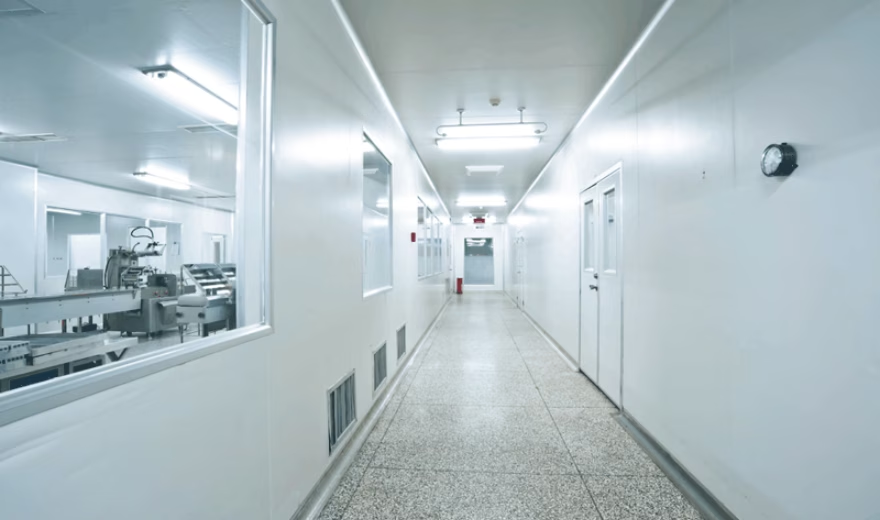
A new Royal Decree was recently published “concerning the preparation and dispensing of medicines and the use and distribution of medical devices within healthcare institutions.” You can read all about it in the blog “The new regulations for hospitals and their pharmacies.” In practical terms, this means that starting January 1, 2026, stricter requirements will also be imposed on how medications are prepared in hospitals. This is referred to as GPP, which stands for Good Preparation Practices. It is therefore expected that work will be carried out in controlled environments, where the handling of open containers must always take place in ventilated rooms with filtered air. In other words, hospitals will also have to install and validate a cleanroom with an associated quality system for their compounding activities.


16 Mar 2026
The New Regulations for Hospitals and Their Pharmacies
The pharmaceutical industry has been operating according to very strict guidelines for decades. The primary objective of these guidelines is to ensure patient safety. But in addition to the pharmaceutical industry, there are other settings where products for patients are prepared. These include, for example, pharmacies, clinical laboratories, and hospitals. In these settings as well, regulations are becoming stricter, and operations are increasingly subject to scrutiny. Consequently, these regulations are aligning more and more closely with those of the pharmaceutical industry—an area in which Normec Advipro has been building its expertise for nearly 20 years.


25 Jan 2026
Paperless validation: (im)possible?
In this blog, Steven takes you on a journey into the world of paperless validation. Find out exactly what it entails and how you can apply it in practice. Steven shares his experiences and explains the challenges and developments surrounding this new method.