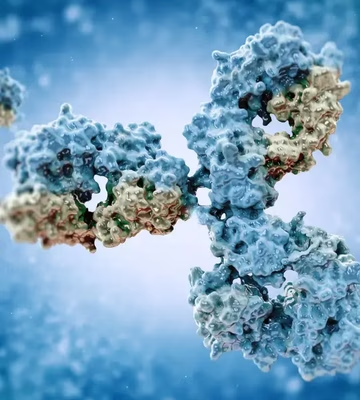
The therapeutic was designed to simultaneously engage two cytokine targets, and this dual binding architecture created a compounding set of bioanalytical challenges that could not be addressed using standard single target assay approaches. Each assay type required an independent development strategy tailored to the structural and pharmacological properties of the bispecific molecule.
For PK assay development, the primary requirement was engineering sufficient sensitivity to accurately capture drug concentrations across both low dose and high dose cohorts within a single analytical run. The inherently wide dose range of the clinical program demanded a long dynamic quantitation range without sacrificing lower limit of quantitation (LLOQ) performance. In addition, the assay exhibited matrix intolerance at standard dilution factors, a common obstacle with complex biological matrices, necessitating careful buffer optimization to preserve assay integrity while meeting regulatory sensitivity requirements. Achieving the target sensitivity in the low dose groups while maintaining quantitative accuracy in high dose samples within a single validated method represented a fundamental design constraint.
The ADA assay presented a distinct and clinically significant challenge: developing an ADA assay drug tolerant to circulating drug concentrations up to 300 µg/mL. High drug levels at the time of sampling are common in clinical trials, particularly during and shortly after dosing, and can mask or suppress ADA signals in standard bridging assay immunogenicity formats. Achieving adequate drug tolerance without compromising sensitivity to low titer ADA, which may be clinically meaningful even at low levels, required a fundamentally modified sample preparation strategy that went beyond conventional acid dissociation approaches.
For the pharmacodynamic assay target engagement measurements, the sponsor required dual target engagement assessments for both interleukin targets of the bispecific molecule. Developing a drug bound cytokine assay capable of quantifying target engagement in the presence of circulating bispecific antibody proved especially complex, as steric hindrance from excess free drug and heterophilic interactions between assay components impaired signal detection. Conventional antibody capture strategies failed to achieve adequate sensitivity and specificity without extensive optimization, and both the capture antibody selection and assay diluent formulation required iterative redesign to overcome these matrix driven interferences.
Solution
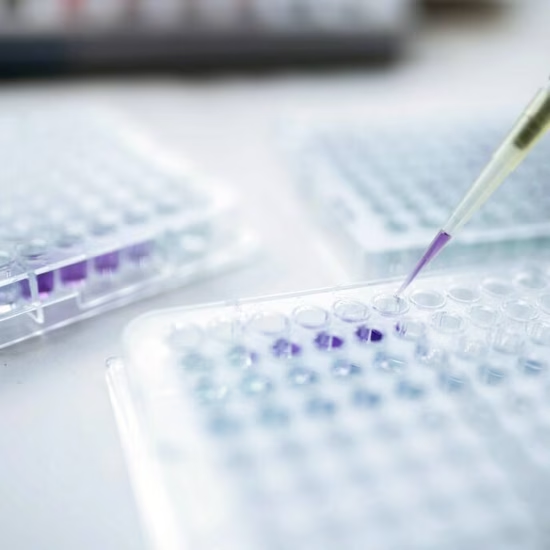
A sandwich immunoassay PK assay format was established for PK assay development, utilizing an anti drug antibody assay configuration with the anti drug antibody serving as the capture reagent and an anti human IgG1 antibody for detection. This configuration was specifically selected to preserve binding specificity across the full quantitation range required for multi dose clinical monitoring. Reagent screening and iterative optimization achieved a validated sensitivity of 50.00 ng/mL with an upper limit of quantitation of 6400.00 ng/mL, yielding a 128 fold dynamic range. Minimum required dilution matrix interference was systematically controlled by applying an MRD of 1:30 in a specialized assay buffer, effectively suppressing matrix effects without compromising the validated range at anticipated clinical concentrations.
For the immunogenicity assessment, the BEAD drug tolerance ADA methodology, Biotin Drug Extraction and Acid Dissociation, was adopted as the sample preparation strategy to dissociate drug ADA immune complexes under acidic conditions, allowing the liberated ADA to rebind to biotin labeled drug during the subsequent neutralization step. This BEAD based pretreatment was integrated into a bridging electrochemiluminescence (ECL) assay format, and iterative optimization of acid dissociation parameters and reagent concentrations advanced the assay to drug tolerance up to 1000 µg/mL at a positive control concentration of 100 ng/mL, substantially exceeding the sponsor’s clinical requirement of 300 µg/mL and providing a wide safety margin for samples collected at peak drug exposure.
For the PD assessment, a drug bound cytokine assay was developed for each interleukin target to measure target engagement biomarkers in the presence of circulating bispecific antibody. A structured antibody screening campaign identified capture antibodies capable of accessing their respective epitopes on drug bound cytokine complexes despite steric blockade from the bispecific molecule. A heterophilic blocker immunoassay strategy was applied, incorporating heterophilic blocking reagents into the assay diluent, to suppress non specific signal contributions from endogenous immunoglobulins and cross reactive matrix components, restoring the sensitivity and specificity required to detect pharmacodynamic modulation across the expected clinical concentration ranges.

Outcome
We developed and validated a complete bioanalytical package, PK, ADA, and dual PD assays, in support of this interleukin targeting bispecific antibody clinical trial. The PK assay delivered a validated quantitation range of 50.00–6400.00 ng/mL with demonstrated matrix compatibility at a 1:30 minimum required dilution, providing reliable drug concentration data across all dose cohorts. The ADA assay achieved drug tolerance substantially exceeding the clinical threshold, ensuring that immunogenicity assessments remain valid even in the presence of high circulating drug levels. The two PD target engagement assays successfully overcame steric interference and matrix related challenges to enable the detection of drug bound cytokine complexes, yielding pharmacodynamic readouts directly relevant to the bispecific mechanism of action.
Collectively, this bioanalytical program reflects NorthEast BioLab's ability to address the amplified complexity of bispecific antibody therapeutics, which require coordinated immunoassay strategies that go well beyond single target approaches. The data generated across all three assay types are informing dose selection, immunogenicity risk assessment, and pharmacodynamic proof of concept evaluation as the program advances through clinical development.
Immunogenicity assay development validation and PK method development for bispecific therapeutics demand platform expertise that goes well beyond standard large molecule programs. Engaging a dedicated bioanalytical CRO clinical trials team early, one that can architect PK, ADA, and PD strategies in parallel, is essential to ensuring data quality and regulatory compliance. Aligning all methods with FDA bioanalytical method validation guidance from day one eliminates costly rework and keeps the program on timeline for regulatory submission.
Registered And Inspected By Various Regulatory Agencies
Speak To Our Scientist About Your Multiplex Cytokine Assay, Cytokine Quantification On Meso Scale Discovery
Related articles
MSD Hybridization ELISA PK Immunoassay Development, GLP Validation, And Oligonucleotide Analysis

TaqMan Gene Expression Assay, Copy Number Variation

Genomic Variation Analysis – TaqMan Single Nucleotide Polymorphism (SNP) Analysis

LC MS Bioanalysis Of Oligos Using Mass Spec And Ion Pair Chromatography
Dosing THC Lab, Cannabis Testing Lab, CBD Melatonin Testing
HPLC-UV Method Development: Testing 9 Articles in Formulation
Payload Plus Peptide LC MS Analysis, GLP Validation In Rat, NHP, Human Plasma
Epigallocatechin gallate (EGCG) LC MS Analysis In VcEDTA Human Serum
LC MS Method For Proline Amino Acid, Hydroxyproline In Mouse Tissues
LC MS Method For DNA Adducts Analysis In Cell-Based In-Vitro Samples
LC MS Method for Everolimus Eluting Coronary Stent Drug Delivery Systems

Mass Spectrometry Amino Acids, Quantitative LC MS Amino Acid Analysis

LC MS Method Development And GLP Validation For PK Plasma Sample Analysis
Incurred Sample Reanalysis (ISR) Test, FDA Requirements, And Study Evaluation
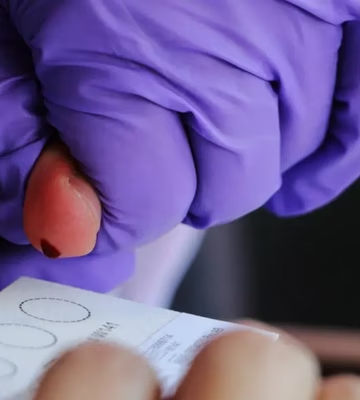
Dried Blood Spot (DBS) Sampling, DBS Collection, And DBS Analysis
Your partner in quality, safety, and compliance
The life sciences sector requires specialized knowledge and reliable support. With our broad expertise, we help organizations comply with laws and regulations, ensure quality, and continue to innovate with confidence.