

This guide explains how ISO 14644, Good Manufacturing Practice (GMP) and PIC/S shape cleanroom qualification, what happens during on-site testing, and how requalification helps maintain the qualified state after initial approval.
Why cleanroom qualification matters
A poorly qualified cleanroom can lead to contamination, batch rejection, regulatory findings, product recalls and risks to patient safety. A structured qualification programme provides documented evidence that production takes place in a controlled environment and that the room performs consistently under the conditions for which it was designed.
To define the right test scope, organisations first need to understand the applicable standards, the intended use of the cleanroom and the risks to the product and process.
Cleanroom qualification vs cleanroom classification
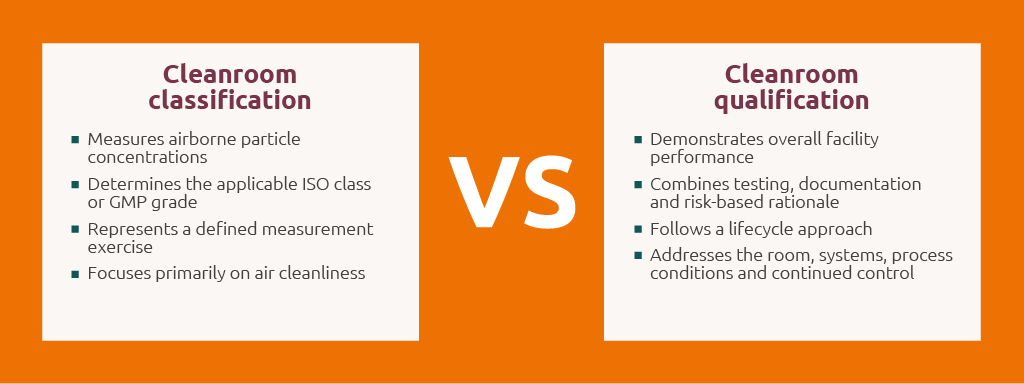
The two terms are closely related, but they are not interchangeable. Classification is one element of qualification; qualification demonstrates the broader performance of the facility
The regulatory framework: ISO, GMP and PIC/S
ISO 14644: the technical foundation
The ISO 14644 series is the global reference for cleanroom classification and testing. The most relevant parts in practice include Part 1 for classification, Part 2 for monitoring, Part 3 for test methods, Part 4 for design, construction and start-up, and Part 7 for separative devices. Together, they define air cleanliness classes, particle concentration limits and standardised test methods.
ISO focuses primarily on airborne particle control and provides the technical baseline for evaluating cleanroom performance.
GMP and Annex 1: beyond particles
Good Manufacturing Practice goes beyond airborne particles. In pharmaceutical environments, it also addresses microbiological contamination control, personnel behaviour and gowning, environmental monitoring and risk-based decision-making.
GMP does not replace ISO; it builds on it. ISO defines particle limits and test methods, while GMP connects environmental control to product quality and patient safety. Grade A and grade B correspond broadly to ISO Class 5 at rest, grade C to ISO Class 7 at rest and grade D to ISO Class 8 at rest. The systems are not directly interchangeable because GMP grades also include in-operation and microbiological expectations.
PIC/S: harmonising global expectations
The Pharmaceutical Inspection Co-operation Scheme supports alignment of GMP expectations across participating authorities. Its GMP guide reflects the requirements of EU GMP Annex 1 and emphasises detailed interpretation, inspection expectations and a documented contamination control strategy (CCS).
The four stages of cleanroom qualification
Qualification follows a structured lifecycle. Before formal qualification begins, the User Requirement Specification (URS) should clearly describe what the process and facility need to achieve. Many late-stage problems begin with a requirement that was never defined precisely enough.
Design Qualification (DQ)
Confirms that the proposed design meets the approved user and regulatory requirements.
Installation Qualification (IQ)
Verifies that systems, components and utilities have been installed correctly and in accordance with the approved design.
Operational Qualification (OQ)
Demonstrates that the cleanroom and its systems operate as intended across the defined operating ranges.
Performance Qualification (PQ)
Confirms performance under representative conditions, with the defined people, equipment and process activities in place.
Regulations define the performance that must be achieved. Qualification testing shows whether the cleanroom achieves that performance in practice.
Cleanroom qualification tests: what happens on site?
-
1.
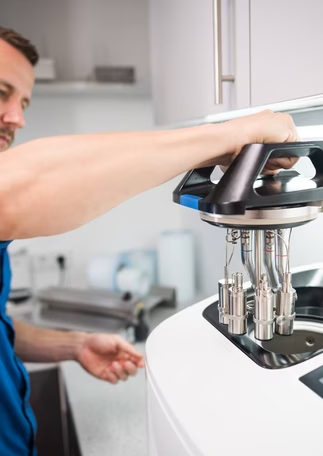
Airborne particle counting
Measures particle concentrations and supports classification against ISO class or GMP grade limits. Testing uses calibrated particle counters at documented, risk-based locations and heights in the relevant occupancy states.
-
2.
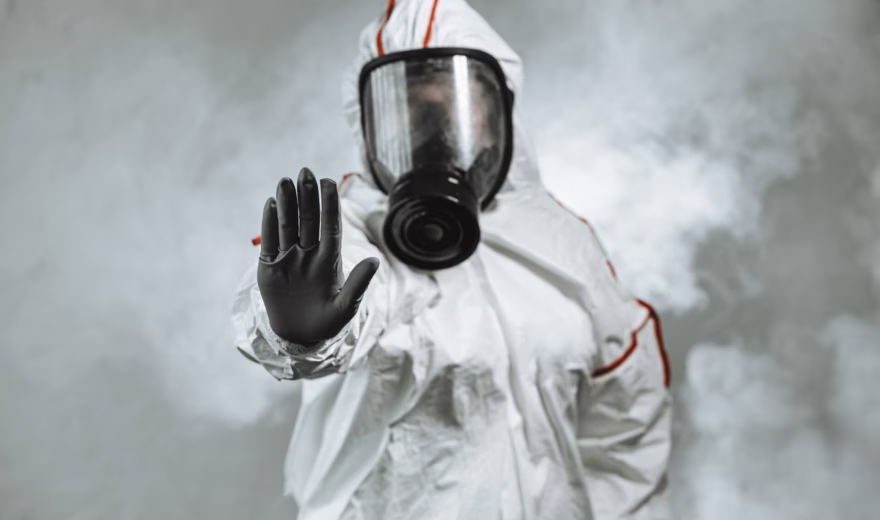
Airflow visualisation (smoke studies)
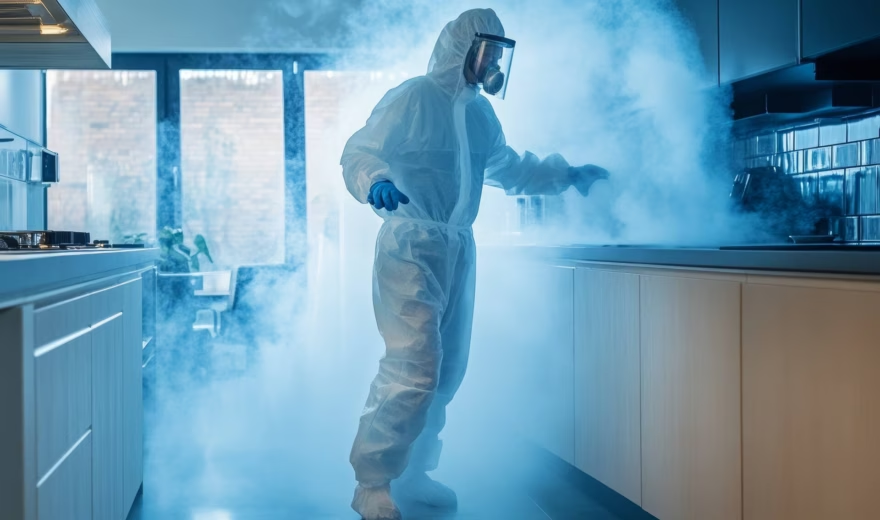
Makes airflow patterns visible so teams can assess airflow direction, dead zones and protection of critical areas. In aseptic processing, studies should demonstrate protection of exposed product and reflect representative interventions.
-
3.
Air velocity and air change rates
Evaluates how air moves through the room, confirms unidirectional airflow performance where applicable, and shows how frequently room air is replaced.
-
4.
Recovery testing
Determines how quickly a room returns to its specified at-rest particle condition after a defined disturbance. The qualified recovery time should be documented and reflected in operating procedures.
-
5.
Installed filter leakage testing
Uses an upstream aerosol challenge and downstream scan to detect leakage through the filter medium, frame, seal or housing. This is distinct from integrity testing of sterilising-grade process filters.
-
6.
Pressure differential testing
Confirms that pressure cascades support the intended direction of airflow between adjacent spaces. Critical differentials identified in the CCS should be monitored, recorded and alarmed as required.
-
7.
Temperature and humidity
Demonstrates that environmental conditions remain within the ranges required by the product, process and personnel.
-
8.
Microbiological monitoring
Assesses viable contamination through active air sampling, settle plates, surface sampling and personnel monitoring in relevant at-rest and in-operation conditions.
GMP grades: particle and microbiological qualification limits
The following quick-reference table summarises the limits presented in the original article. Always verify the applicable standard and approved site procedures before using these values as acceptance criteria.
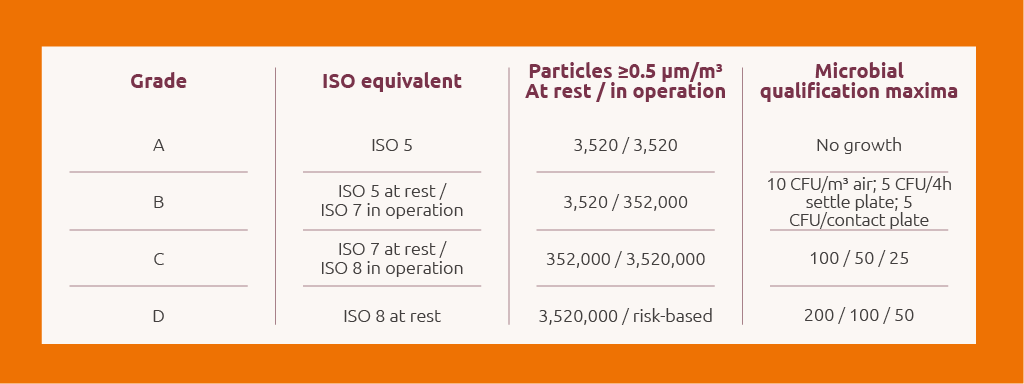
Occupancy states: as-built, at rest and in operation
As-built: Construction is complete, but equipment is not operating and personnel are not present.
At rest: Utilities and HVAC are functioning and the main equipment is installed, but the process is not running and personnel are absent.
In operation: The cleanroom, HVAC, equipment and personnel are operating in the defined routine or simulated operating mode.
Operational conditions often reveal risks that are not visible in an at-rest test. A room that meets its at-rest limit can still fail when people, equipment and interventions affect airflow and contamination control. Qualification therefore needs to reflect the way the facility will actually be used.
Requalification: maintaining the qualified state
Cleanroom qualification is not a one-off exercise. The original article states a maximum requalification interval of six months for grade A and B areas and twelve months for grade C and D areas. It also identifies classification, final-filter leakage testing, air volume or velocity measurement and pressure-difference verification as part of the minimum scope, with recovery testing used in specified non-unidirectional areas.
Requalification may also be necessary after remedial action or after changes to equipment, the facility or the process. Changes such as filter replacement, layout modification or altered operating conditions should therefore be assessed for their potential impact on the qualified state.
Common cleanroom qualification mistakes
- An incomplete URS that does not translate process needs into testable requirements
- Acceptance criteria defined after data have already been generated
- Insufficient testing under in-operation conditions
- Smoke studies that do not include representative interventions
- Correctly executed tests that are not interpreted in the broader GMP and CCS context
- Weak change control or delayed requalification after facility, equipment or process changes
Need support with cleanroom qualification?
Whether you are qualifying a new facility, preparing for an Annex 1 inspection or requalifying an existing cleanroom, Normec can support testing, validation and environmental monitoring across the cleanroom lifecycle.
About Normec Advipro
Normec Advipro ensures that your organization in life science operations complies with regulations while also maintaining sustainable compliance. With our expertise in GMP, ISO standards, the FDA, the EMA, and other regulatory bodies, we implement smart solutions that ensure regulatory compliance and improve operational efficiency. From project initiation to periodic requalification: we support you at every stage to ensure optimal performance and risk management.
About Farma Consulting
Farma Consulting & Partners aims to be the reference for QA, QP, qualification and validation activities within the life sciences sector. We build sustainable, long-term relationships with our clients, with one goal: bringing your products to market safely, and implementing, optimising and validating your quality system efficiently. We continuously challenge the status quo. In a strictly regulated pharmaceutical sector, processes and systems are often approached conservatively — with our expertise in the applicable regulations, we are committed to helping our clients operate in the most efficient way possible.
FAQ Cleanroom Qualification Explained - ISO 14644, GMP & Annex 1 Requirements
-
Cleanroom qualification is the documented process of verifying that a cleanroom and its supporting systems consistently meet predefined operational, environmental and regulatory requirements.
-
Classification measures airborne particle concentrations and assigns a cleanroom class or grade. Qualification is broader and combines classification with other tests, documentation and risk-based evidence of performance.
-
The applicable framework depends on the operation, product and market. Common references include the ISO 14644 series, EU GMP Annex 1 and the PIC/S GMP guide.
-
The original article states maximum intervals of six months for grade A and B and twelve months for grade C and D, alongside event-driven requalification after relevant changes or remediation.
-
Typical tests include particle counting, airflow visualisation, air velocity or air change measurement, recovery testing, installed filter leakage testing, pressure differentials, temperature, humidity and microbiological monitoring.
Related Services
Related Articles
07 Sep 2026
Three Years Into Annex 1: What Inspectors Are Actually Asking For
In the pharmaceutical industry, contamination control is not just about meeting regulatory requirements. It determines whether product quality and patient safety can be demonstrated – and, in practice, whether a batch can be released and a facility can keep running.


14 Aug 2026
What do you know about EudraLex Volume 4 Annex 11:2026? Are your computer systems inspection ready?
The current version of Eudralex Volume 4 Annex 11 dates back to 2011 and is no longer fully up to date. The technological world has changed significantly since then. Requirements for lifecycle management and data integrity have become much stricter, and the use of cloud solutions in the pharmaceutical industry is now standard. Regulatory bodies such as EMA and PIC/S have indicated plans to revise Annex 11 to provide more clarity on its interpretation, guidelines for new technologies, and clear requirements for data integrity.
28 Apr 2026
A Failed APS: Every Sterile Production Department’s Nightmare
A failed aseptic process simulation (APS) is every sterile production department’s nightmare. As soon as the culture medium becomes cloudy, alarm bells go off throughout the entire organization.


16 Mar 2026
What do you know about EudraLex Volume 4 Annex 11:2026? Are your computer systems inspection ready?
The current version of Eudralex Volume 4 Annex 11 dates back to 2011 and is no longer fully up to date. The technological world has changed significantly since then. Requirements for lifecycle management and data integrity have become much stricter, and the use of cloud solutions in the pharmaceutical industry is now standard. Regulatory bodies such as EMA and PIC/S have indicated plans to revise Annex 11 to provide more clarity on its interpretation, guidelines for new technologies, and clear requirements for data integrity.
16 Mar 2026
What Is Involved in Building a Cleanroom? | PIC/S Standard for Hospitals
A new Royal Decree was recently published “concerning the preparation and dispensing of medicines and the use and distribution of medical devices within healthcare institutions.” You can read all about it in the blog “The new regulations for hospitals and their pharmacies.” In practical terms, this means that starting January 1, 2026, stricter requirements will also be imposed on how medications are prepared in hospitals. This is referred to as GPP, which stands for Good Preparation Practices. It is therefore expected that work will be carried out in controlled environments, where the handling of open containers must always take place in ventilated rooms with filtered air. In other words, hospitals will also have to install and validate a cleanroom with an associated quality system for their compounding activities.


16 Mar 2026
The New Regulations for Hospitals and Their Pharmacies
The pharmaceutical industry has been operating according to very strict guidelines for decades. The primary objective of these guidelines is to ensure patient safety. But in addition to the pharmaceutical industry, there are other settings where products for patients are prepared. These include, for example, pharmacies, clinical laboratories, and hospitals. In these settings as well, regulations are becoming stricter, and operations are increasingly subject to scrutiny. Consequently, these regulations are aligning more and more closely with those of the pharmaceutical industry—an area in which Normec Advipro has been building its expertise for nearly 20 years.


25 Jan 2026
Paperless validation: (im)possible?
In this blog, Steven takes you on a journey into the world of paperless validation. Find out exactly what it entails and how you can apply it in practice. Steven shares his experiences and explains the challenges and developments surrounding this new method.